
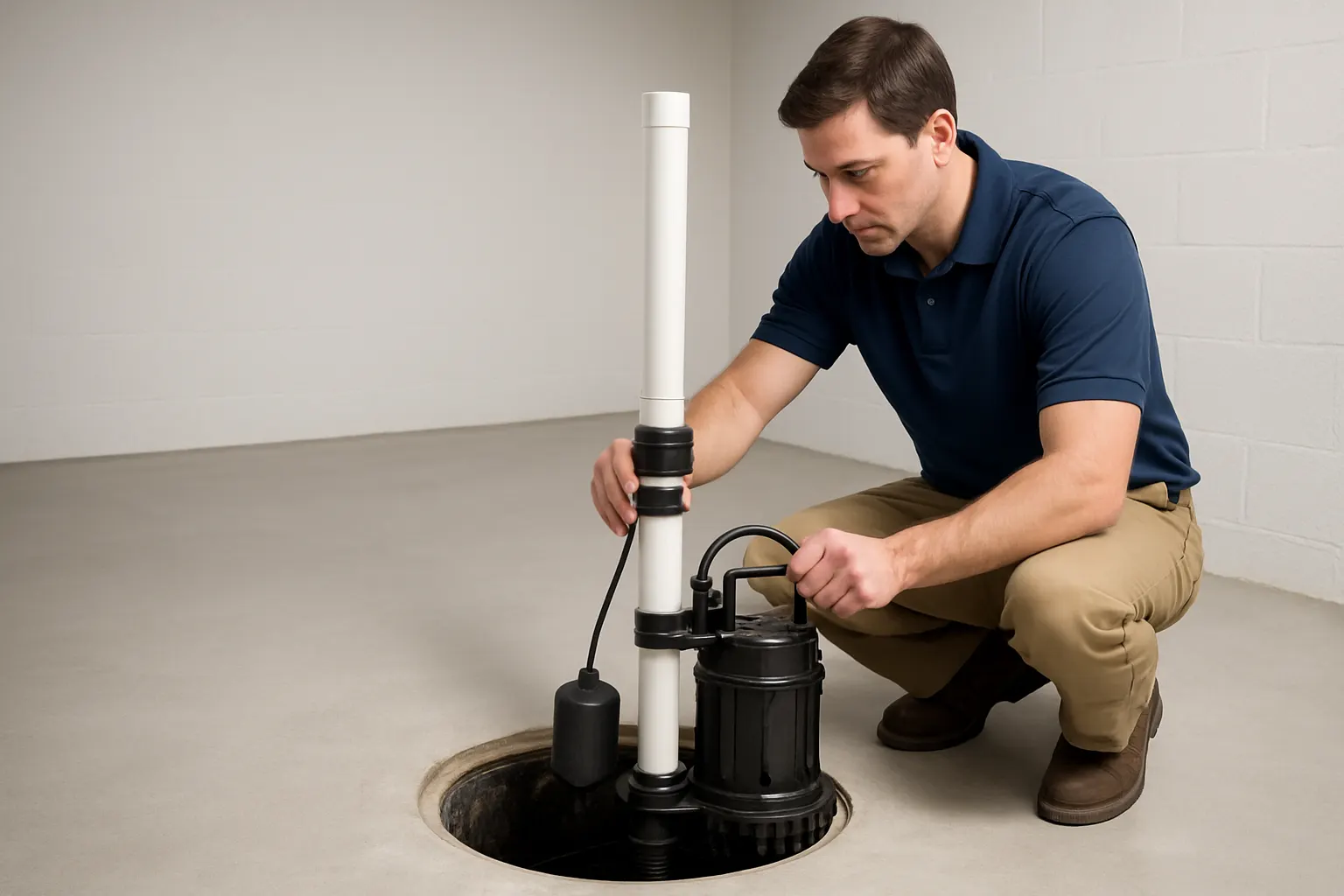
High Water Alarm Installation in Columbus, Ohio
Transit & Flow Group installs high water alarms across Columbus and Central Ohio as a standalone early-warning device for a sump pit. A high water alarm does not pump any water itself; it senses when water in the pit rises higher than it should and sounds an alert, so you find out about a problem while it is still small instead of discovering it in a flooded basement. Describe your current sump setup in the Estimate Builder for a preliminary online estimate.
Transit & Flow Group installs high water alarms across Columbus and Central Ohio as a standalone early-warning device for a sump pit. A high water alarm does not pump any water itself; it senses when water in the pit rises higher than it should and sounds an alert, so you find out about a problem while it is still small instead of discovering it in a flooded basement. Describe your current sump setup in the Estimate Builder for a preliminary online estimate.
Is this the right service for you?
A high water alarm is a good fit in a wide range of situations, which is part of why it is one of the most commonly added components in this category:
- You have a single primary pump with no backup system and want a way to know if it fails before the pit overflows, rather than finding out after the fact.
- You already have a Battery Backup Sump Pump or a Combination Sump System and want an additional layer of notice on top of the backup pump itself, since even a backup system benefits from an independent alert.
- You travel often or the basement is not somewhere you check daily, so a stuck float or a power outage could go unnoticed for hours or days without an alarm.
- You have had a close call before, water rising close to pit level even though the pump eventually caught up, and want a warning next time before it gets that close.
- You want the cheapest meaningful upgrade to an existing sump system. Compared to a full backup pump, an alarm is a small add-on that still meaningfully reduces your risk of an unnoticed flood.
- You are finishing a basement and want a low-cost safeguard in place before carpet, drywall, or storage go in.
A high water alarm is not a substitute for a backup pump. It tells you there is a problem; it does not move any water. If you want a system that keeps pumping during a power outage or a primary pump failure, see Battery Backup Sump Pump or Combination Sump System. Many homeowners install a high water alarm now and add a backup pump system later, or vice versa; the two are independent decisions and an alarm works with either.
How pricing works
High water alarm installation is fixed, scope-based pricing, one of the simpler add-ons in this category:
- Base installation covers mounting the sensor at the correct height in your pit, running power or confirming battery function, and testing the alert under simulated high-water conditions.
- Alarm type affects price modestly: a simple audible alarm, a unit with a battery backup of its own so it still works during a power outage, and a Wi-Fi or cellular-connected alarm that can notify your phone remotely are priced as different tiers.
- What changes the price: whether a nearby outlet exists for a wired unit, pit depth and accessibility, and whether you want the alarm added to an existing pump system or as part of a new installation.
- Compatible with any existing system, whether you have just a primary pump, a primary pump with a battery backup, or a full combination system already in place.
As general market context, not a Transit & Flow quote, Angi’s 2026 data notes that smart monitoring alarms and Wi-Fi-connected controls typically add about $100 to $500 to a sump pump project, a useful reference point for what a notification-only add-on like this commonly costs on its own. Enter your project details and photos in the Estimate Builder for a preliminary online estimate. Final scope and price subject to verification on site.
What’s included
- Sensor mounted at the correct trigger height for your specific pit and pump cycle range
- Power connection or battery installation, confirmed functional
- A test simulating high water to verify the alert actually sounds or notifies
- A walkthrough of what the alarm does and does not do, so there is no confusion about its role
- Photos of the finished installation for your records
- All workmanship is backed by a 1-year labor warranty on labor, parts, and equipment covered per manufacturer terms.
What’s not included
- Any pumping function; the alarm alerts only and moves no water itself
- Battery backup pump installation (see Battery Backup Sump Pump)
- Combination primary-and-backup system installation (see Combination Sump System)
- Sump pump repair or replacement if the pump itself needs attention (see Sump Pump Replacement)
- Ongoing cellular or Wi-Fi service fees for connected models, which are typically billed directly by the alarm manufacturer
An add-on, not a system replacement
A high water alarm is intentionally simple: one job, done well. It does not compete with a Battery Backup Sump Pump or a Combination Sump System, which are built to keep water moving during a power outage or primary pump failure. Instead, it is the inexpensive layer that tells you something is wrong regardless of what else your system does or does not have. A home with just a primary pump benefits from the early warning just as much as a home with a full combination system benefits from an extra, independent alert layered on top of its backup pump. The two categories of product solve different problems, and many Central Ohio homeowners end up with both.
Central Ohio context
Central Ohio’s clay soil means a sump pit can receive water for days after a storm has passed, so a slow-developing problem, a stuck float, a weakening motor, a check valve letting water fall back, often has time to get worse before it becomes obvious from upstairs. Spring’s heavy rain and the freeze-thaw pattern that keeps opening new paths for groundwater both raise the odds that a pit fills at an inconvenient time, overnight, during a work trip, during a power outage from a storm. An alarm closes that gap by alerting you the moment water crosses a threshold, rather than whenever someone happens to walk past the basement door.
Our process
- Describe your system online. What pump setup you already have, and whether you want a basic or connected alarm, go into the Estimate Builder for a preliminary online estimate.
- Book the visit. Same-day availability may be available depending on your location and schedule.
- Install and mount. Sensor set at the correct trigger height for your pit and pump cycle.
- Test the alert. We simulate high water to confirm the alarm actually sounds or notifies as expected.
- Walkthrough. We explain exactly what the alarm does, what it does not do, and how to respond if it goes off.
Services completed by appropriately qualified professionals where required.
Related services
Battery Backup Sump Pump | Combination Sump System | Sump Pump Replacement | Check Valve Replacement
An alarm is the cheapest meaningful upgrade to any sump system. Enter your project details and photos in the Estimate Builder for a preliminary online estimate, book service online, or call Transit & Flow at (614) 382-0000.
More Sump, Sewage, and Water Management
- Erosion Control Improvements in Columbus, Ohio
- Foundation Drainage in Columbus, Ohio
- French Drain Installation in Columbus
- New Sump Pump Installation in Columbus, Ohio
- Standing Water Correction in Columbus, Ohio
- Sump Pit Lid Installation in Columbus, Ohio
- Sump Pit Service in Columbus, Ohio
- Sump Pump Check Valve Replacement in Columbus