
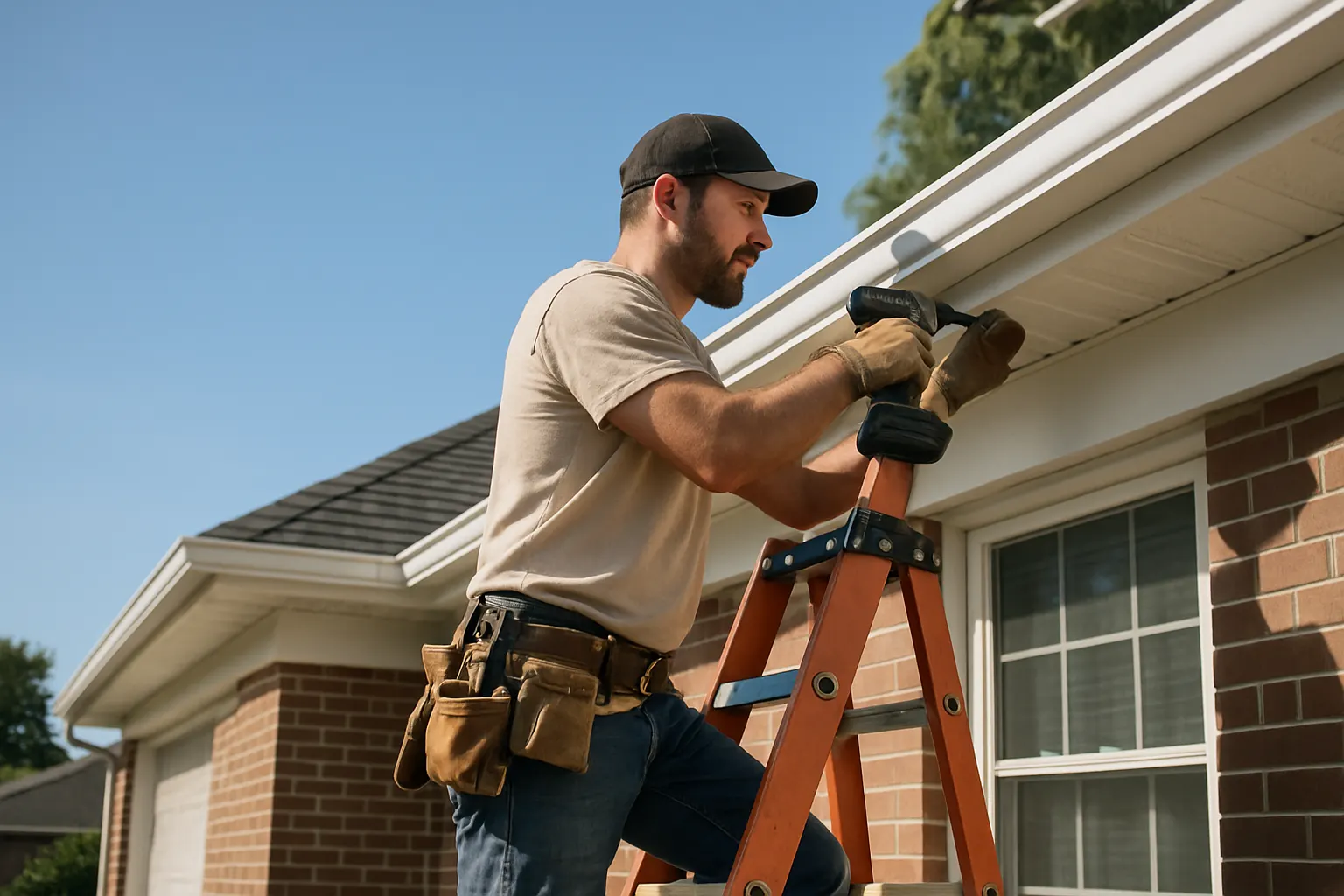
Storm Damage Exterior Repair in Columbus, Ohio
A bad wind event or hailstorm rarely damages just one part of your home. Transit & Flow Group’s Storm Damage Exterior Repair service covers storm-related damage to siding, gutters, soffit, and fascia specifically. If your roof also took a hit, our separate Roof Repair and Storm Damage service handles the roof itself, and we can coordinate both repairs together so you’re not managing two separate contractors after the same storm. Describe the damage in the Estimate Builder for a preliminary online estimate.
A bad wind event or hailstorm rarely damages just one part of your home. Transit & Flow Group’s Storm Damage Exterior Repair service covers storm-related damage to siding, gutters, soffit, and fascia specifically. If your roof also took a hit, our separate Roof Repair and Storm Damage service handles the roof itself, and we can coordinate both repairs together so you’re not managing two separate contractors after the same storm. Describe the damage in the Estimate Builder for a preliminary online estimate.
Is this what you’re seeing?
- Siding panels cracked, dented, or torn loose after high winds or wind-driven debris
- Gutters pulled away from the fascia, bent, or hanging after a storm
- Soffit panels blown loose or missing, exposing the underside of the roofline
- Fascia boards exposed or damaged where a gutter tore loose and took the fastening with it
- Hail dents or impact marks across aluminum trim, gutters, or siding
- A neighbor’s exterior getting storm repairs and you’re wondering whether your home has damage you haven’t spotted yet
- An insurance company asking for documentation of exterior storm damage beyond the roof
How pricing works
Storm damage repair is starting pricing, scoped from an on-site inspection since storm damage rarely follows a simple pattern:
- Single-element repairs, like one gutter run or a section of soffit, are priced from a fixed starting point for that scope.
- Multi-element storm damage, siding, gutters, soffit, and fascia all affected at once, is priced by scope after inspection, with each repair as its own line so you can see what each piece costs.
- What changes the price: how many exterior elements are affected, whether matching material is available, roofline height and access, and whether we find damage that wasn’t visible from the ground once we’re up close.
- Coordinating with roof repair. If your roof was also damaged, we can schedule and price that alongside this repair through our Roof Repair and Storm Damage service, so the whole exterior gets addressed in a coordinated timeline.
As general market context, not a Transit & Flow quote, HomeAdvisor’s 2025 storm damage repair data puts typical exterior storm repairs (siding, gutters, and trim combined) in the roughly $300 to $2,500 range, depending on how many elements are affected and the extent of the damage. Enter your project details and photos in the Estimate Builder for a preliminary online estimate. Final scope and price subject to verification on site.
What’s included
- On-site inspection and photo documentation of storm damage to siding, gutters, soffit, and fascia
- Repair or replacement of damaged sections, matched to existing material and color where available
- Re-fastening and re-sealing at repair points to restore proper drainage and weather protection
- A written scope you can keep for your own records or share with your insurance company
- Coordination with our roofing team if storm damage also affected the roof
What’s not included
- Roof surface or structural roof repair, which is covered by our separate Roof Repair and Storm Damage service
- Interior damage repair, such as drywall, insulation, or flooring affected by a leak
- Insurance claim filing, negotiation, or adjuster representation
- Full siding replacement if the inspection shows damage extends across most of the home rather than specific storm-affected sections
A note on insurance: we can document what we find with photos and a written scope you can hand to your insurance company. We are not public adjusters and do not negotiate claims. That process stays between you and your insurer.
Why Central Ohio storms hit siding, gutters, and trim hard
Central Ohio sees a mix of high wind events, hail, and heavy spring and summer storms that can tear gutters loose, dent aluminum trim, or crack siding panels without leaving an obvious hole to spot from the ground. Wind-driven debris, tree limbs especially, does a lot of the damage to soffit and fascia, since a falling branch often takes the gutter and the fascia board behind it in one motion. Freeze-thaw cycles through the following winter can widen small cracks in siding or trim that seemed minor right after the storm, which is part of why we recommend getting damage assessed and documented before the next hard freeze rather than waiting.
Older homes in Clintonville, Hilltop, and Whitehall often have original fascia and soffit material that’s already brittle from age, so a storm that leaves newer construction with minor cosmetic damage can crack or dislodge older material outright. Homes in Dublin, New Albany, and Lewis Center tend to see more contained, storm-specific damage on newer materials rather than damage layered on top of existing wear.
Our process
- Describe the damage online, or call (614) 382-0000. Photos of siding, gutters, soffit, and fascia go into the Estimate Builder for a preliminary online estimate.
- On-site inspection. We check all affected exterior elements, and the roof if you’d like it included, documenting everything with photos.
- Written scope. Each repair priced as its own line, with roof coordination added if needed. Final scope and price subject to verification here.
- Documentation for insurance. You receive photos and a written scope to share with your insurer if you’re filing a claim.
- Repair work. Damaged sections are repaired or replaced, with proper fastening and sealing restored throughout.
Services completed by appropriately qualified professionals where required. Same-day availability may be available depending on your location and current schedule, and emergency response times vary by location, technician availability, weather, traffic, and job conditions.