
Rough Grade Restoration in Columbus, Ohio
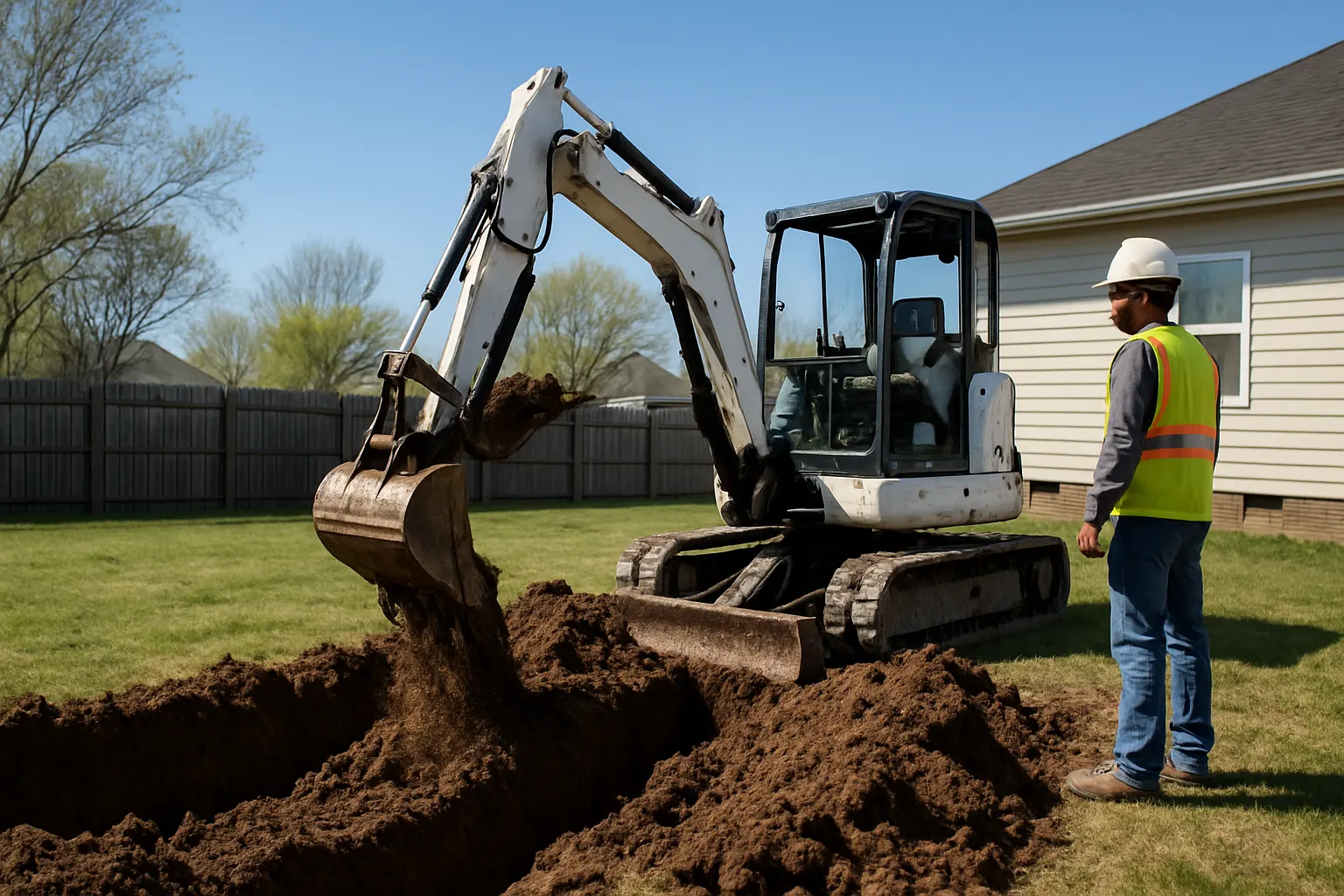
Transit & Flow Group brings a yard back to an approximate finished contour after excavation work, backfilling the trench or dig properly in compacted lifts and rough-grading the disturbed soil so it’s ready for finish-level work. This is the coarse, structural step that usually comes right after digging and right before finishing touches, not a cosmetic service on its own. Most excavation projects need this page first, then Site Restoration afterward to bring the yard to a finished look with topsoil, seed or sod, and landscaping recovery. Describe your excavation project and the disturbed area in the Estimate Builder for a preliminary online estimate.
Transit & Flow Group brings a yard back to an approximate finished contour after excavation work, backfilling the trench or dig properly in compacted lifts and rough-grading the disturbed soil so it’s ready for finish-level work. This is the coarse, structural step that usually comes right after digging and right before finishing touches, not a cosmetic service on its own. Most excavation projects need this page first, then Site Restoration afterward to bring the yard to a finished look with topsoil, seed or sod, and landscaping recovery. Describe your excavation project and the disturbed area in the Estimate Builder for a preliminary online estimate.
Is this the right service for you?
Rough grade restoration is the right call in these situations:
- A trench or excavation on your property was just completed for a utility line, a foundation repair, a septic or sewer job, or any other dig, and the backfilled soil needs to be compacted and shaped back to an approximate contour before anything else happens.
- You want the disturbed area properly compacted, not just loosely shoveled back in, so it doesn’t settle into a trench-shaped dip six months from now.
- You’re not ready for finish work yet. If you want sod, seed, topsoil, and landscaping put back, that’s the next step, our Site Restoration service, but it comes after this one.
- The disturbed area needs to match the surrounding grade roughly, in preparation for finishing, rather than needing a precise cosmetic finish right now.
- This is not a standalone drainage problem. If your yard has a water or drainage issue unrelated to any excavation work, standing water, a slope pointing at the house, a wet basement traced to grading, our Water Management division’s Drainage Grading service is the purpose-built fix for that, and it’s a different job from restoring ground disturbed by a dig.
How pricing works
Rough grade restoration is priced as a range, set mainly by the volume of soil to move and compact and the condition of the disturbed area:
- Volume of backfill material needed, and whether it’s soil generated by the original excavation or imported fill where the original spoils aren’t sufficient.
- Compaction method and lifts. Backfilling in properly compacted lifts rather than one dump is what prevents future settling, and it takes more passes and more time than it looks like from the surface.
- Area and shape of the disturbed ground. A narrow trench line is a smaller job than a wide foundation excavation footprint.
- Access for compaction equipment. Open yards accessible to plate compactors or small rollers cost less than tight side yards requiring hand-tamping.
- What changes the price: how deep the original excavation went, soil type at your site, and whether unsuitable material (organic debris, oversized rock, wet unstable soil) needs to be hauled off and replaced rather than reused.
Enter your project details and photos in the Estimate Builder for a preliminary online estimate. Final scope and price subject to verification on site. As general market context, not a Transit & Flow quote, HomeAdvisor’s 2025 published data prices structural backfill and compaction work at roughly $12 to $25 per cubic yard depending on material and access, a reasonable reference point though your actual volume and site conditions set the real number.
What’s included
- Backfill of the trench or excavation footprint in compacted lifts, not a single loose dump
- Compaction testing or verification appropriate to the scope, so the fill won’t settle unevenly later
- Rough regrading of the disturbed area to an approximate finished contour, matched to the surrounding yard
- Removal and replacement of any unsuitable backfill material (oversized rock, organic debris, unstable wet soil) found during the work
- Photos documenting the compacted, rough-graded result before finish work begins
- All workmanship is backed by a 1-year labor warranty on labor, parts, and equipment covered per manufacturer terms.
What’s not included
- Finish-level restoration: topsoil, seed or sod, landscaping replacement, driveway or walkway patching, or other cosmetic recovery; that is our Site Restoration service, the next step after this one
- A standalone drainage or grading fix unrelated to excavation work; see our Water Management division’s Drainage Grading service
- The original excavation, trenching, or utility work itself, priced as its own scope
- Hazardous material remediation or asbestos or lead abatement of any kind
Central Ohio context for backfill and compaction
Central Ohio’s clay soil compacts differently than sandier ground, and it’s part of why rushing this step causes problems later. Clay holds moisture longer, and backfilling it loosely, or all at once instead of in lifts, leaves air pockets that collapse under their own weight or under saturation from the next big rain. That’s the mechanism behind the classic trench-line dip that shows up in a yard a year or two after a utility repair: the fill settled unevenly because it wasn’t compacted correctly the first time. Freeze-thaw cycling compounds it, since repeated freezing and thawing of loosely packed fill accelerates settling in a way that well-compacted fill mostly resists.
Excavation on older Central Ohio lots, particularly in established neighborhoods with decades of prior construction and utility work, can also turn up old buried debris, abandoned fuel oil tanks, or contaminated fill left behind by a previous structure or repair. Transit & Flow does not perform hazardous material remediation or asbestos or lead abatement. If we encounter suspected hazardous material while backfilling or regrading, we stop work in that area, document what we found, and refer you to a separately qualified environmental or abatement specialist before continuing.
Our process
- Describe the completed excavation online. What was dug, how deep, and photos of the current disturbed area go into the Estimate Builder for a preliminary online estimate.
- On-site assessment of the disturbed area. We check soil conditions, backfill material available, and access for compaction equipment. Final scope and price subject to verification here.
- Backfill in compacted lifts. Material is placed and compacted in layers, not dumped in all at once, to prevent future settling.
- Rough regrading. The disturbed area is shaped back to an approximate contour matching the surrounding yard.
- Handoff to finish work. Once the area is compacted and roughly graded, it’s ready for Site Restoration, or you can leave it at rough grade if finish work isn’t needed yet.
Services completed by appropriately qualified professionals where required.
More Excavation and Underground Utilities
- Downspout Drain Installation in Columbus, Ohio
- Excavation Consultation in Columbus, Ohio
- Excavation Inspection Coordination in Columbus, Ohio
- Excavation Permit Coordination in Columbus, Ohio
- French Drain Excavation in Columbus, Ohio
- OUPS Coordination in Columbus, Ohio
- Right-of-Way Coordination in Columbus, Ohio
- Site Restoration in Columbus, Ohio