
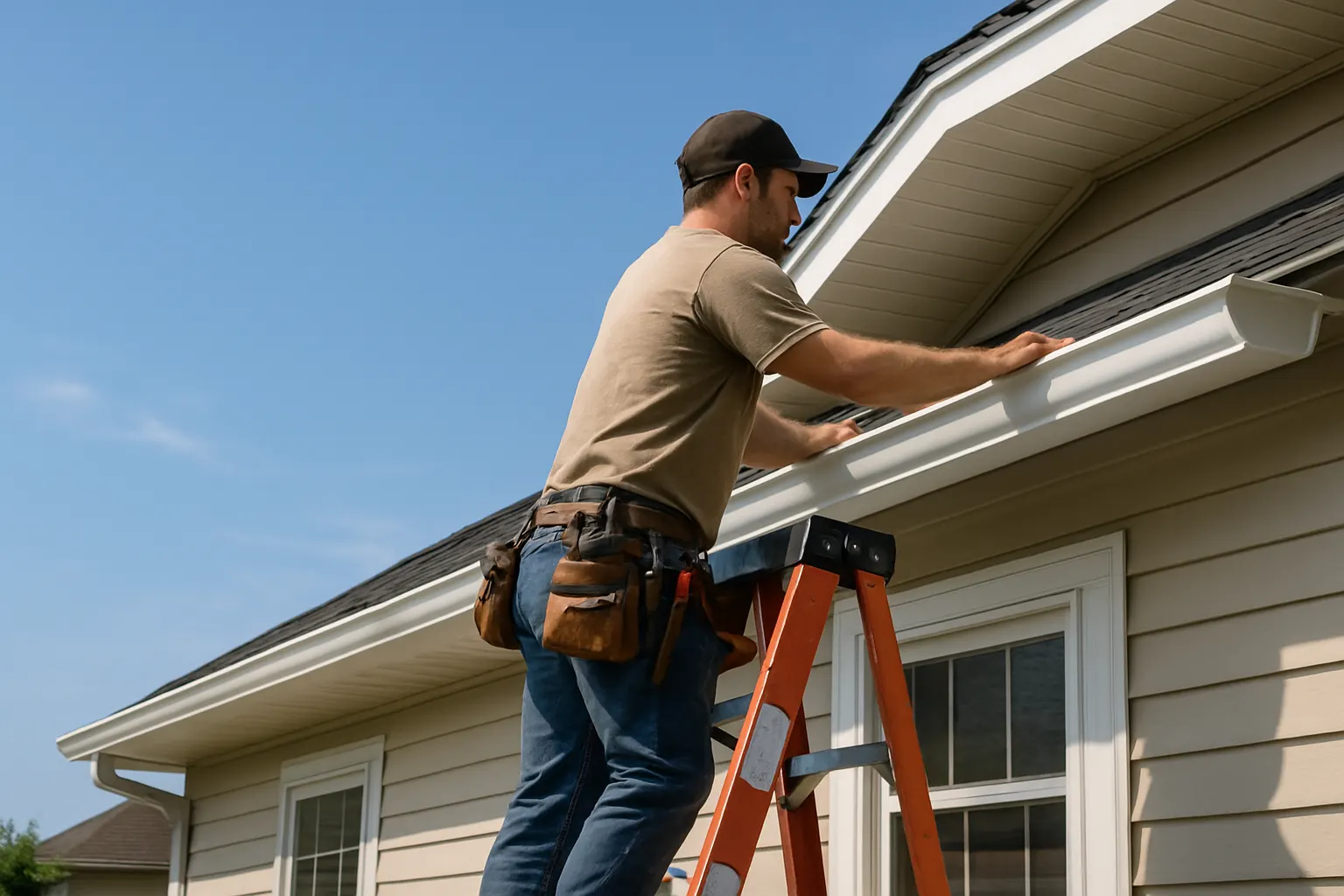
Protect your roofline the right way
Get an instant estimate on gutters and roofing, then we confirm on a free visit.
Gutter guards get pitched as a “never clean your gutters again” solution, and that’s oversold; the honest answer is more nuanced and depends heavily on your property’s tree cover, your gutter’s condition, and which type of guard you’re comparing. This guide breaks down what gutter guards actually cost in 2026, which types perform best, and the specific situations where they’re clearly worth it versus where the payoff is less certain.
What the data shows
In This Old House’s 2025 survey of 1,000 U.S. homeowners, 94% reported being satisfied with how effectively their gutter guards blocked debris, and nearly 30% said they never had to clean their gutters again after installing them. (This Old House, 2025 Gutter Guard Survey)
Build My Estimate | Call (614) 382-0000
The short answer
Gutter guard installation, across all types, generally runs about $6 to $13 per linear foot installed, which works out to roughly $650 to $2,450 for a typical home, with an average project landing around $1,520. They’re worth it primarily for homes with significant nearby tree cover and gutters that clog often, where guards can save $120 to $500 a year in cleaning costs and meaningfully reduce water-damage risk from overflowing, clogged gutters. They’re a weaker value for homes with minimal tree cover and gutters that rarely clog in the first place, since there’s less problem to solve. Even with gutter guards installed, cleaning roughly once every two years is still recommended, they reduce maintenance, they don’t eliminate it.
What gutter guards cost by type, 2026 market data
| Type | General 2026 cost (150 linear feet) |
|---|---|
| Plastic screen | ~$80 to $200 |
| Foam inserts | ~$200 to $400 |
| Metal mesh screens | ~$150 to $600 |
| Vinyl grid | ~$150 to $600 |
| Reverse curve (surface tension) | ~$550 to $1,000 |
| Full surface tension covers | ~$600 to $1,200 |
| Gutter brushes | ~$400 to $500 |
| Micro-mesh screens | ~$1,000 to $1,350 |
These are general 2026 market ranges for context, not a Transit & Flow Group quote. Your actual cost depends on your home’s linear footage of gutter, roof pitch and accessibility, and the guard type you choose, confirmed through an on-site assessment.
What each type actually does
Plastic screen and foam inserts sit at the low end of both cost and performance. They block larger debris, leaves and twigs, reasonably well but tend to let smaller debris, pine needles and seed pods, through, and foam inserts in particular can become a growth medium for moss or small plants over time if not periodically checked.
Metal mesh and vinyl grid guards offer a meaningful step up in debris-blocking performance for a moderate cost increase, and are a common middle-ground choice for homes with moderate tree cover.
Reverse curve (surface tension) guards use the physics of water’s surface tension to pull water into the gutter while directing debris to fall off the edge; they perform well in heavier rain but can be less effective in a lighter drizzle where water doesn’t have enough force to curve into the gutter channel.
Micro-mesh screens sit at the top of the cost range and are generally the best-performing option for blocking fine debris, pine needles, small seeds, roof grit, that other guard types let through, making them the strongest choice for homes under heavy pine or similarly fine-debris tree cover.
Gutter brushes, cylindrical bristle inserts, offer a simple retrofit option that catches larger debris on top of the brush where it can be brushed or blown off, though they don’t perform as well against fine debris as mesh options.
When gutter guards are clearly worth it
A few situations make the case for gutter guards straightforward. Homes with significant overhanging tree cover, especially oak, maple, or similar leaf-heavy species close to the roofline, generate enough seasonal debris that gutters clog multiple times a year without guards, and the annual cleaning cost this creates adds up quickly, commonly $120 to $500 a year in professional cleaning, well within the range guards can offset over a few years. Homes with a two-story or steep-pitch roof, where gutter cleaning is a genuine fall-risk task rather than a quick ladder job, get real safety value from guards beyond the pure cost math, since reducing how often anyone needs to climb up there at all has a value that doesn’t show up on a spreadsheet. Homes that have experienced ice dam problems, where clogged gutters have contributed to water backing up under roof shingles in winter, benefit from guards as one part of a broader ice dam prevention approach, alongside attic insulation and ventilation improvements. And homes where clogged, overflowing gutters have already caused fascia rot, foundation splashback, or basement moisture issues have a direct, demonstrated problem that guards specifically address by keeping water flowing through the gutter system as designed instead of overflowing at clog points.
When the value is less clear
Gutter guards make less financial sense in a few situations. A home with minimal nearby tree cover, few or no large trees within dropping distance of the roof, may already have gutters that clog rarely, in which case there’s limited debris problem for a guard to solve, and the upfront cost may outlast its own payback period. A home with an aging gutter system that needs replacement soon regardless is often better served by replacing the gutters first (potentially with a guard-compatible design) rather than installing guards on a system that’s near the end of its life anyway. And a homeowner who already has a reliable, inexpensive cleaning routine in place, whether DIY or a low-cost service, may find the guard investment doesn’t meaningfully beat the cost of continuing that existing routine, particularly for a single-story home where cleaning isn’t a safety concern.
What gutter guards don’t do
It’s worth being direct about the limits here, since overselling gutter guards is common in the industry and it undermines trust when a homeowner discovers the gap later. Guards do not eliminate gutter cleaning entirely; even the best-performing micro-mesh systems still need a check roughly every one to two years to clear whatever fine debris does get through and to confirm nothing has shifted or clogged at a seam or corner. Guards do not fix an undersized or poorly pitched gutter system; if your gutters are already too small for your roof’s water volume or don’t have correct pitch toward the downspouts, a guard doesn’t solve that underlying design problem. And guards do not eliminate ice dam risk on their own; they’re one contributing factor among several (attic insulation, ventilation, roof design) in a broader ice dam prevention approach, not a standalone fix.
The Central Ohio factor
Central Ohio’s mix of mature tree canopy in established neighborhoods and newer, more open subdivisions makes this a genuinely different calculation depending on where you live. Older neighborhoods with decades-old oak and maple canopy, common across much of Columbus’s older suburbs and inner-ring communities, generate heavy seasonal leaf drop that makes guards a strong practical case. Newer developments with younger, smaller trees generate meaningfully less debris, at least for the next decade or two, which shifts the math toward a lower-cost guard type or simply continuing a normal cleaning schedule. Central Ohio’s winter freeze-thaw cycles also make clogged gutters a meaningful contributor to ice dam formation, since trapped water and debris freezing at the gutter edge is part of how ice dams get started, giving homeowners in this climate an additional reason beyond leaf season to keep gutters clear one way or another.
The installation process, and why professional installation matters
Gutter guard installation is often marketed as a simple DIY project, and for a small, easily accessible single-story home with basic snap-in guards, that can be true. For most homes, though, professional installation matters more than the marketing suggests. A technician first inspects your existing gutters for damage, sagging, incorrect pitch, or loose fasteners, since installing guards over an already-compromised gutter system just hides problems that will get worse underneath the guard rather than solving anything. Correct alignment matters more than it looks; a guard installed at a slightly wrong angle can direct water past the gutter entirely rather than into it, effectively making the gutter useless while looking installed correctly from the ground. Fastening method matters too, guards attached with an inadequate number of fasteners or the wrong fastener type for your roofing material can loosen or blow off in Central Ohio’s seasonal wind events, becoming both an ineffective guard and a separate repair. And working at height on a ladder against a gutter edge carries real fall risk that a professional crew is equipped and insured to manage safely, which is a meaningful part of what you’re paying for beyond the guard material itself.
Comparing gutter guards to alternatives
Gutter guards aren’t the only way to manage gutter debris, and it’s worth understanding the alternatives before committing. Regular professional cleaning, typically scheduled once or twice a year depending on tree cover, is the lowest upfront-cost option and requires no permanent modification to your gutters, though the ongoing annual cost adds up over the years you own the home and the fall-risk factor doesn’t go away. Gutter covers that are removable rather than permanently installed offer a middle option, letting a homeowner choose seasonally whether protection is in place, though they require someone to actually do the removing and reinstalling, which is its own recurring task. Larger-capacity gutters, sometimes installed as part of a full gutter replacement, can reduce clogging simply by giving debris more room before it causes a blockage, though this addresses volume rather than debris type and doesn’t eliminate the need for guards or cleaning on a heavily wooded property. For most Central Ohio homes with meaningful tree cover, a combination approach, quality guards plus a periodic check rather than full cleaning, tends to deliver the best balance of upfront cost, ongoing maintenance, and safety.
Signs your current gutters need attention before adding guards
If you’re considering guards, it’s worth checking your existing gutter system’s condition first, since guards installed over a failing system just delay a problem rather than preventing one. Watch for visible sagging or pulling away from the fascia board, which indicates the gutter’s fasteners or the fascia itself may already be compromised. Look for water marks or staining on the fascia board beneath the gutter, a sign water has been overflowing or running behind the gutter rather than through it. Check for granules from asphalt shingles accumulating heavily in the gutter, which is normal in modest amounts but can indicate a gutter that isn’t being cleaned often enough or a roof shedding more than usual. And look at your downspouts for consistent water flow during rain; a downspout that isn’t flowing despite visible water in the gutter above it usually means a clog already exists at the transition point, exactly the kind of existing problem a guard installed on top of it won’t resolve. Any of these signs are worth addressing, cleaning, resealing, or in some cases partial replacement, before or as part of a guard installation, not after.
Getting a real number for your home
Use an on-site assessment to get an accurate linear footage measurement and a guard-type recommendation suited to your specific tree cover, roof pitch, and gutter condition. We don’t quote a firm final price without seeing your home’s actual gutter run and access requirements, since linear footage and roof complexity vary enough house to house to make a generic online number unreliable.
Doing the payback math for your own home
Because the “worth it” answer genuinely depends on your specific property, it helps to run the numbers yourself rather than relying on a generic rule of thumb. Start with what you currently pay for gutter cleaning annually, or what you’d pay a professional if you currently do it yourself and want to stop; multiply that by the number of years you plan to stay in the home. Compare that total against the installed cost of the guard type that fits your tree cover and gutter condition. For a home with heavy tree cover paying $300 to $500 a year for cleaning and planning to stay put for five-plus years, even a higher-end micro-mesh system at $1,000 to $1,350 pays for itself within three to five years and continues saving money after that. For a home with light tree cover paying closer to $120 to $150 a year, or one where the homeowner already handles cleaning inexpensively, the payback period stretches out much further, and the case weakens accordingly, particularly if a move is anticipated in the next few years and the investment won’t be around long enough to pay off. Safety value, avoiding ladder work altogether on a two-story or steep-pitch home, is real but doesn’t show up in this math directly; it’s worth weighting separately based on your own comfort with height work and how often your current routine actually requires it.
Frequently asked questions
Do gutter guards really stop all cleaning?
No. Even high-performing micro-mesh guards still need periodic checking, generally every one to two years, to clear fine debris and confirm nothing has clogged at a seam or downspout entry. Guards reduce cleaning frequency significantly; they don’t eliminate it.
What’s the best gutter guard for a home with a lot of pine trees?
Micro-mesh screens generally perform best against fine debris like pine needles, which slip through wider mesh and screen options more easily. It’s a higher upfront cost but typically the right call for heavy pine coverage specifically.
Can gutter guards cause ice dams?
Guards themselves don’t cause ice dams, but a guard installed over a gutter system with existing ice dam risk factors, poor attic insulation or ventilation, doesn’t fix those underlying causes. Guards are one piece of ice dam prevention, not a complete solution on their own.
How long do gutter guards last?
Lifespan varies significantly by type and material quality; metal mesh and micro-mesh systems generally outlast plastic screen and foam insert options. Ask about warranty terms for your specific guard choice when you request an estimate.
Are gutter guards worth it on a single-story home with few trees?
This is the weakest case for guards financially. With minimal tree debris and easy, low-risk access for cleaning, the ongoing maintenance a guard would save is limited, and a normal periodic cleaning routine may be the more cost-effective choice.
See if gutter guards make sense for your home
Build a preliminary online estimate, or call (614) 382-0000 to schedule an assessment. See our gutter guard installation page for what’s included.
Reviewed by the Transit & Flow Group service team. Last reviewed July 2026. Cost figures reflect general 2026 market data and are not a Transit & Flow Group quote; your price is confirmed through an on-site assessment.
Sources for general market cost context:
– Angi, “How Much Does Gutter Guard Installation Cost? (2026 Data)”: https://www.angi.com/articles/cost-gutter-guards-worth-it.htm
Frequently Asked Questions
Are gutter guards worth it?
For most Central Ohio homes with mature trees, yes. Quality gutter guards cut cleaning frequency and help prevent clogs, ice dams, and water damage to your foundation.
Do gutter guards eliminate cleaning entirely?
They greatly reduce it, but occasional maintenance may still be needed depending on the guard type and surrounding trees.
How much do gutter guards cost?
Cost depends on the length of your gutter runs and the guard system chosen. We provide a free, measured estimate.
More Resources
- Contractor Registration and Permits in Central Ohio
- Do You Need a Permit? A Central Ohio Home Improvement Guide
- Roof Replacement Cost in Central Ohio (2026 Guide)
- Signs You Need a Sump Pump: A Central Ohio Homeowner’s Guide
- Tank vs Tankless Water Heater in Central Ohio: How to Choose in 2026
- The Facilities Manager’s Guide to Vendor Consolidation
- Tub to Shower Conversion Cost: A 2026 Central Ohio Guide
- Why Is My Drain Backing Up? How to Tell What’s Really Wrong