
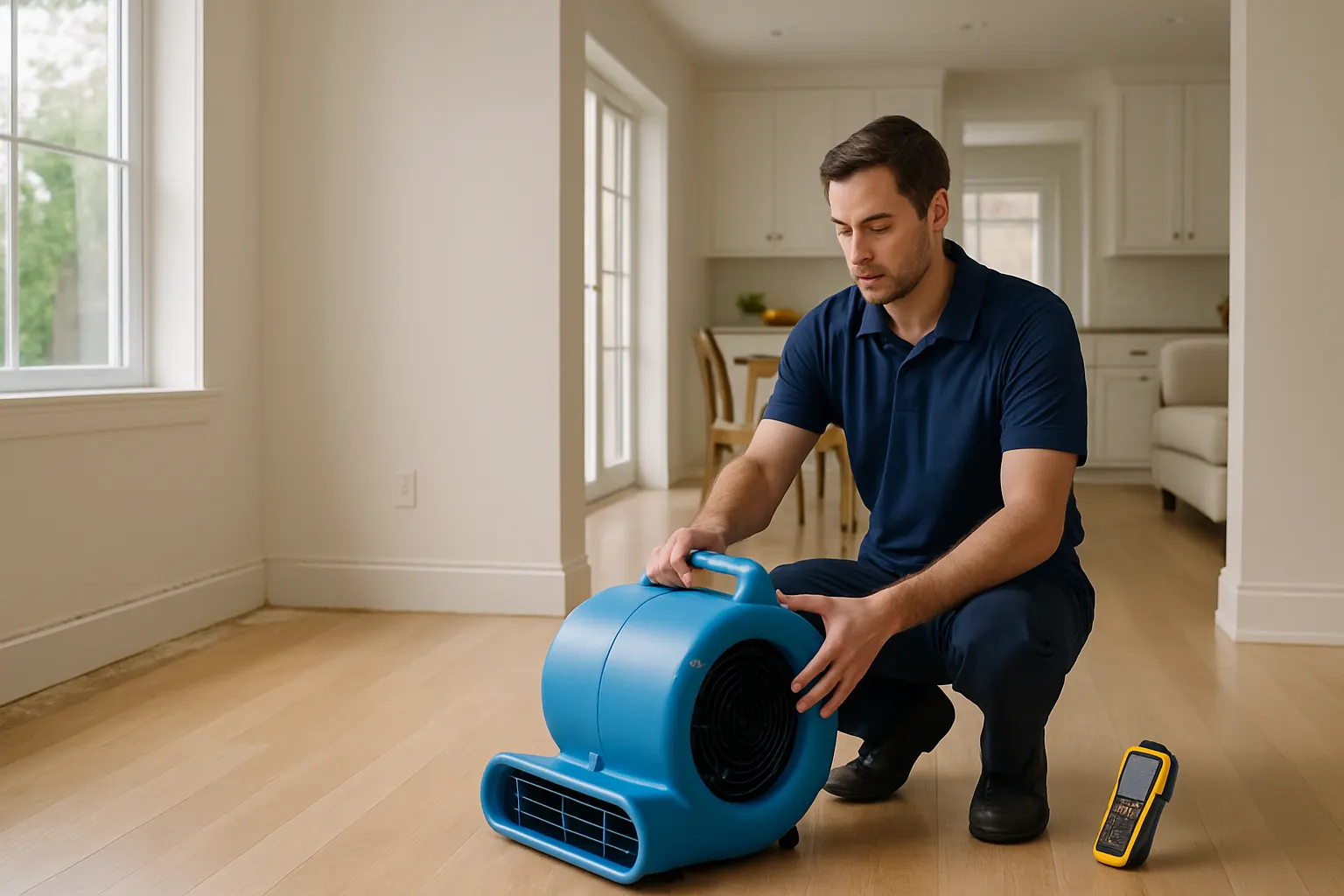
Temporary Protection in Columbus, Ohio
Transit & Flow Group installs temporary containment and protective coverings after fire, storm, or water damage, plastic sheeting to isolate a damaged area, protective floor and furniture coverings, and moisture barriers, so the rest of your home and your belongings stay protected while repairs are pending. This is non-structural protective work, not bracing a damaged structure and not roof tarping. Describe your situation and photos in the Estimate Builder for a preliminary online estimate.
Transit & Flow Group installs temporary containment and protective coverings after fire, storm, or water damage, plastic sheeting to isolate a damaged area, protective floor and furniture coverings, and moisture barriers, so the rest of your home and your belongings stay protected while repairs are pending. This is non-structural protective work, not bracing a damaged structure and not roof tarping. Describe your situation and photos in the Estimate Builder for a preliminary online estimate.
Is this what you’re seeing?
Temporary Protection fits situations where the damage itself may already be contained or being addressed, but the rest of the property and its contents are at risk while work is underway. Common reasons Central Ohio homeowners call:
- Dust, debris, or odor from a damaged area spreading into the rest of the home during an active restoration project.
- Furniture, flooring, or belongings near a damaged area that need covering to keep them from further water, dust, or debris exposure.
- An opened wall or ceiling from mitigation or assessment work that needs a containment barrier until repair begins.
- A damaged room that needs to be sealed off from the rest of a home or business so daily life or operations can continue elsewhere.
- A moisture-prone area that needs a temporary barrier while permanent repairs are scheduled.
This page covers protecting the property and its contents, not stabilizing a compromised structure and not covering a damaged roof. If a wall, floor, or roof structure is actually unsafe and needs bracing or shoring, that’s our Property Stabilization page. If the immediate problem is a damaged roof that needs a tarp to stop water intrusion, that’s our Emergency Tarping page. Temporary Protection, Property Stabilization, and Emergency Tarping often run on the same project, but each solves a different problem: contents and containment, structure, and roof coverage, respectively.
How pricing works
Temporary Protection is priced by scope, built from an on-site assessment. Site conditions after an emergency vary too much to price accurately from a phone description alone, so an on-site look is standard here:
- Area and complexity of containment drives most of the cost: sealing off a single room is a smaller scope than isolating multiple areas or an entire floor.
- Materials used vary by situation: plastic sheeting and zip walls for containment, moisture barriers for damp areas, and protective coverings for floors, furniture, and fixtures.
- Duration of protection needed matters too. A short containment during a few days of active work is priced differently than protection that needs to hold for a longer repair timeline.
- Access and site conditions affect labor time, particularly in occupied homes or businesses that need to keep functioning around the containment.
Enter your project details and photos in the Estimate Builder for a preliminary online estimate. Final scope and price subject to verification on site. As general market context, not a Transit & Flow Group quote, HomeGuide’s 2025 data puts containment barrier and dust protection setup for restoration projects at roughly $300 to $1,500 depending on the size of the area and materials used. If insurance is involved, Transit & Flow Group is not a public adjuster and does not negotiate your claim on your behalf, though our documentation supports it.
What’s included
- An on-site assessment of what needs to be protected and for how long
- Plastic sheeting and containment barriers to isolate a damaged area from the rest of the property
- Protective floor and furniture coverings in areas near active work
- Moisture barriers where dampness could spread to unaffected areas
- Photo documentation useful for insurance claims
- A written scope of what’s protected and for how long
What’s not included
- Structural bracing or shoring of a compromised wall, floor, or roof; see our Property Stabilization page
- Roof tarping to stop active water intrusion from a damaged roof; see our Emergency Tarping page
- Moisture assessment and mapping the extent of existing water damage; see our Moisture Assessment page
- The repair or reconstruction work itself, once protection is in place
- Mold remediation or asbestos and lead paint abatement; Transit & Flow does not perform these and refers to a separately qualified specialist if suspect conditions are found
- Cleaning or restoration of items already damaged before protection was installed
Central Ohio context
Restoration projects in Central Ohio often stretch over days or weeks once permits, material lead times, and insurance documentation are factored in, and during that stretch a property has to keep functioning around the damage. In an occupied home in neighborhoods like Clintonville or Bexley, that usually means sealing off a damaged room so a family can keep living in the rest of the house without dust, debris, or lingering odor spreading. In a commercial space, effective containment can be the difference between staying open during repairs and having to close entirely.
Central Ohio’s humid summers and freeze-thaw winters also mean a damaged, opened-up area is vulnerable to secondary moisture problems if it’s left exposed, which is why moisture barriers are often part of the protection scope even when the original damage wasn’t water-related. A fire-damaged room with an opened ceiling, for instance, still needs protection from rain or humidity finding its way in before repairs are complete.
Our process
- Describe your situation online. What’s happening, what needs protecting, and photos go into the Estimate Builder for a preliminary online estimate.
- On-site assessment. We evaluate what needs containment or covering and for roughly how long, based on your repair timeline.
- Protective work installed. Containment barriers, floor and furniture coverings, and moisture barriers set up around the affected area.
- Documentation. Photos and a written scope of what’s protected, useful for your insurance claim.
- Coordination through completion. Protection stays in place and is adjusted as needed until the repair or reconstruction work is finished.
Services completed by appropriately qualified professionals where required.
More Restoration and Emergency Response
- Fire & Smoke Damage Restoration in Grove City, OH
- Fire & Smoke Damage Restoration in Hilliard, OH
- Fire & Smoke Damage Restoration in Lewis Center, OH
- Fire & Smoke Damage Restoration in Marysville, OH
- Fire & Smoke Damage Restoration in New Albany, OH
- Fire & Smoke Damage Restoration in Pickerington, OH
- Fire & Smoke Damage Restoration in Powell, OH
- Fire & Smoke Damage Restoration in Reynoldsburg, OH