
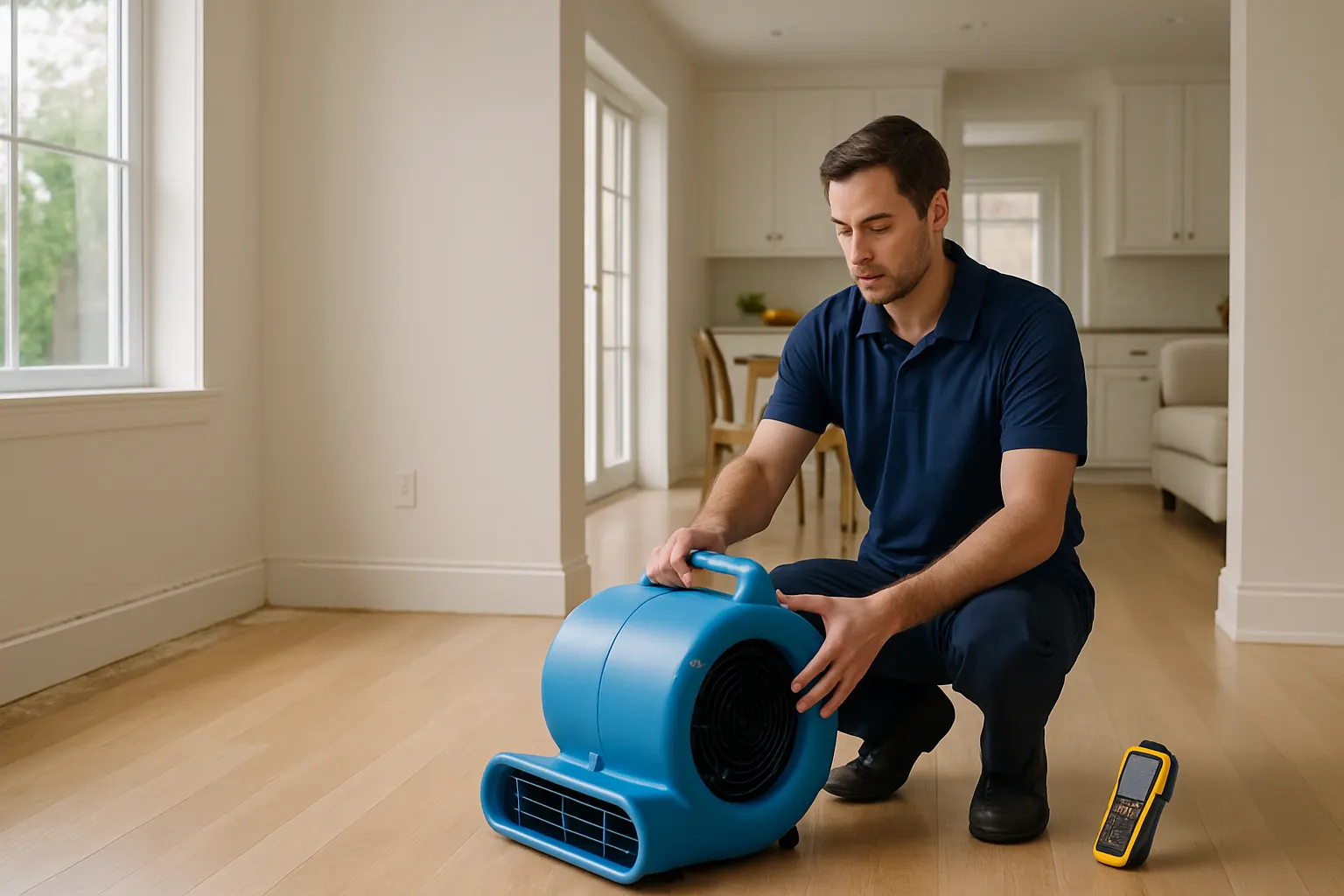
Moisture Assessment in Columbus, Ohio
Transit & Flow Group’s Moisture Assessment is a flat-fee, whole-structure inspection that maps where water has traveled through a home, walls, ceilings, floors, and framing, using moisture meters and a visual inspection, with findings in a written report. This is diagnostic-fee pricing, not a bundle of pre-scoped repairs: you pay for the assessment and documentation itself, whether or not any restoration work follows. Enter your address and details in the Estimate Builder for a preliminary online estimate.
Transit & Flow Group’s Moisture Assessment is a flat-fee, whole-structure inspection that maps where water has traveled through a home, walls, ceilings, floors, and framing, using moisture meters and a visual inspection, with findings in a written report. This is diagnostic-fee pricing, not a bundle of pre-scoped repairs: you pay for the assessment and documentation itself, whether or not any restoration work follows. Enter your address and details in the Estimate Builder for a preliminary online estimate.
Is this the right service for you?
A Moisture Assessment fits a homeowner who needs to know the true extent of water damage before anyone starts cutting into walls or pricing a rebuild. Common situations:
- You just had a pipe burst, roof leak, or appliance overflow and need to know how far the water actually traveled behind walls, under floors, or into a ceiling cavity, not just what’s visible.
- An insurance claim is underway or about to start, and you need a documented, professional read on the extent of moisture damage to support the claim.
- You smell must or see staining in a wall or ceiling and want to know whether it’s active moisture or old, already-dry evidence of a past event.
- A restoration project is starting and the contractor doing the rebuild needs a moisture map first, to know exactly what has to come out and what can stay.
- You’re buying, selling, or simply concerned about a property with a history of water intrusion and want an independent, documented assessment.
This is a whole-structure assessment, not a plumbing or sump-system diagnostic. If your concern is specifically a sump pump acting up, see our Water Management division’s Sump Pump Diagnostic page, and if you’re trying to figure out why a basement is wet, see that division’s Basement Water Management page. Both focus on the mechanics of a specific system, the pump, the pit, the perimeter drainage. A Moisture Assessment is broader: it’s used after a restoration event, or whenever a homeowner suspects hidden moisture damage anywhere in the home, to map water intrusion in walls, ceilings, and floors so a restoration scope can be built accurately. When a sump or drainage failure turns out to be the actual source, our team coordinates directly with the Water Management division.
How pricing works
A Moisture Assessment is diagnostic-fee pricing, not scope-based ranges like most restoration pages. You pay a flat visit fee for the assessment and the written findings report, whether or not you book any follow-up restoration work with Transit & Flow:
- Flat diagnostic visit fee covers the walkthrough, moisture meter readings at each affected area, photo documentation, and the written findings report. This visit is $249..
- Credit toward booked restoration work. The full $249 fee is credited toward the cost of the work if you book it as a result of the visit..
- What the fee does not include. The fee covers the assessment and report only. Any restoration, drywall, or reconstruction work the findings point to is priced and scheduled as its own separate visit, using that service’s own pricing model.
- No obligation to book with us. The findings report is yours to use however you choose, with Transit & Flow, with your insurer, or with another contractor entirely.
As general market context, not a Transit & Flow Group quote, Angi’s 2026 data puts professional water damage restoration inspection and assessment fees at roughly $150 to $400 for a standalone visit, often credited toward the restoration project if one follows. Enter your address and details in the Estimate Builder for a preliminary online estimate.
What’s included
- A walkthrough of affected and adjacent areas: walls, ceilings, floors, and accessible framing
- Moisture meter readings at each area of concern, mapping where moisture is present and how far it extends
- Photo documentation of every reading and visible sign of damage
- A written findings report identifying the likely extent of the damage and a recommended next step
- Plain-language explanation of what the readings mean, not just numbers on a page
- A note of any mold-suspect conditions found, with a referral to a separately qualified mold remediation specialist if needed
- Yes, a follow-up call is included to walk through the findings at no extra charge.
What’s not included
- Repair or restoration work itself; findings are documented and priced as separate, follow-up visits
- Mold remediation or testing; Transit & Flow does not perform mold remediation, and any mold-suspect material identified during the assessment is disclosed plainly and referred to a separately qualified specialist
- Asbestos or lead paint testing and abatement; in older homes where opening up wet materials could plausibly disturb either, Transit & Flow does not perform abatement and refers that work to a separately qualified specialist if suspect material is found
- Sump pump or drainage system diagnostics; see our Water Management division’s Sump Pump Diagnostic and Basement Water Management pages for those
- Structural engineering evaluation, though our findings flag when one appears warranted
- Insurance claim negotiation; Transit & Flow Group is not a public adjuster and does not negotiate claims on your behalf, though the report is written to be useful documentation for your claim
Central Ohio context
Central Ohio’s mix of humid summers and freeze-thaw winters means moisture that gets into a wall cavity or under a floor rarely stays put or dries on its own schedule. A leak that looked minor on the surface can travel along framing, insulation, and subfloor for feet in every direction before it shows as a stain or a soft spot, which is why a meter-based assessment matters more than a visual guess. This is especially true after an active restoration event, a burst pipe, storm-driven roof leak, or appliance overflow, where visible damage is often a small fraction of what moisture meters find.
Older homes in Clintonville, German Village, and Bexley add another layer, since plaster-and-lath construction and older insulation types hold and move moisture differently than modern drywall assemblies, and materials from those eras are more likely to raise asbestos or lead paint questions once something gets opened up. Newer homes in Dublin, New Albany, and Lewis Center are usually more straightforward to read, but a moisture map still matters for building an accurate restoration scope.
Our process
- Enter your details online. Address, what happened, and any photos go into the Estimate Builder for a preliminary online estimate.
- Book your visit online or by calling (614) 382-0000.
- On-site assessment. We take moisture meter readings across affected and adjacent areas and document everything with photos.
- Findings report delivered. A written, plain-language report mapping the extent of moisture and a recommended next step.
- Decide your next step. Book any recommended restoration work as its own visit, with Transit & Flow or elsewhere, or use the report for your insurance claim or your own records.
Services completed by appropriately qualified professionals where required.