
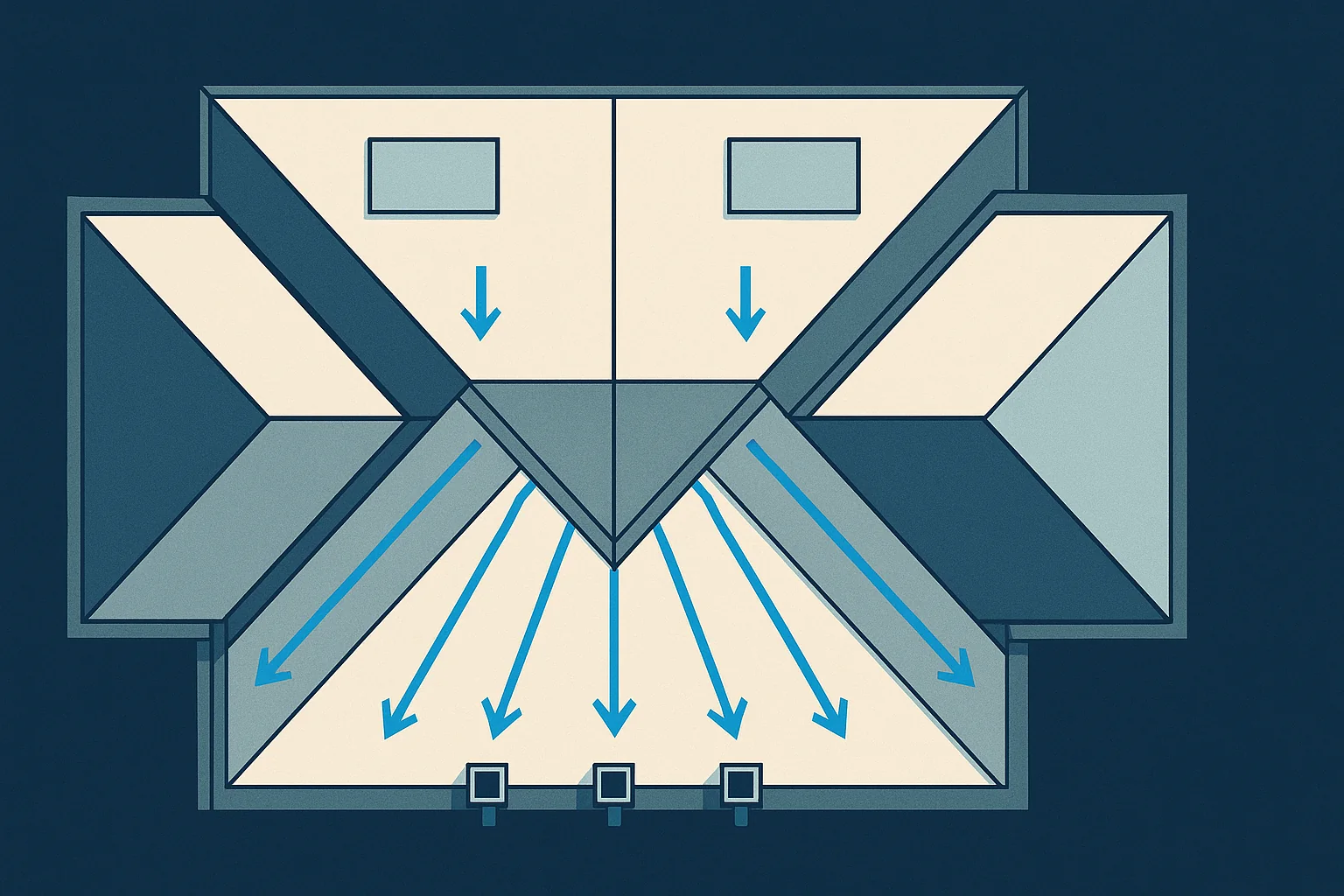

Late August in Central Ohio brings some of the most violent weather of the year, and every one of those storms is a threat to the wiring, panels, and electronics inside your home or building. As a construction manager who has walked hundreds of properties after a storm, I can tell you that electrical surge protection central Ohio owners invest in is the cheapest insurance they will ever buy. A single lightning event or grid fluctuation can quietly cook a furnace control board, an HVAC compressor, or an entire rack of office equipment before you ever smell the smoke.
In This Guide
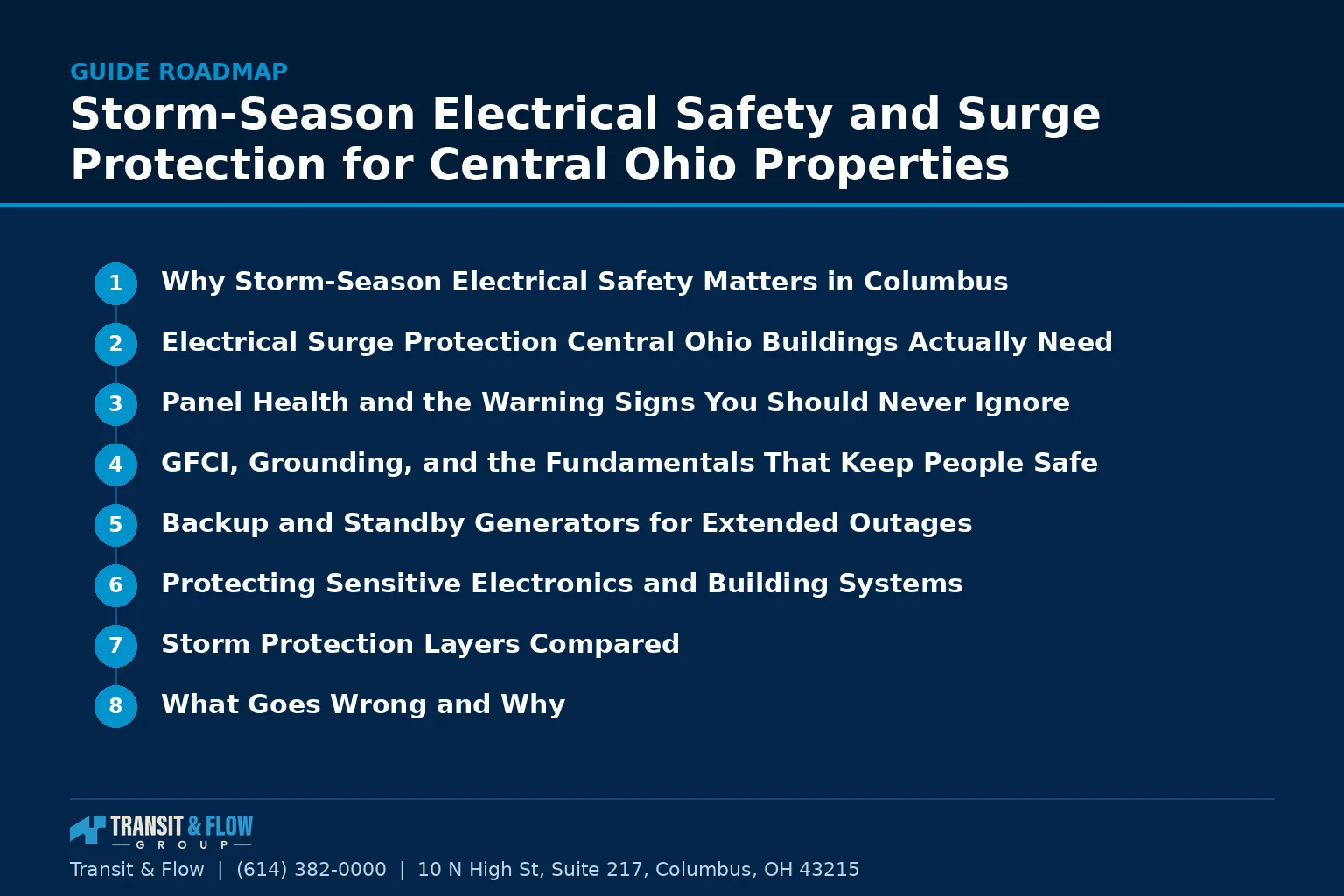
- Why Storm-Season Electrical Safety Matters in Columbus
- Electrical Surge Protection Central Ohio Buildings Actually Need
- Panel Health and the Warning Signs You Should Never Ignore
- GFCI, Grounding, and the Fundamentals That Keep People Safe
- Backup and Standby Generators for Extended Outages
- Protecting Sensitive Electronics and Building Systems
- Storm Protection Layers Compared
- What Goes Wrong and Why
- Build a Storm-Ready Electrical Plan With Transit & Flow
- Frequently Asked Questions
- Sources
- Related Transit & Flow Services
This guide walks through what actually protects people and equipment when the sky turns green over Columbus, Dublin, Westerville, and the surrounding suburbs. It is written from the field, not the sales counter, so you can make decisions that hold up long after the crew leaves.
Why Storm-Season Electrical Safety Matters in Columbus
Central Ohio sits in a corridor where warm Gulf air collides with cooler fronts, and August is peak season for the fast, powerful thunderstorms that follow. Those storms do two things to your power. First, direct or nearby lightning can push tens of thousands of volts into a service line in a fraction of a second. Second, when the grid trips and restores, or when large equipment on the same feeder cycles, it sends smaller surges down the line. Strong storm electrical safety Columbus practices account for both, because it is usually the repeated small surges, not the dramatic lightning strike, that shorten the life of your electronics and appliances.
Electrical Surge Protection Central Ohio Buildings Actually Need
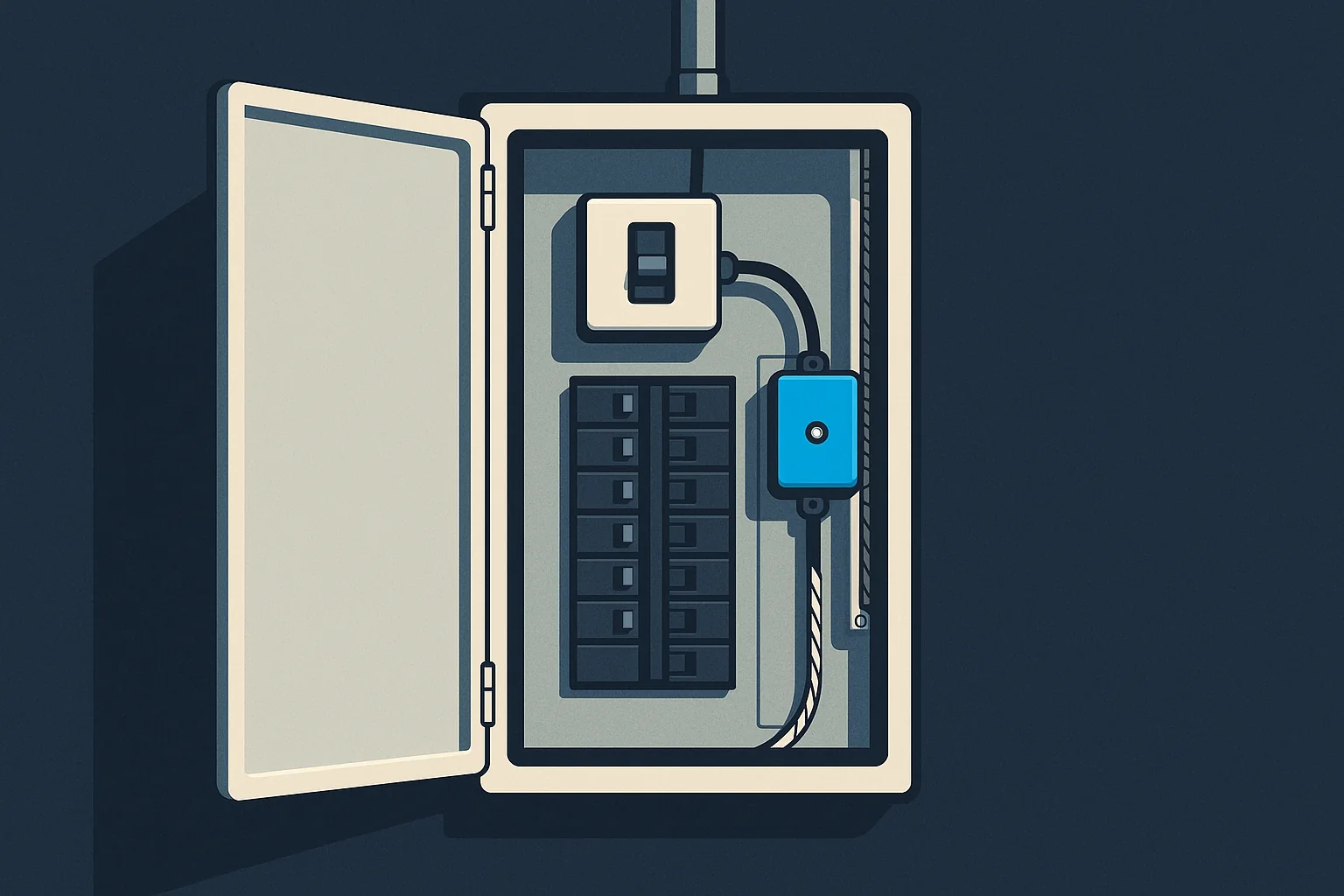
The plug-in power strip under your desk is not real protection. Meaningful defense starts at the electrical panel with a whole home surge protector Ohio electricians install directly at the service entrance. This device clamps incoming voltage spikes before they ever reach a circuit, protecting your HVAC system, water heater, well pump, and hardwired appliances that no power strip can cover. For the best results, we recommend a layered approach.
- Service-level protection: a Type 2 surge protective device at the main panel to absorb the largest transients.
- Point-of-use protection: quality surge strips or receptacles for computers, TVs, and networking gear.
- Subpanel coverage: added protection for detached garages, workshops, or light commercial suites on their own panels.
That layered strategy is the backbone of dependable electrical surge protection central Ohio properties actually need, and it is affordable relative to the equipment it defends.
Panel Health and the Warning Signs You Should Never Ignore
A surge device is only as good as the panel it is mounted in. During storm season we see a lot of tired equipment, and an aging or overloaded panel is a genuine fire risk. Watch for breakers that trip repeatedly, warm or discolored panel covers, a persistent burning smell, buzzing sounds, or flickering lights across multiple rooms. Homes in Upper Arlington, Worthington, and other established neighborhoods often still run older panels or brands that are known to fail. If your service is undersized for today’s HVAC and EV-charging loads, an electrical panel upgrade is not just about capacity, it is about giving surge protection and modern breakers a safe, code-compliant home to live in.
GFCI, Grounding, and the Fundamentals That Keep People Safe
Surge protection guards your equipment, but grounding and GFCI protection guard the people. A properly bonded grounding system gives fault current and surge energy a safe path to earth, which is exactly what lets your surge device do its job. Ground-fault circuit interrupter protection in kitchens, bathrooms, garages, basements, and all exterior outlets shuts power off in milliseconds when moisture or a fault appears, and storm season is precisely when wet conditions and standing water make that protection critical. If your home in Hilliard, Gahanna, or Grove City still relies on two-prong outlets or lacks GFCI at exterior receptacles, that is a foundational fix worth prioritizing before the next round of storms.
Backup and Standby Generators for Extended Outages
When a strong front knocks out power for hours or days, a standby generator keeps your home livable and your business running. For residential clients, that means the sump pump keeps fighting groundwater, the refrigerator stays cold, and medical equipment stays powered. For light commercial sites in New Albany, Powell, and Pickerington, it can mean the difference between a normal day and lost revenue. A permanently installed standby unit with an automatic transfer switch starts on its own within seconds and isolates your system safely from the grid, protecting utility crews and your own wiring. Pair the generator with surge protection, because the switching events during startup and transfer are themselves a source of transients.
Protecting Sensitive Electronics and Building Systems
Modern homes and buildings are full of delicate circuit boards. Smart thermostats, variable-speed HVAC systems, security and camera systems, networking gear, and commercial point-of-sale equipment all run on low-voltage electronics that a surge will destroy in an instant. The replacement cost of that equipment, plus the downtime, dwarfs the price of doing this right the first time. A coordinated plan that combines panel-level protection, clean grounding, GFCI coverage, and point-of-use devices is the electrical surge protection central Ohio buildings depend on to keep those systems alive through an entire storm season. If you want to go deeper on seasonal readiness across your property, our related guides cover HVAC, plumbing, and building performance for Central Ohio conditions.
Storm Protection Layers Compared
Owners usually call about a single device and assume that one purchase covers the property. It is more useful to see the layers side by side, because each one answers a different failure and none of them substitutes for another. Read the table as a way to frame the conversation with your electrician, not as a specification for your building.
| Layer | What It Guards | Typical Location | Who Determines Suitability |
|---|---|---|---|
| Service-entrance device | Hardwired equipment across the property | At or beside the main panel | Licensed electrician, under the adopted code |
| Subpanel device | Detached garages, shops, separate suites | At the remote panel serving those loads | Licensed electrician, under the adopted code |
| Point-of-use device | Computers, televisions, networking gear | At the receptacle | Owner, per the manufacturer’s instructions |
| Grounding and bonding | The path every other layer depends on | Service equipment and electrodes | Licensed electrician, under the adopted code |
| Standby generator | Continuity through extended outages | Exterior pad and service equipment | Licensed contractor, permitted work |
What Goes Wrong and Why
Most storm-season electrical failures are not mysteries. They follow a short list of patterns that repeat every summer across Franklin, Delaware, and Licking counties, and each one is avoidable with a plan rather than a purchase.
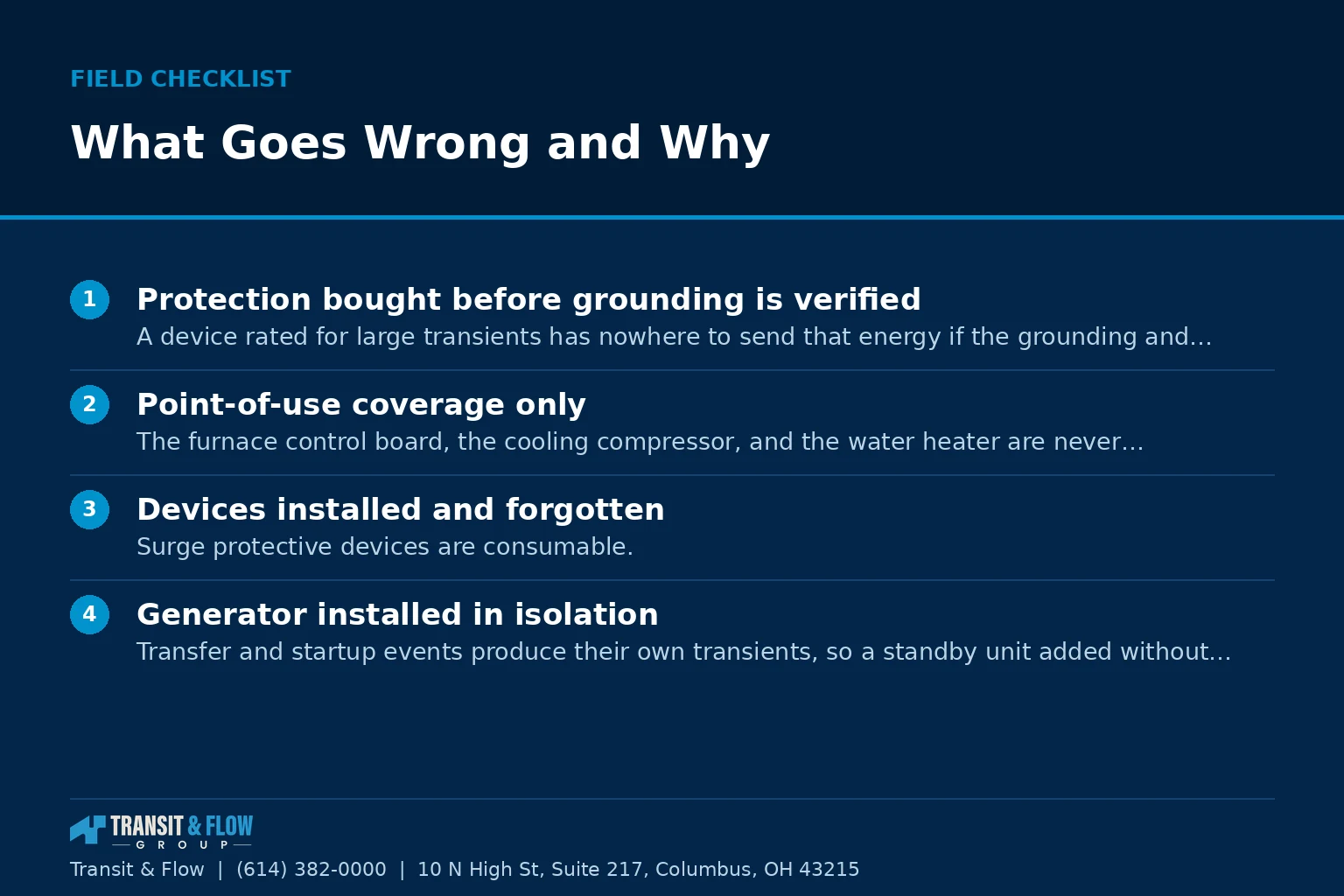
- Protection bought before grounding is verified. A device rated for large transients has nowhere to send that energy if the grounding and bonding system has degraded over the decades. The rating on the carton describes laboratory conditions, not the condition of your service.
- Point-of-use coverage only. The furnace control board, the cooling compressor, and the water heater are never plugged into a strip, so the equipment with the longest replacement lead time is exactly the equipment left uncovered.
- Devices installed and forgotten. Surge protective devices are consumable. They absorb energy over their service life and eventually stop protecting, usually announcing it through a status indicator nobody is watching. Put that indicator on the same walk-through as filter changes.
- Generator installed in isolation. Transfer and startup events produce their own transients, so a standby unit added without coordinated surge protection can become a source of the problem it was bought to solve.
Build a Storm-Ready Electrical Plan With Transit & Flow
You do not have to sort out surge devices, panel capacity, grounding, and generators on your own. Transit & Flow brings OCILB-licensed electrical partners and a genuinely multi-trade team to every property, so one accountable partner handles your electrical safety from the service entrance to the last outlet. Whether you own a single home or manage a portfolio across the Columbus suburbs, we design protection that fits your equipment, your risk, and your budget, and we stand behind the work. See the full list of communities we cover on our service areas page.
Do not wait for the next warning to scroll across your screen. Get an instant estimate right on the Transit & Flow homepage, or call our team at (614) 382-0000 to schedule a storm-season electrical safety assessment. A short visit now can save you thousands and keep your family, tenants, and equipment protected all season long.
Transit & Flow Group coordinates projects and partners with properly licensed and insured specialty contractors when licensing is required, and work is performed under the appropriate permits.
Frequently Asked Questions
Is a plug-in power strip enough to protect a whole house from storm surges?
No. A power strip only covers what is plugged into it, and it does nothing for the hardwired equipment that costs the most to replace, including the furnace, the cooling system, the water heater, and a well pump. This article describes a layered approach that starts with a surge protective device at the service entrance and adds point-of-use devices for electronics. Which device is appropriate for your service, and how it is installed, is a determination for a licensed electrician working to the adopted code and the manufacturer’s published instructions.
What is the difference between service-level and point-of-use surge protection?
They address different parts of the same problem and neither one replaces the other. Service-level protection sits at the main panel and is intended to absorb the largest incoming transients before they reach branch circuits. Point-of-use protection sits at the receptacle and is intended for the electronics plugged into it. A licensed electrician can confirm what your panel will accept and how the two layers should be coordinated on your property.
Do I need a panel upgrade before surge protection can be added?
Sometimes, and the answer depends on the condition and capacity of the equipment you already have rather than on a general rule. A surge protective device has to be installed in a panel that can safely accept it, and older or heavily loaded panels may not qualify. Whether your service is adequate for current heating, cooling, and vehicle-charging loads is an on-site evaluation for a licensed electrician, made under the adopted code and the device manufacturer’s published instructions. Panel work is typically permitted work, so your building department is part of the answer as well.
Which panel warning signs should prompt a call rather than a wait?
This article points to breakers that trip repeatedly, warm or discolored panel covers, a persistent burning smell, buzzing, and lights flickering across multiple rooms. None of those are conditions to diagnose yourself, and none of them have a safe homeowner remedy. Treat any of them as a reason to stop loading the affected circuits and to have a licensed electrician evaluate the equipment. If you smell burning or see heat damage at the panel, treat it as urgent rather than as a scheduling item.
Does a standby generator remove the need for surge protection?
No. The switching and startup events that come with a standby generator are themselves a source of transients, which is why this article recommends pairing the generator with surge protection rather than choosing between them. A permanently installed unit with an automatic transfer switch also has to isolate your system from the grid so utility crews are not exposed while they work. Sizing, placement, and transfer equipment are governed by the manufacturer’s published instructions and the adopted code, and the installation is permitted work for a licensed contractor.
Why does grounding matter if surge protection is already installed?
A surge protective device works by giving excess energy a path away from your circuits, and the grounding and bonding system is what provides that path. If grounding is incomplete or has degraded over the years, the protection may not perform the way its rating suggests. Ground-fault protection is a separate safeguard aimed at people rather than equipment, and it matters most in the wet conditions that arrive with storm season. Verifying grounding, bonding, and ground-fault coverage is work for a licensed electrician under the adopted code.
Sources
- Electrical Safety Foundation International, home electrical safety
- Ready.gov, U.S. Department of Homeland Security, severe weather preparedness
- U.S. Consumer Product Safety Commission, carbon monoxide safety
Related Transit & Flow Services
Every service below is delivered by the same accountable Transit & Flow team, so one call covers the whole property.
- Electrical Services
- Electrical Panel Upgrades
- Standby Generator Installation
- Storm Damage Restoration
- Commercial and Facilities Services
- Property Solutions
Serving Columbus and every community across Central Ohio. See the full service areas map, or get an instant estimate on the Transit & Flow homepage.
About This Guide
Written and edited by Micheal Parker, founder of Transit & Flow Group. Published July 31, 2026. This guide is checked against the agency and code sources listed above, and it is revised when those sources change.
General contractor of record. Micheal Parker holds City of Columbus General Contractor Registration G12064, issued by the Columbus Department of Building and Zoning Services under Transit & Flow LLC and valid through June 30, 2027. Trade work that falls outside the scope of that registration is performed by licensed trade partners, and the responsible license holder is identified before work begins.
Transit & Flow Group, home and commercial services for Columbus and the surrounding Central Ohio communities. Phone (614) 382-0000. Email solutions@transitflowgroup.com. 10 N. High St., Suite 217, Columbus, OH 43215. Contact our team or review the communities we serve.
