
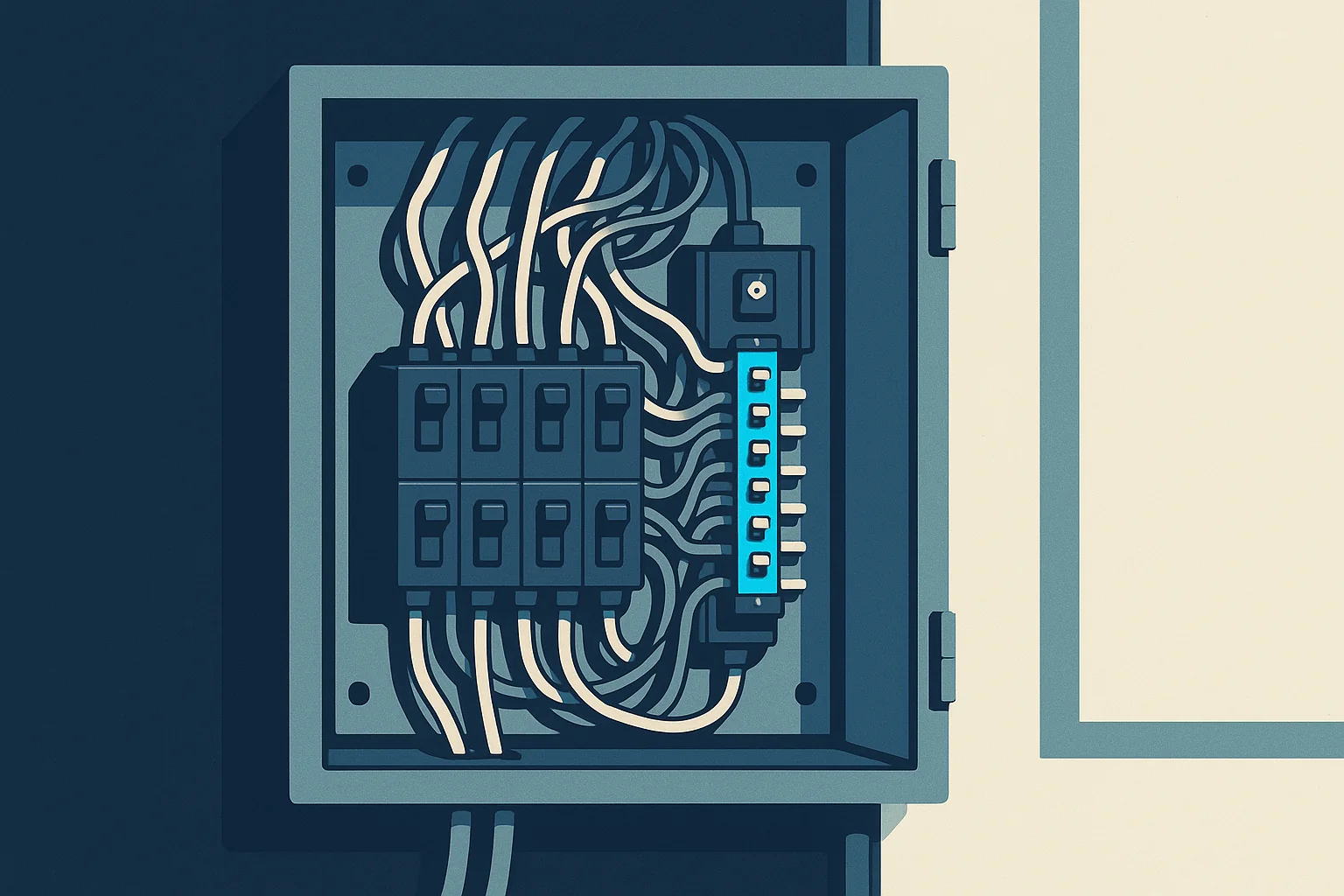

Certain electrical panels installed between the 1950s and the 1990s carry documented performance histories that a home buyer deserves to know about before closing. This guide names those products, explains what the concern actually is in each case, describes how to identify a panel from the outside during a walkthrough, and lays out how to handle the finding during the inspection period when it still has negotiating value. It is part of our electrical panel guide, and it pairs with our article on the signs of an overloaded or outdated panel.
In This Guide
- The Products Worth Knowing By Name
- Adjacent Findings in Older Homes
- Identifying a Panel During a Walkthrough
- Handling the Finding Before You Close
- What This Finding Does Not Mean
- A Short Glossary for the Inspection Report
- Where Transit & Flow Group Fits
- Frequently Asked Questions
Transit & Flow Group coordinates projects and partners with properly licensed and insured specialty contractors when licensing is required.
One boundary before the detail. Everything here is written for identification and decision-making from the outside of the equipment. None of it is instruction to open a panel or perform electrical work. Panel interiors remain energized at the main lugs with the main breaker switched off, and the failure modes are fire and electrocution. Photograph the label, and have a licensed electrician do the rest.
The Products Worth Knowing By Name
These are not the only older panels in Central Ohio housing stock, and they are the ones with enough documented history that a buyer should treat the finding as material rather than cosmetic.
- Federal Pacific Electric, Stab-Lok line. The concern is breakers that may fail to trip on an overload or a short. A breaker that does not trip leaves the wire unprotected, which is the exact condition the device exists to prevent. Widely installed from the late 1950s into the early 1980s.
- Zinsco, also branded Sylvania-Zinsco. The concern is the connection between the breaker and the bus bar. Aluminum bus material and the breaker mounting design can allow heat and deterioration at that junction, and a breaker can appear seated while making a poor connection.
- Challenger. Related concerns around breaker and bus connection performance in certain product lines. Often installed in homes from the 1980s.
- Bulldog Pushmatic. A push-button breaker design with no toggle. These generally have no main breaker in the panel, they age poorly in their trip mechanisms, and replacement parts are effectively a salvage market at this point.
- Fuse panels of any brand. Not defective by definition, and almost always undersized for how a household actually uses power now. The practical risks are oversized fuse replacement and the absence of modern fault protection.
Being honest about the state of the evidence matters here. These products were listed and installed legally, and not every unit of every one of them has failed. What is documented is a rate of concern high enough that home inspectors flag them routinely and that some insurers ask about them. That is the standard a buyer should apply: this is a known-risk product that deserves evaluation, not a certainty of failure.
Adjacent Findings in Older Homes
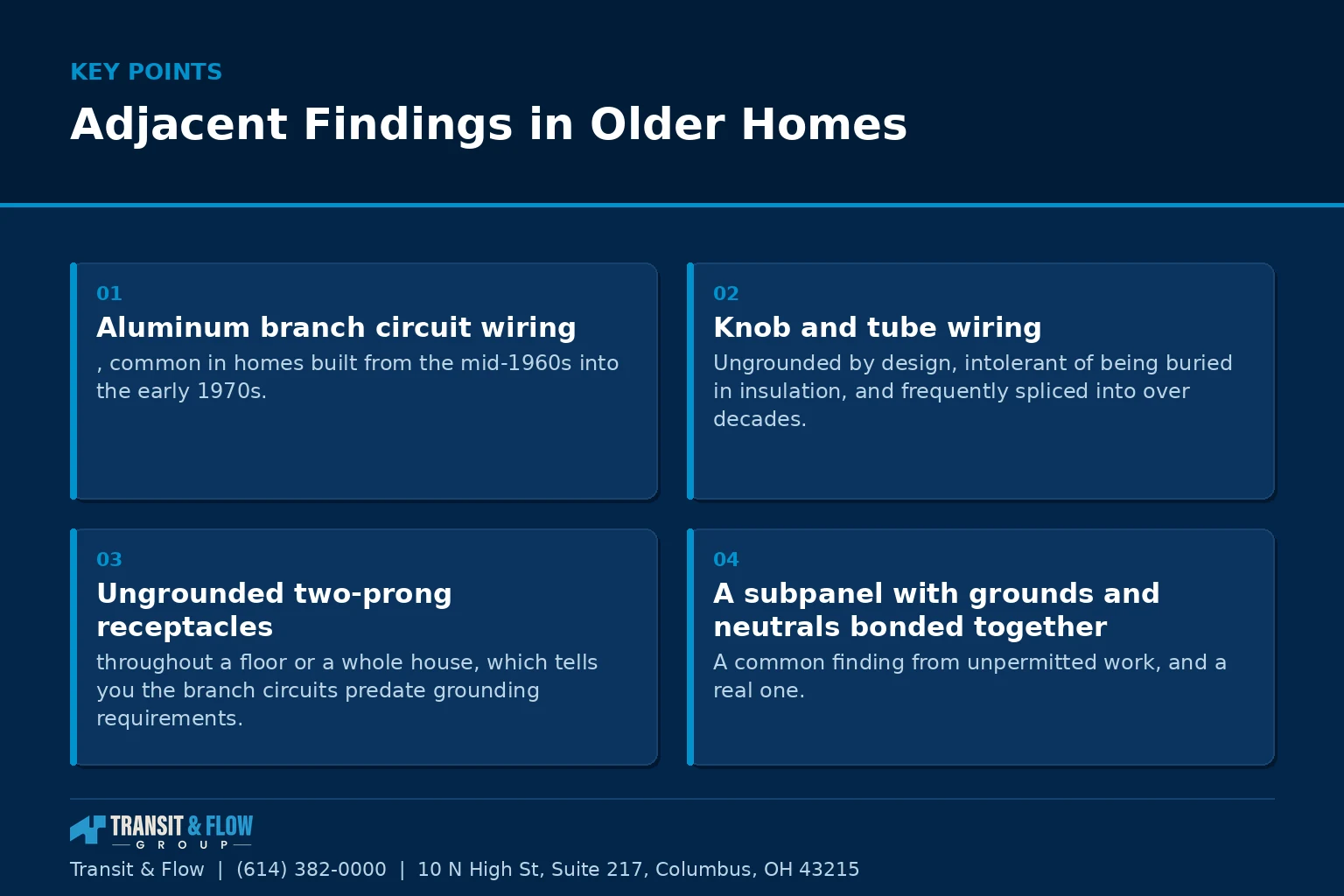
- Aluminum branch circuit wiring, common in homes built from the mid-1960s into the early 1970s. The concern is connection performance at receptacles, switches, and splices rather than the wire itself. There are recognized remediation methods, and this is a specialist conversation.
- Knob and tube wiring. Ungrounded by design, intolerant of being buried in insulation, and frequently spliced into over decades. Insurers often ask about it directly.
- Ungrounded two-prong receptacles throughout a floor or a whole house, which tells you the branch circuits predate grounding requirements.
- A subpanel with grounds and neutrals bonded together. A common finding from unpermitted work, and a real one.
- Double-tapped breakers, where two conductors land on a breaker not rated for two. Usually the fingerprint of circuits added without capacity.
- No visible permit history for electrical work in a home that clearly has had some. Undocumented work is the category that produces surprises.
Identifying a Panel During a Walkthrough
- Find the panel. In Central Ohio housing stock it is usually in the basement, an attached garage, a utility closet, or on an exterior wall near the meter.
- Photograph the closed panel straight on, including the full door and any visible labeling.
- Open only the outer door, the one homeowners are meant to open, and photograph the directory and the face of the breakers. Do not remove the cover held on by screws.
- Look for a brand name on the door, on the deadfront, or on a label inside the door. Federal Pacific panels often say Stab-Lok. Pushmatic panels are unmistakable because the breakers are buttons rather than toggles.
- Read the main breaker rating, which is the number on the largest breaker, usually at the top.
- Count total spaces and filled spaces.
- Photograph the meter and the service entrance conductors where they enter the building.
- Note whether the panel has three feet of clear working space in front of it and whether the door opens fully.
Handling the Finding Before You Close
The inspection period is the only window where this finding carries leverage. After closing it becomes your project at your cost.
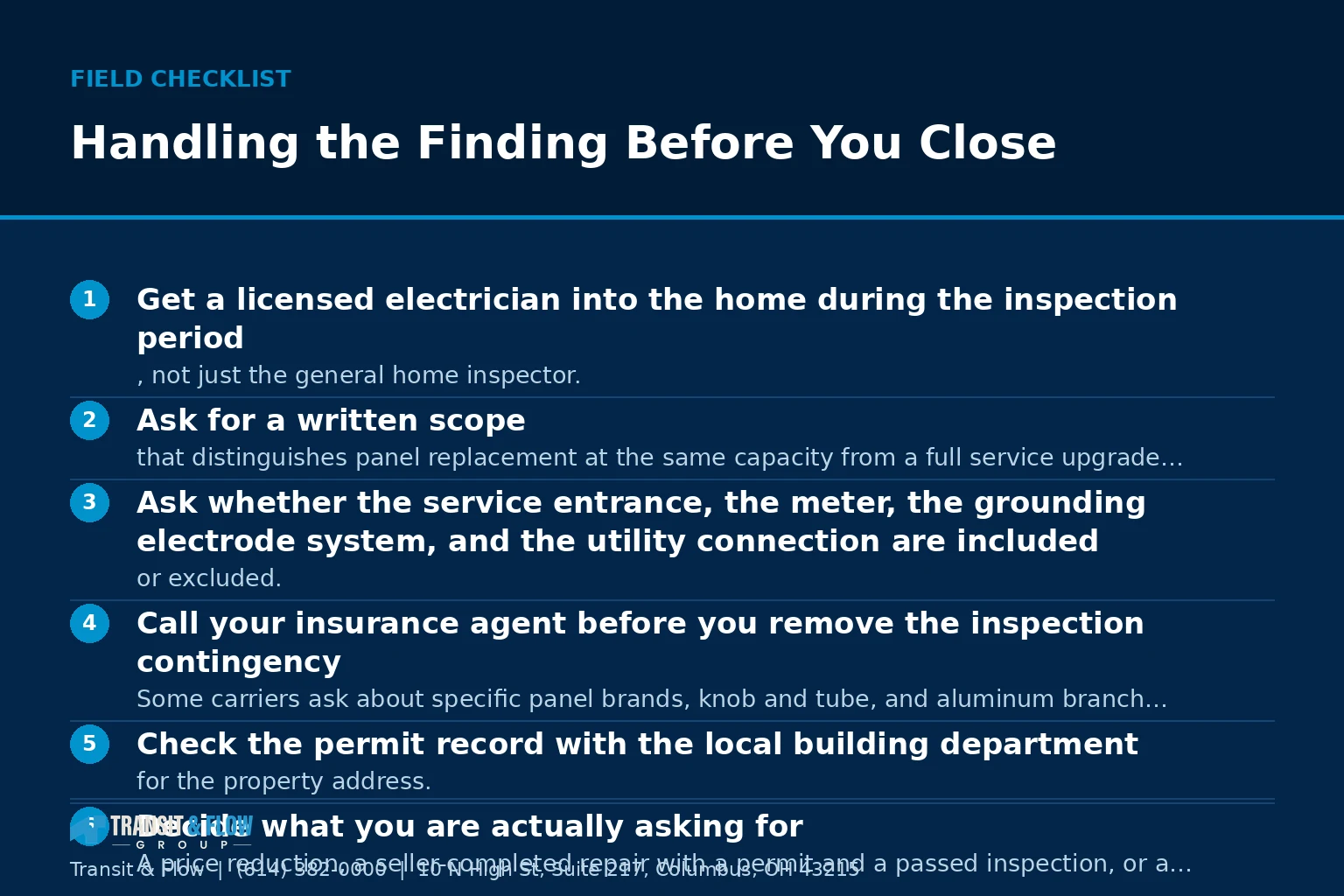
- Get a licensed electrician into the home during the inspection period, not just the general home inspector. A general inspector flags the panel. An electrician scopes the remedy, and the scope is what you negotiate against.
- Ask for a written scope that distinguishes panel replacement at the same capacity from a full service upgrade, because those are different projects with different costs and only one of them may be necessary.
- Ask whether the service entrance, the meter, the grounding electrode system, and the utility connection are included or excluded. Exclusions are where surprises live.
- Call your insurance agent before you remove the inspection contingency. Some carriers ask about specific panel brands, knob and tube, and aluminum branch wiring at underwriting. Better to know now.
- Check the permit record with the local building department for the property address. A history of permitted, inspected work is a meaningful asset. Its absence is information too.
- Decide what you are actually asking for. A price reduction, a seller-completed repair with a permit and a passed inspection, or a credit at closing. A seller-completed repair is only worth more than a credit if you control the contractor selection and the permit is pulled.
On cost: this guide contains no dollar figures on purpose. Panel and service work varies with the existing service size, the target capacity, the panel location, the condition of the service entrance and grounding, the utility’s requirements, the permit and inspection process in that jurisdiction, and whatever the cover comes off to reveal. Any number published here would mislead you about your specific house. Get a written scope on the actual property.
What This Finding Does Not Mean
- It does not mean the house is unsafe to occupy. It means a component with a documented risk history should be evaluated by someone qualified.
- It does not mean you should walk away. Most of these findings are solvable, and the solution has a defined scope and a defined end.
- It does not mean the seller is hiding something. Many owners have no idea what brand of panel they have.
- It does not mean a replacement breaker is a fix. Where the concern is the bus or the breaker-to-bus interface, swapping a breaker does not address it.
- It does not expire. A panel flagged in an inspection report a decade ago is still flagged today.
A Short Glossary for the Inspection Report
- Deadfront. The screwed-on inner cover that exposes the breaker faces while shielding the energized parts. Removing it is electrician work.
- Bus bar. The internal conductor the breakers clip onto. Bus condition is central to the Zinsco and Challenger concerns.
- Service entrance. The conductors, the meter, and the equipment bringing utility power to the panel. Frequently the hidden scope in an upgrade.
- Grounding electrode system. The rods, plates, or water pipe connections tying the system to earth. Often updated as part of a panel replacement.
- Subpanel. A secondary panel fed from the main. Adds circuit spaces without increasing service capacity.
- Load calculation. The documented arithmetic that determines the service size a home actually requires.
- Legacy panel. Shorthand in inspection reports for a discontinued product with a documented performance history.
Where Transit & Flow Group Fits
Transit & Flow Group coordinates electrical work across Columbus and Central Ohio and partners with properly licensed and insured specialty contractors when licensing is required. On a home purchase, our standard is a written scope during the inspection period that separates panel replacement from service upgrade, names what is included at the meter and the grounding system, and states who pulls the permit. Buyers frequently find the same walkthrough surfaces questions about heating and cooling and plumbing, and one coordinator carries all of it. If you are under contract and need the electrical picture before your contingency expires, request an assessment.
Frequently Asked Questions
Which older panel brands should a buyer treat as a material finding?
The names with enough documented history to matter are Federal Pacific Electric in the Stab-Lok line, Zinsco including the Sylvania-Zinsco branding, Challenger, and Bulldog Pushmatic, along with fuse panels of any brand. The concerns differ by product, ranging from breakers that may fail to trip to the connection between the breaker and the bus bar. These are not the only older panels in Central Ohio housing stock, and they are the ones home inspectors flag routinely. Treat the finding as a known-risk product that deserves evaluation by a licensed electrician rather than as a certainty of failure.
Does a legacy panel mean the house is unsafe to occupy?
No. It means a component with a documented risk history should be evaluated by someone qualified, which is a different statement. These products were listed and installed legally, and not every unit of every one of them has failed. It also does not mean you should walk away, because most of these findings are solvable with a defined scope and a defined end. What it does mean is that the evaluation belongs to a licensed electrician rather than to a general opinion.
Can I identify the panel myself during a walkthrough?
You can identify it from the outside, and that is where it should stop. Photograph the closed panel straight on including the door and any labeling, open only the outer door that homeowners are meant to open, and photograph the directory and the face of the breakers. Do not remove the cover held on by screws, because panel interiors remain energized at the main lugs even with the main breaker switched off. Look for a brand name on the door or on a label inside it, note the rating on the largest breaker, and photograph the meter and where the service conductors enter the building. Hand the photos to a licensed electrician and let them do the rest.
What should a buyer do about this during the inspection period?
Get a licensed electrician into the home during that window rather than relying only on the general home inspector, because an inspector flags the panel while an electrician scopes the remedy, and the scope is what you negotiate against. Ask for that scope in writing, and ask it to distinguish panel replacement at the same capacity from a full service upgrade, since those are different projects and only one of them may be necessary. Confirm whether the service entrance, the meter, the grounding electrode system, and the utility connection are included or excluded, because exclusions are where surprises live. Also check the permit record with the local building department for the address. The inspection period is the only window where this finding carries leverage.
Will a legacy panel affect homeowners insurance?
It can, and the time to find out is before the inspection contingency is removed. Some carriers ask at underwriting about specific panel brands, about knob and tube wiring, and about aluminum branch circuit wiring. Call your agent with what the inspection actually found rather than waiting to see whether it comes up. Knowing the carrier’s position early keeps the answer inside the window where you still have room to respond.
Is replacing the breakers enough, or does the panel have to be replaced?
That determination belongs to a licensed electrician who has looked at the actual equipment, not to a general rule. Where the concern is the bus or the breaker-to-bus interface, swapping a breaker does not address the underlying condition. What a homeowner can do is insist on a written scope for the specific property that names the capacity being installed, states what happens at the meter and the grounding electrode system, and identifies who pulls the permit. Cost varies with existing service size, target capacity, panel location, the condition of the service entrance, the utility’s requirements, and the jurisdiction’s permit process, so any figure quoted before the property is scoped belongs to a different house.
Sources
- U.S. Consumer Product Safety Commission, residential electrical product safety
- Ohio Construction Industry Licensing Board, electrical trade licensing
- City of Columbus, Get a Permit, permit and inspection records
About This Guide
Written and edited by Micheal Parker, founder of Transit & Flow Group. Published October 7, 2026. This guide is checked against the agency and code sources listed above, and it is revised when those sources change.
General contractor of record. Micheal Parker holds City of Columbus General Contractor Registration G12064, issued by the Columbus Department of Building and Zoning Services under Transit & Flow LLC and valid through June 30, 2027. Trade work that falls outside the scope of that registration is performed by licensed trade partners, and the responsible license holder is identified before work begins.
Transit & Flow Group, home and commercial services for Columbus and the surrounding Central Ohio communities. Phone (614) 382-0000. Email solutions@transitflowgroup.com. 10 N High St, Suite 217, Columbus, OH 43215. Contact our team or review the communities we serve.
