
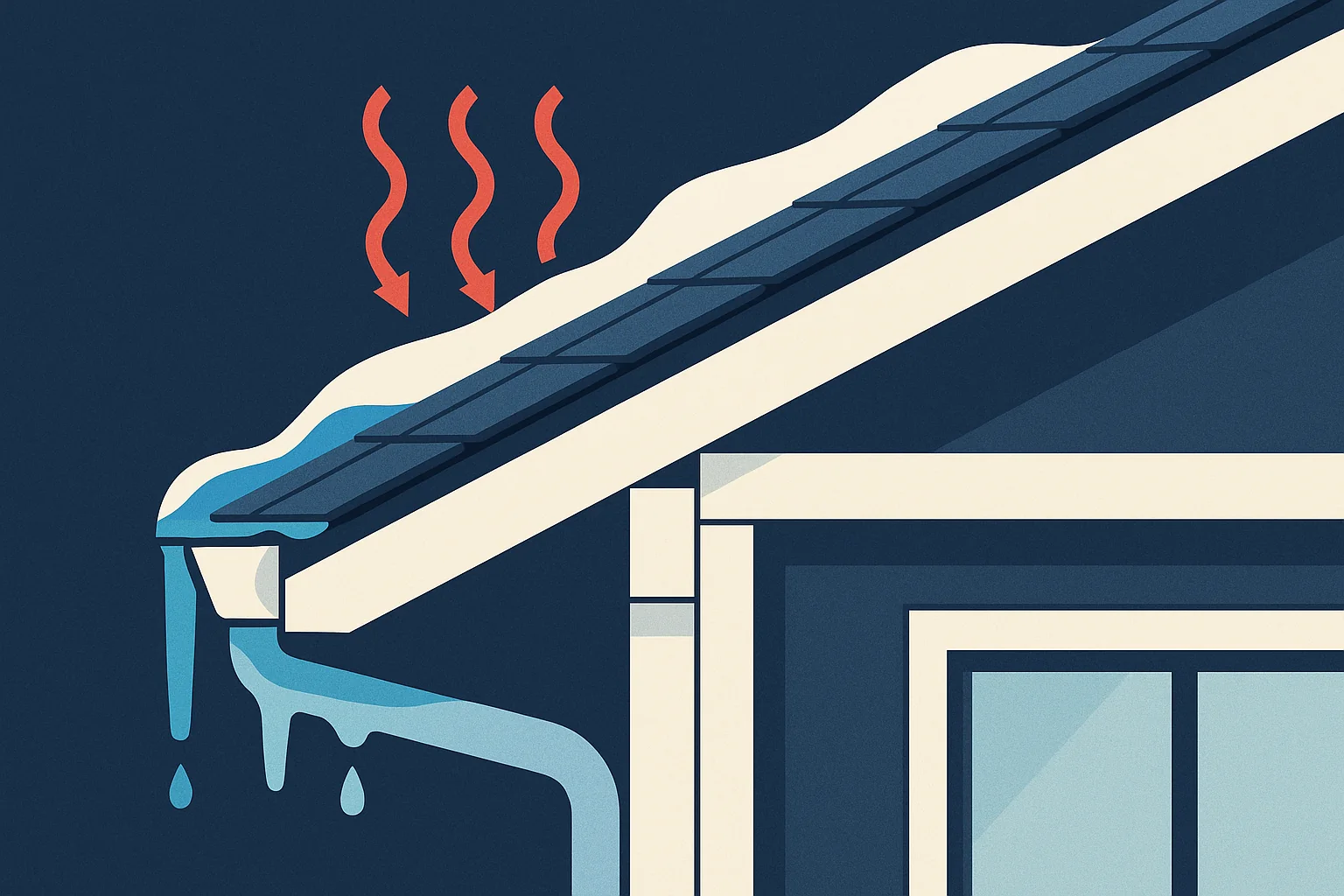

Ice dams look like a roof problem and get sold as a roof problem, which is why so much money gets spent on them without the dam ever going away. An ice dam is a heat problem that shows up on the roof. Until the heat is addressed, the ice comes back every winter that behaves the way this one did. This article explains the mechanism and what actually prevents it. It supports our roofing work.
In This Guide
- The Mechanism, In One Paragraph
- Why It Happens on This House and Not the Neighbor’s
- What Actually Prevents Ice Dams, Ranked
- What To Do While One Is Actively Forming
- Where Transit & Flow Group Fits
- Frequently Asked Questions
Transit & Flow Group coordinates projects and partners with properly licensed and insured specialty contractors when licensing is required.
One boundary. Do not get on an icy roof. Falls and ice fall are the two ways people are seriously hurt during ice dam season, and neither is worth a leak that a bucket can hold overnight. Do not use a hammer, a chisel, or an open flame on ice above a roof surface. Attic and insulation work sits alongside electrical wiring and ventilation paths, and altering either is work for a qualified trade.
The Mechanism, In One Paragraph
Heat escapes from the living space into the attic. That heat warms the underside of the roof deck above the heated part of the house, and the snow sitting on it melts. The meltwater runs down the roof until it reaches the eave, which overhangs unheated space and is therefore cold. There it refreezes. The refrozen ridge grows, and water backing up behind it stands against the roof rather than running off it. Shingles shed water. They do not hold back standing water. It finds the seams and enters the house.
Every effective prevention follows from that description. Keep the roof deck cold and uniform in temperature and the dam does not form, because nothing melts in the middle and refreezes at the edge.
Why It Happens on This House and Not the Neighbor’s
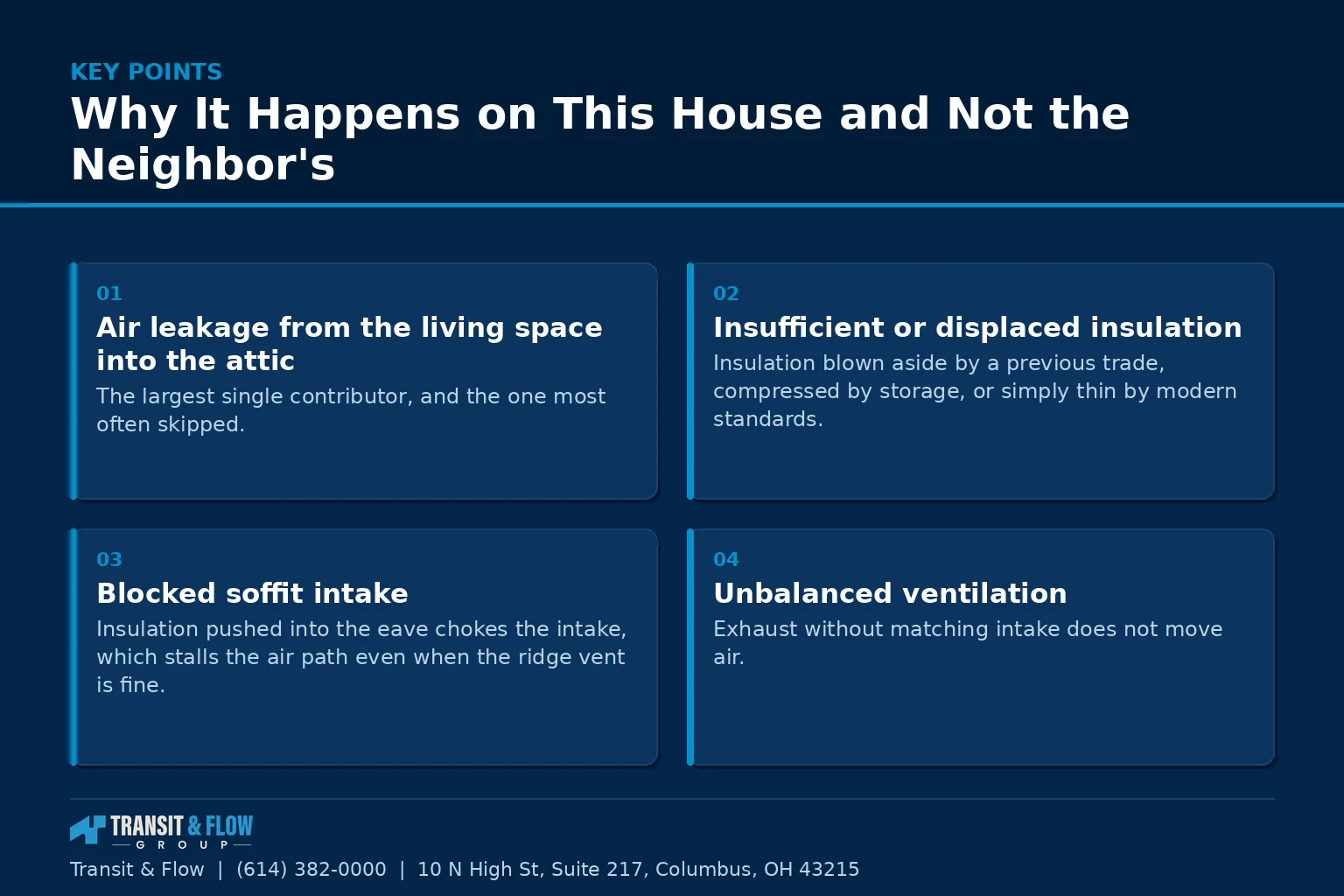
- Air leakage from the living space into the attic. The largest single contributor, and the one most often skipped. Recessed lights, bath fan housings, attic hatches, plumbing and wiring penetrations, and the top plates of interior walls all leak warm air upward.
- Insufficient or displaced insulation. Insulation blown aside by a previous trade, compressed by storage, or simply thin by modern standards.
- Blocked soffit intake. Insulation pushed into the eave chokes the intake, which stalls the air path even when the ridge vent is fine.
- Unbalanced ventilation. Exhaust without matching intake does not move air. It just pulls conditioned air up through the ceiling.
- Ductwork or air handlers in the attic, leaking heated air directly into the space that must stay cold.
- Bath and dryer exhaust terminating in the attic rather than outside, which adds both heat and moisture.
- Complex roof geometry. Valleys, dormers, and low-slope sections over additions concentrate meltwater and shed it slowly.
- Skylights and chimneys, which create local warm spots and interrupt drainage paths.
What Actually Prevents Ice Dams, Ranked
- Air seal the ceiling plane. This is first because it addresses the cause. Every penetration between conditioned space and attic gets sealed with the correct material, including fire-rated treatment where required around flues and certain fixtures.
- Bring insulation to depth and keep it even. Depth matters, and so does coverage. A thin band along the perimeter undoes a deep field.
- Restore intake ventilation at the eaves, using baffles that hold the air channel open where insulation meets the soffit.
- Balance intake and exhaust so the attic actually flushes rather than merely having vents installed.
- Move or seal attic ductwork and terminate all exhaust fans outside the building envelope.
- Install ice and water membrane at the eaves when the roof is next replaced. This is important and frequently misunderstood. It does not prevent the dam. It protects the deck from the water the dam produces, which is a meaningful backstop and not a solution.
- Consider heat cable only as a targeted last resort, on a specific problem valley or over an entry, after the items above have been done. Cable manages a symptom, consumes electricity every winter, and does nothing about the heat loss that caused the ice.
Note the ordering. Items one through five are building science and they belong to the attic. Item six belongs to the roof. Item seven is a patch. A proposal that leads with item seven and never mentions items one through five is selling you a heater for the outside of your house. Our article on attic ventilation and ice dams covers the ventilation side in depth.
What To Do While One Is Actively Forming
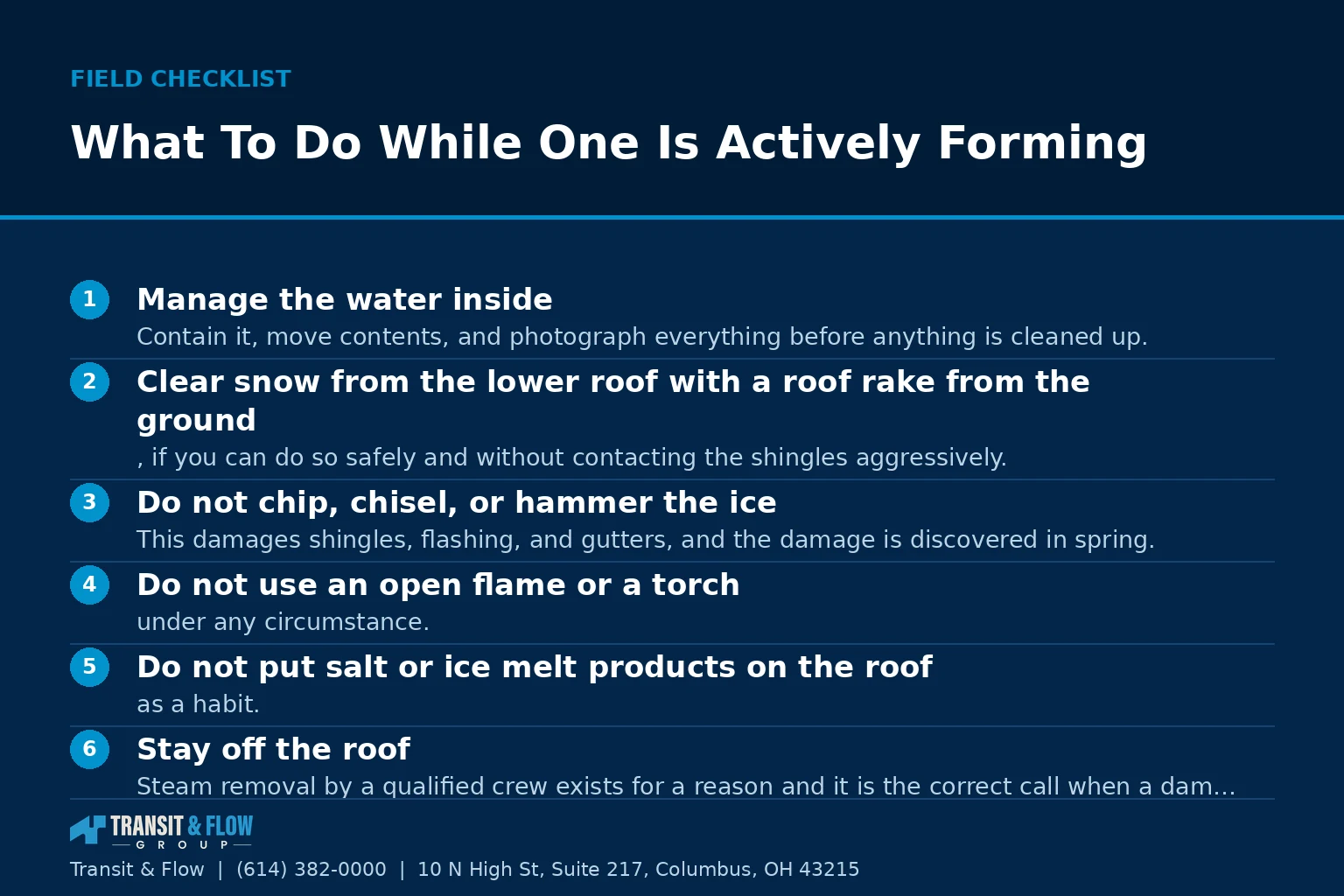
- Manage the water inside. Contain it, move contents, and photograph everything before anything is cleaned up.
- Clear snow from the lower roof with a roof rake from the ground, if you can do so safely and without contacting the shingles aggressively. Removing the snow removes the material that melts.
- Do not chip, chisel, or hammer the ice. This damages shingles, flashing, and gutters, and the damage is discovered in spring.
- Do not use an open flame or a torch under any circumstance.
- Do not put salt or ice melt products on the roof as a habit. They corrode metal components and stain surfaces below.
- Stay off the roof. Steam removal by a qualified crew exists for a reason and it is the correct call when a dam is causing active interior water entry.
- Note where the water entered, because that information is worth more in spring than any photograph of the ice itself.
If water is entering the living space, treat it as a water loss and follow the response sequence in our first 48 hours guide. Ice dam water reaches insulation and wall cavities the same way any other water does.
On cost: this article contains no dollar figures on purpose. Prevention scope ranges from a targeted air sealing and insulation project to a full roof replacement with membrane at the eaves, and the correct scope depends on attic access, existing insulation depth, roof geometry, the number of penetrations, and whether ductwork is present in the attic. Any published range would mislead. Get an attic assessed and get the scope written before you price anything.
Option A is treating ice dams reactively each winter with raking, steaming, and heat cable. Option B is an attic air sealing, insulation, and ventilation project that removes the heat driving the melt. My recommendation is Option B in every case where attic access allows it. Option A is a recurring annual expense that never reduces the underlying risk, and the same money directed at the ceiling plane also lowers heating load every month of the year. Where the roof is also near the end of its service life, sequence the attic work first and the roof second, so the membrane goes on a roof that no longer has a reason to melt unevenly. Our guidance on repair or replace decisions covers that timing question.
Where Transit & Flow Group Fits
Transit & Flow Group coordinates roofing and building envelope work across Columbus and Central Ohio and partners with properly licensed and insured specialty contractors when licensing is required. Our standard is that an ice dam complaint produces an attic assessment before a roof proposal, that intake and exhaust ventilation are evaluated together rather than separately, and that heat cable is never presented as a substitute for addressing heat loss. To get an attic and roof assessed together, request an assessment.
Frequently Asked Questions
Is an ice dam a roof problem or an insulation problem?
It is a heat problem that shows up on the roof. Heat escaping the living space warms the underside of the deck above the heated part of the house, the snow there melts, and the meltwater refreezes when it reaches the cold eave overhanging unheated space. The ridge of ice grows and water backs up behind it, standing against a surface designed only to shed water. Until the heat loss is addressed, the ice returns every winter that behaves the same way.
Why does one house get ice dams while the neighbor’s does not?
The differences are usually inside the attic rather than on the roof. Air leakage from the living space through recessed lights, bath fan housings, attic hatches, penetrations, and interior wall top plates is the largest single contributor and the one most often skipped. Insufficient or displaced insulation, soffit intake choked by insulation pushed into the eave, ventilation with exhaust but no matching intake, attic ductwork or air handlers leaking heated air, and bath or dryer exhaust terminating in the attic all add to it. Complex geometry with valleys, dormers, low slope sections, skylights, and chimneys concentrates the result.
Does heat cable solve the problem?
No. Cable manages a symptom, consumes electricity every winter, and does nothing about the heat loss that created the ice. It has a narrow role as a targeted last resort on a specific problem valley or over an entry, and only after air sealing, insulation, intake ventilation, ventilation balance, and attic duct issues have been addressed. A proposal that leads with heat cable and never mentions the attic is selling you a heater for the outside of your house.
Does ice and water membrane at the eaves prevent ice dams?
It does not prevent the dam, and this is frequently misunderstood. Membrane protects the deck from the water the dam produces, which is a meaningful backstop rather than a solution. It belongs in the scope when the roof is next replaced, not as a standalone answer to a dam that keeps forming. If the attic work and the roof work are both coming, sequence the attic first so the membrane goes on a roof that no longer has a reason to melt unevenly.
What should I do while a dam is actively forming?
Manage the water inside first by containing it, moving contents, and photographing everything before anything is cleaned up, and note where the water entered, because that is worth more in spring than any photograph of the ice. Snow can be cleared from the lower roof with a roof rake from the ground if that can be done safely. Do not chip, chisel, or hammer the ice, do not use an open flame or a torch, and do not make a habit of salt or ice melt on the roof, because those corrode metal components and stain surfaces below. Stay off the roof, and call a qualified crew for steam removal when a dam is causing active interior water entry.
Is ice dam water inside the house treated like any other water loss?
Yes. Ice dam water reaches insulation and wall cavities the same way any other water does, so it warrants the same prompt response sequence: contain, document, and get the affected assemblies dried. Where water has been sitting in a ceiling or wall cavity, the assessment belongs to a qualified professional rather than to a visual check from below. The interior evidence also informs the attic assessment that should precede any roof proposal.
Sources
- U.S. Department of Energy, Building Technologies Office, air sealing and attic insulation guidance
- National Roofing Contractors Association, roofing system references
- Ohio Construction Industry Licensing Board, contractor licensing
About This Guide
Written and edited by Micheal Parker, founder of Transit & Flow Group. Published December 4, 2026. This guide is checked against the agency and code sources listed above, and it is revised when those sources change.
General contractor of record. Micheal Parker holds City of Columbus General Contractor Registration G12064, issued by the Columbus Department of Building and Zoning Services under Transit & Flow LLC and valid through June 30, 2027. Trade work that falls outside the scope of that registration is performed by licensed trade partners, and the responsible license holder is identified before work begins.
Transit & Flow Group, home and commercial services for Columbus and the surrounding Central Ohio communities. Phone (614) 382-0000. Email solutions@transitflowgroup.com. 10 N. High St., Suite 217, Columbus, OH 43215. Contact our team or review the communities we serve.
