
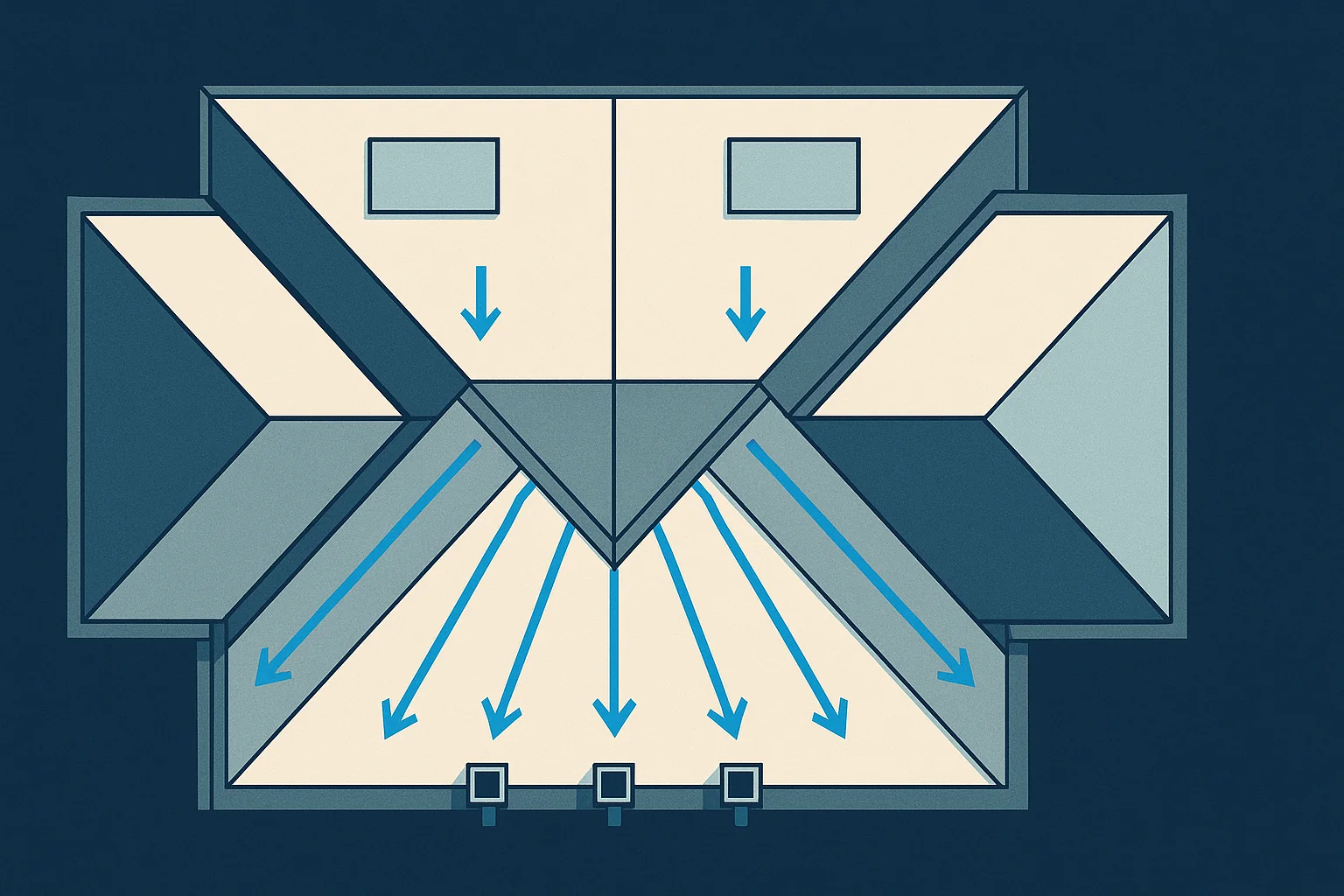

A sewer camera inspection is the single piece of information that separates guessing from knowing about a buried pipe, and it is also the service homeowners most often decline because they are not sure what they are buying. This guide explains what the camera physically shows, what it cannot show, when the inspection is worth scheduling, and what you should receive when it is finished. It is part of our drain and sewer guide, and it follows our comparison of trenchless and traditional repair methods.
In This Guide
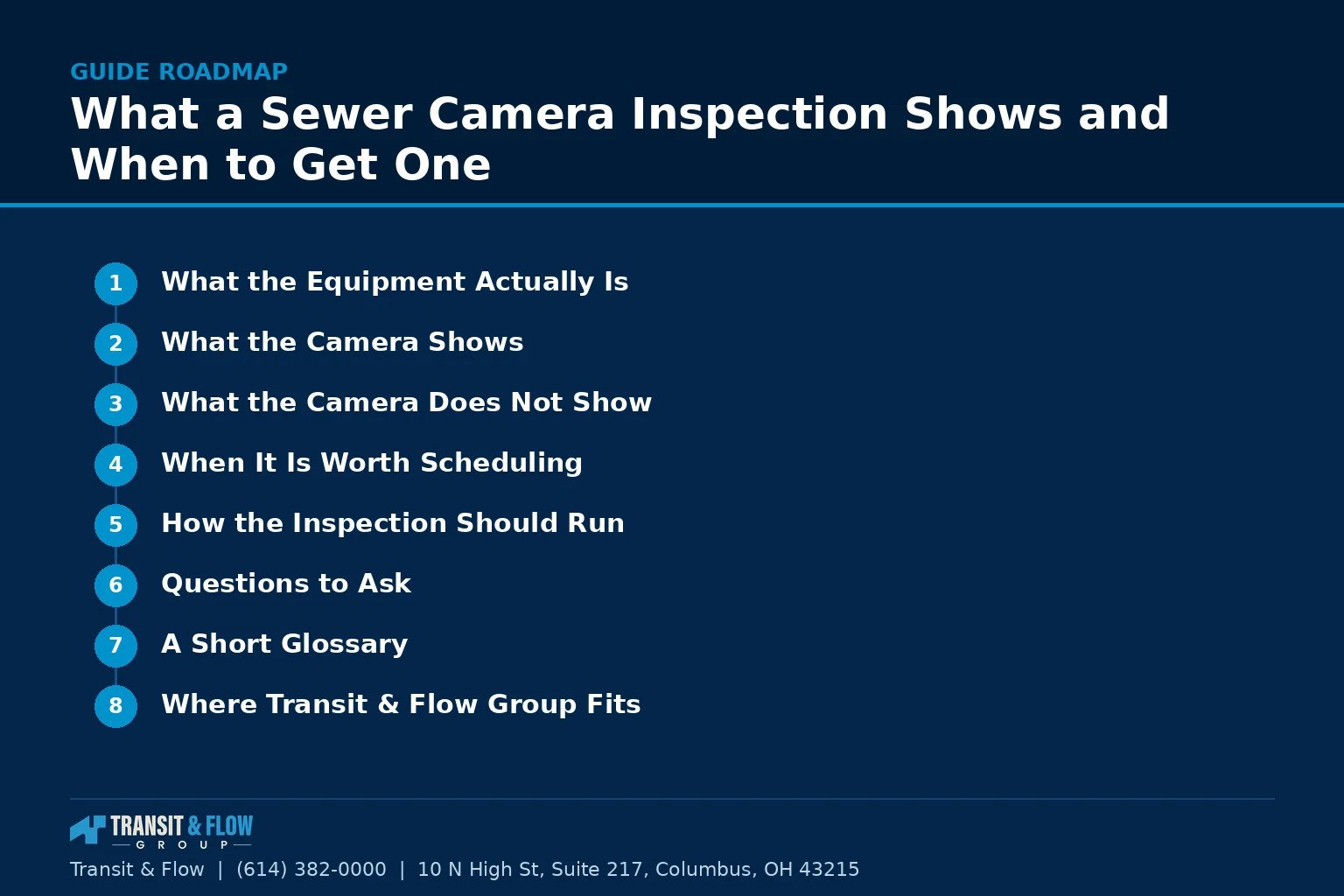
- What the Equipment Actually Is
- What the Camera Shows
- What the Camera Does Not Show
- When It Is Worth Scheduling
- How the Inspection Should Run
- Questions to Ask
- A Short Glossary
- Where Transit & Flow Group Fits
- Frequently Asked Questions
Transit & Flow Group coordinates projects and partners with properly licensed and insured specialty contractors when licensing is required.
What the Equipment Actually Is
A self-leveling camera head on a semi-rigid push cable, fed into the line through a cleanout, with a lighted lens and a reel that counts footage as the cable goes in. The technician watches a monitor at the surface. Most professional units also carry a sonde, a small transmitter in the camera head that a locator above ground can detect, which is how a defect two feet under your lawn gets marked with a flag rather than described vaguely as “somewhere out front.”
Two capabilities matter more than picture quality. The footage counter, because a defect without a distance is not actionable. And the sonde, because a distance without a surface location still leaves someone digging a search trench.
What the Camera Shows
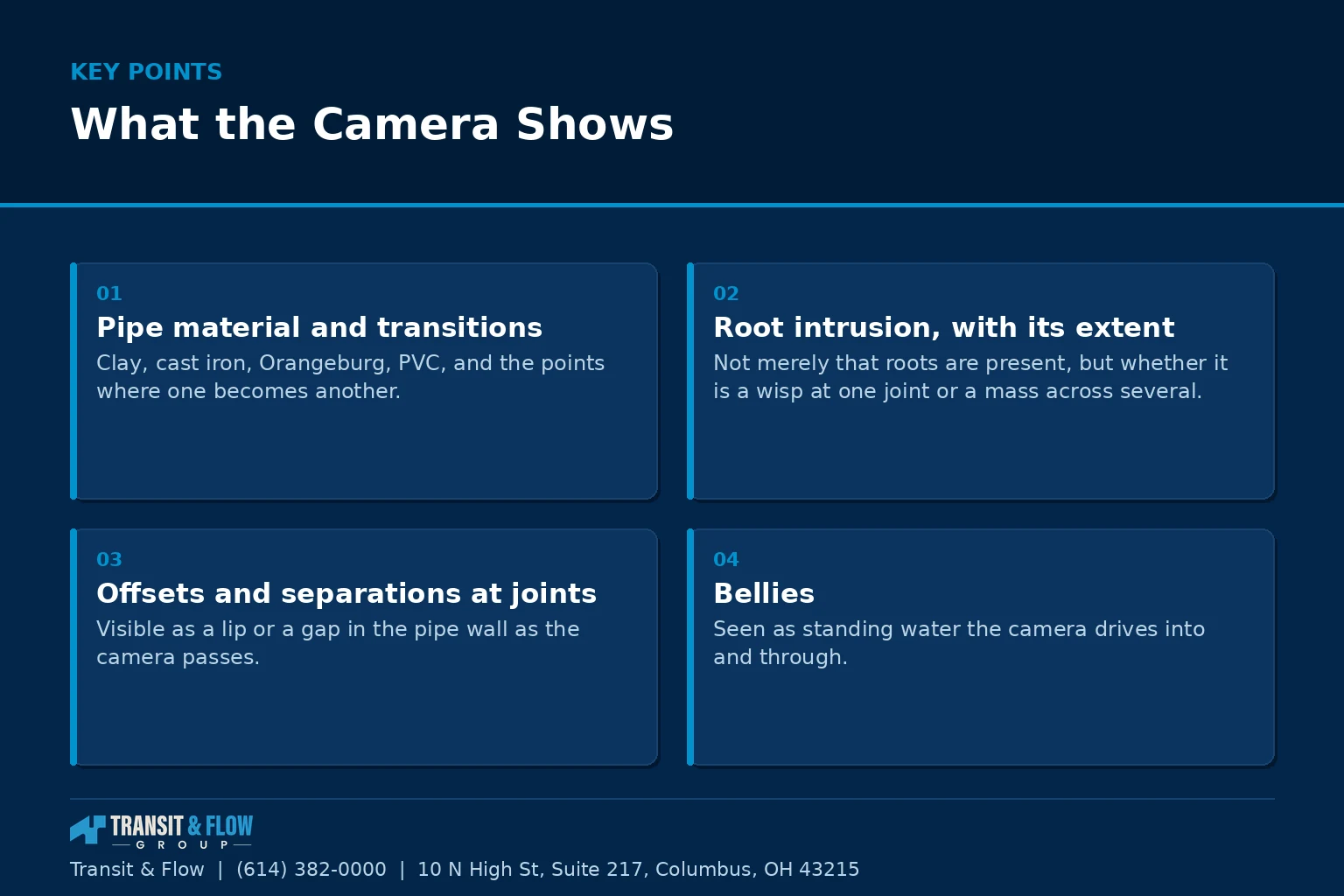
- Pipe material and transitions. Clay, cast iron, Orangeburg, PVC, and the points where one becomes another. Transitions are frequent failure locations because two materials age differently.
- Root intrusion, with its extent. Not merely that roots are present, but whether it is a wisp at one joint or a mass across several.
- Offsets and separations at joints. Visible as a lip or a gap in the pipe wall as the camera passes.
- Bellies. Seen as standing water the camera drives into and through. A belly is one of the few conditions you can practically only diagnose this way.
- Scale, corrosion, and grease coating. The interior wall of an aging cast iron line looks nothing like a smooth pipe, and the difference is measurable in flow.
- Cracks, fractures, and collapse. Including partial collapses that still pass water and therefore produce no symptoms yet.
- Foreign objects and prior repairs. Old patches, misaligned couplings, and things that should never have entered a drain.
- The connection at the main, where the run reaches it. Not always accessible, and worth asking about.
What the Camera Does Not Show
Being clear about the limits keeps a good tool from being oversold.
- Slope, precisely. A camera reveals that water is standing, which implies a grade problem. It does not measure the grade. That takes separate equipment or an excavation.
- Condition outside the pipe. Voids in the surrounding soil, bedding failures, and settlement in progress are invisible from inside.
- Anything past a full blockage. The camera stops where the obstruction does. This is why lines are cleared first and inspected second when both are needed.
- Wall thickness remaining. A clay pipe can look intact and still be structurally marginal.
- The future. An inspection is a snapshot. It tells you the condition on the day it ran, which is exactly why the date on the video matters if you are handed one during a real estate transaction.
When It Is Worth Scheduling
- Before buying a home built before roughly 1980. The lateral is typically the most expensive component of the house that no standard home inspection covers. This is the highest-value moment on this list.
- After a second clog on the same line. Recurrence is a structural signal. Clearing a line twice without looking at it is buying the same information twice and learning nothing.
- Before any repair is authorized. A scope written without a camera is a guess with a price on it.
- After any repair is completed. The post-repair pass is your only proof of what was installed.
- When symptoms and rainfall correlate. The inspection distinguishes an infiltration problem from a blockage, which are different problems with different responsible parties.
- Before finishing a basement or adding a bathroom. Finding a failing lateral after the drywall is up is an expensive sequence.
- As a baseline in an older home you intend to keep. It converts an unknown into a plan, on your timeline rather than the pipe’s.
How the Inspection Should Run
- Access is identified. An exterior or interior cleanout is preferred. Pulling a toilet is a fallback, and it should be discussed before it happens rather than after.
- The line is cleared if it needs clearing. A camera cannot see through standing waste, and pushing a lens into a blocked line accomplishes nothing.
- The camera runs the full length, from the access point toward the main, with the technician narrating what appears and the footage counter visible.
- Defects are located with the sonde and marked above ground with paint or a flag, and the distance is recorded.
- Findings are reviewed with you on the monitor while the camera is still in the line, so you can ask questions about what you are looking at.
- The video file and a written summary are delivered to you. Not a verbal description, and not a video that stays on the technician’s tablet.
Questions to Ask
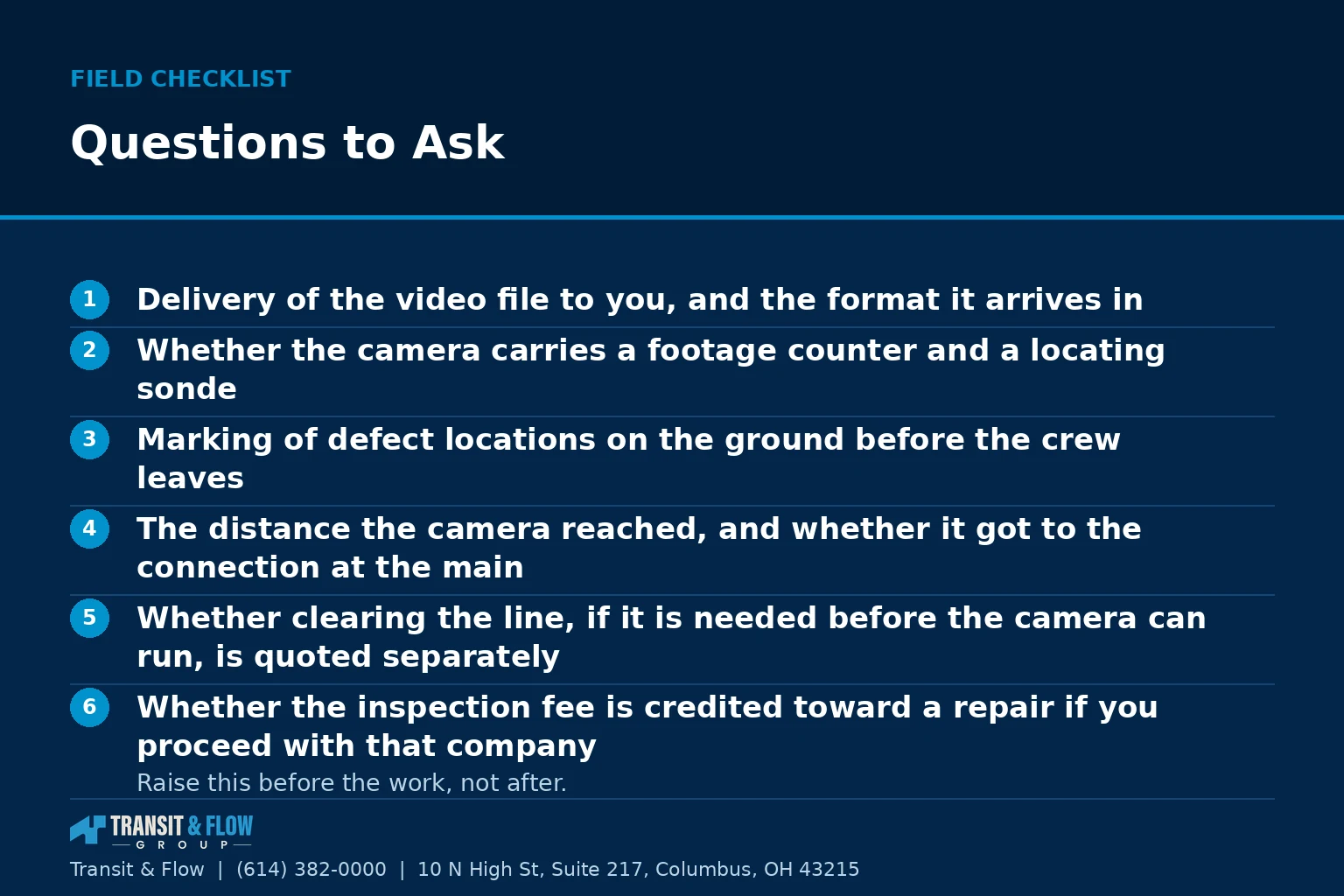
- Delivery of the video file to you, and the format it arrives in.
- Whether the camera carries a footage counter and a locating sonde.
- Marking of defect locations on the ground before the crew leaves.
- The distance the camera reached, and whether it got to the connection at the main.
- Whether clearing the line, if it is needed before the camera can run, is quoted separately.
- Whether the inspection fee is credited toward a repair if you proceed with that company. Raise this before the work, not after.
- What in the video rules out the less invasive repair options.
That last item is the one that separates a diagnosis from a sales call. Any competent technician can answer it from the footage.
A Short Glossary
- Lateral. The privately owned pipe running from your house to the public main.
- Cleanout. A capped access fitting installed specifically so equipment can enter the line.
- Sonde. The transmitter in the camera head that allows above-ground location.
- Belly. A sag in the line where water stands instead of flowing.
- Offset. Two pipe sections shifted out of alignment, leaving an interior lip.
- Orangeburg. A bituminized fiber pipe used mid-century that deforms with age. Finding it changes the repair conversation immediately.
Where Transit & Flow Group Fits
Our standard on drain and sewer work across Columbus and Central Ohio is that the camera runs before anyone quotes a repair, defects are located and marked above ground, and the video and written summary go to you rather than staying with the technician. Where the finding crosses into broader plumbing services, one coordinator carries it through. If you are buying an older home or on your second clearing, request an assessment.
Frequently Asked Questions
What does a sewer camera actually show that other methods cannot?
It shows the interior of the line as it is on the day it runs, including pipe material and the transitions between materials, the extent of root intrusion rather than just its presence, offsets and separations at joints, bellies where water stands, scale and corrosion on the wall, cracks and partial collapses, foreign objects, and prior repairs. A belly in particular is one of the few conditions you can practically only identify this way, because the camera drives into and through the standing water. Transitions between two materials are frequent failure points because the materials age differently. None of this is visible from a fixture or a cleanout without the camera in the line.
What are the limits of a camera inspection?
It does not measure slope. Standing water implies a grade problem, but confirming grade takes separate equipment or an excavation. It also cannot see anything outside the pipe, so voids in the soil, bedding failures, and settlement in progress are invisible, and it cannot tell you how much wall thickness remains, which means a clay pipe can look intact and still be structurally marginal. It also stops at a full blockage, which is why lines are cleared first and inspected second when both are needed.
When is a camera inspection most worth scheduling?
The highest value moment is before buying an older home, because the lateral is typically the most expensive component of the house that no standard home inspection covers. A second clog on the same line is the next strongest signal, since recurrence points to something structural and clearing the line twice without looking at it buys the same information twice. It is also worth running before any repair is authorized and again after one is completed, since the post repair pass is your only proof of what was installed. Before finishing a basement or adding a bathroom is another sensible point, because finding a failing lateral after the drywall is up is an expensive sequence.
Why does the footage counter and the sonde matter so much?
Because a finding without a location is not actionable. The footage counter tells you how far down the line a defect sits, and the sonde, a small transmitter in the camera head that a locator can detect from above ground, is what allows that distance to be translated into a marked spot on the lawn. Without both, a defect gets described as somewhere out front, and someone ends up digging a search trench to find it. When you are comparing providers, confirm the equipment carries both.
What should I receive when the inspection is finished?
The video file and a written summary, delivered to you rather than left on the technician’s tablet. You should also have had the findings reviewed with you on the monitor while the camera was still in the line, so you could ask about what you were looking at rather than receive a verbal description afterward. Defect locations should be marked above ground with paint or a flag, with the distances recorded. If a report is handed to you during a real estate transaction, check the date on the video, because an inspection is a snapshot of one day.
Does the line need to be cleared before the camera runs?
If it needs clearing, yes, because a camera cannot see through standing waste and pushing a lens into a blocked line accomplishes nothing. That is why the sequence is access first, clearing if required, then the camera run along the full length toward the main. Confirm in advance whether clearing is quoted separately from the inspection so the scope is clear before anyone starts. Access should ideally be an exterior or interior cleanout, and pulling a toilet is a fallback that should be discussed before it happens rather than after.
Sources
- U.S. Environmental Protection Agency, collection system blockages and structural failures
- Ohio Revised Code 3781.28, excavation notice requirements
- City of Columbus, Get a Permit, permit application channels
About This Guide
Written and edited by Micheal Parker, founder of Transit & Flow Group. Published September 20, 2026. This guide is checked against the agency and code sources listed above, and it is revised when those sources change.
General contractor of record. Micheal Parker holds City of Columbus General Contractor Registration G12064, issued by the Columbus Department of Building and Zoning Services under Transit & Flow LLC and valid through June 30, 2027. Trade work that falls outside the scope of that registration is performed by licensed trade partners, and the responsible license holder is identified before work begins.
Transit & Flow Group, home and commercial services for Columbus and the surrounding Central Ohio communities. Phone (614) 382-0000. Email solutions@transitflowgroup.com. 10 N High St, Suite 217, Columbus, OH 43215. Contact our team or review the communities we serve.
