
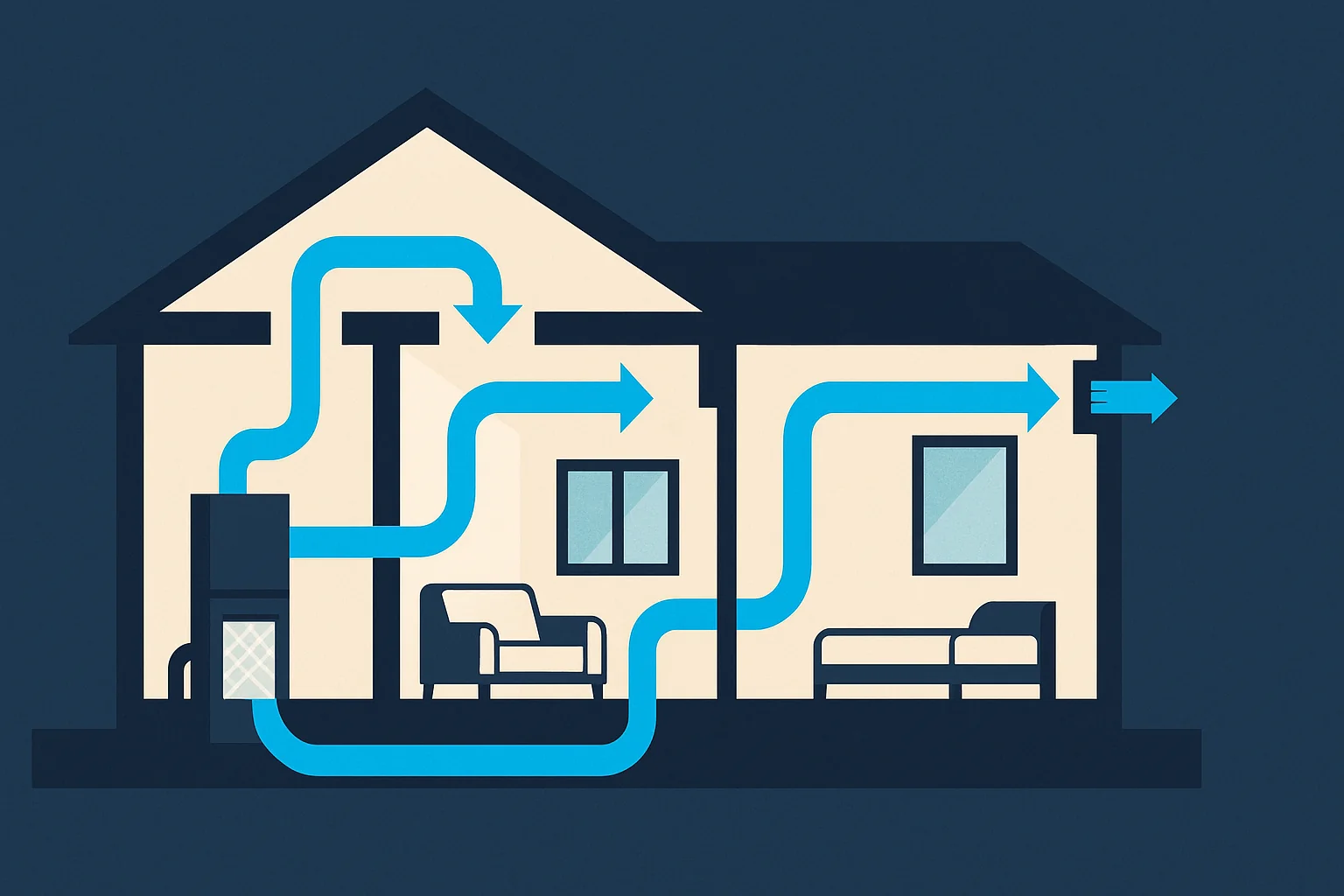

Home charging is where most electric vehicle ownership actually happens, and it is also where the project quietly turns from an appliance purchase into an electrical one. The charger is the cheap part. What determines the scope is your panel capacity, the distance from the panel to the parking spot, and the permit and inspection process in your jurisdiction. This guide covers how to figure out what your home can support, what the installation involves, and what a proposal should tell you. It is part of our electrical panel guide, and it assumes you have already read the signs of an overloaded panel.
In This Guide
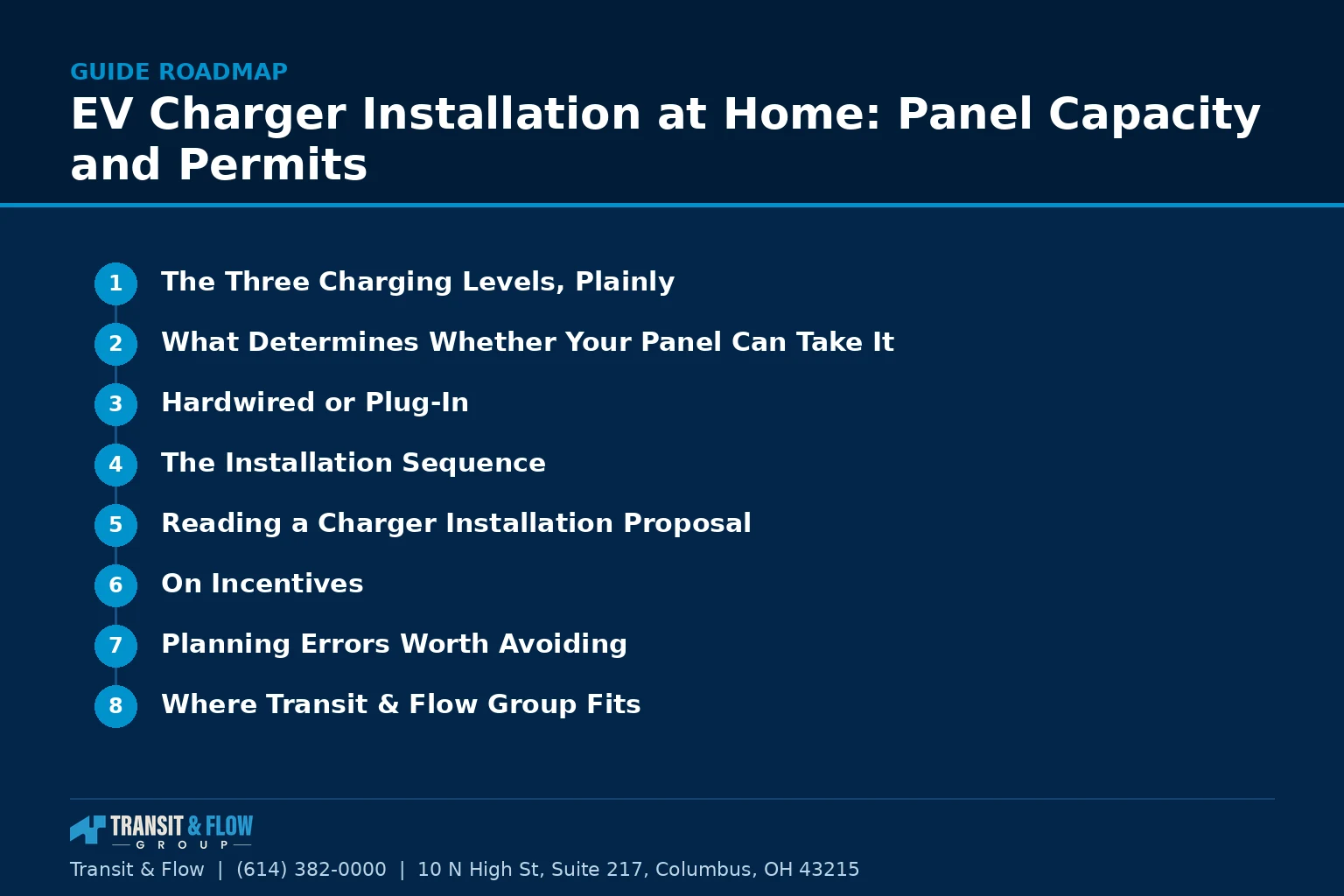
- The Three Charging Levels, Plainly
- What Determines Whether Your Panel Can Take It
- Hardwired or Plug-In
- The Installation Sequence
- Reading a Charger Installation Proposal
- On Incentives
- Planning Errors Worth Avoiding
- Where Transit & Flow Group Fits
- Frequently Asked Questions
Transit & Flow Group coordinates projects and partners with properly licensed and insured specialty contractors when licensing is required.
A boundary first. This guide is for planning and evaluating proposals. It is not instruction to install a circuit or work inside a panel. A vehicle charging circuit is one of the largest continuous loads in a house, it runs for hours at a time, and the consequences of a poor connection are heat and fire. This is licensed, permitted, inspected work.
The Three Charging Levels, Plainly
- Level 1. A standard household 120-volt receptacle using the cord that came with the vehicle. No installation, the slowest option by a wide margin, and genuinely adequate for a short commute with overnight charging. It is worth trying before assuming you need more.
- Level 2. A 240-volt circuit, the same class of supply as an electric range or dryer. This is what nearly every home installation means. It is the level where panel capacity, permits, and inspection enter the picture.
- Level 3, also called DC fast charging. Commercial equipment with a service requirement no ordinary house has. If someone proposes this for a single-family residence, get a second opinion.
The honest starting question is not which charger to buy. It is how many miles you actually drive on a typical day and whether the vehicle sits at home overnight. Many households discover Level 1 covers their real pattern and Level 2 buys convenience rather than necessity. Both are valid answers, and knowing which one you are buying changes how you evaluate the cost.
What Determines Whether Your Panel Can Take It
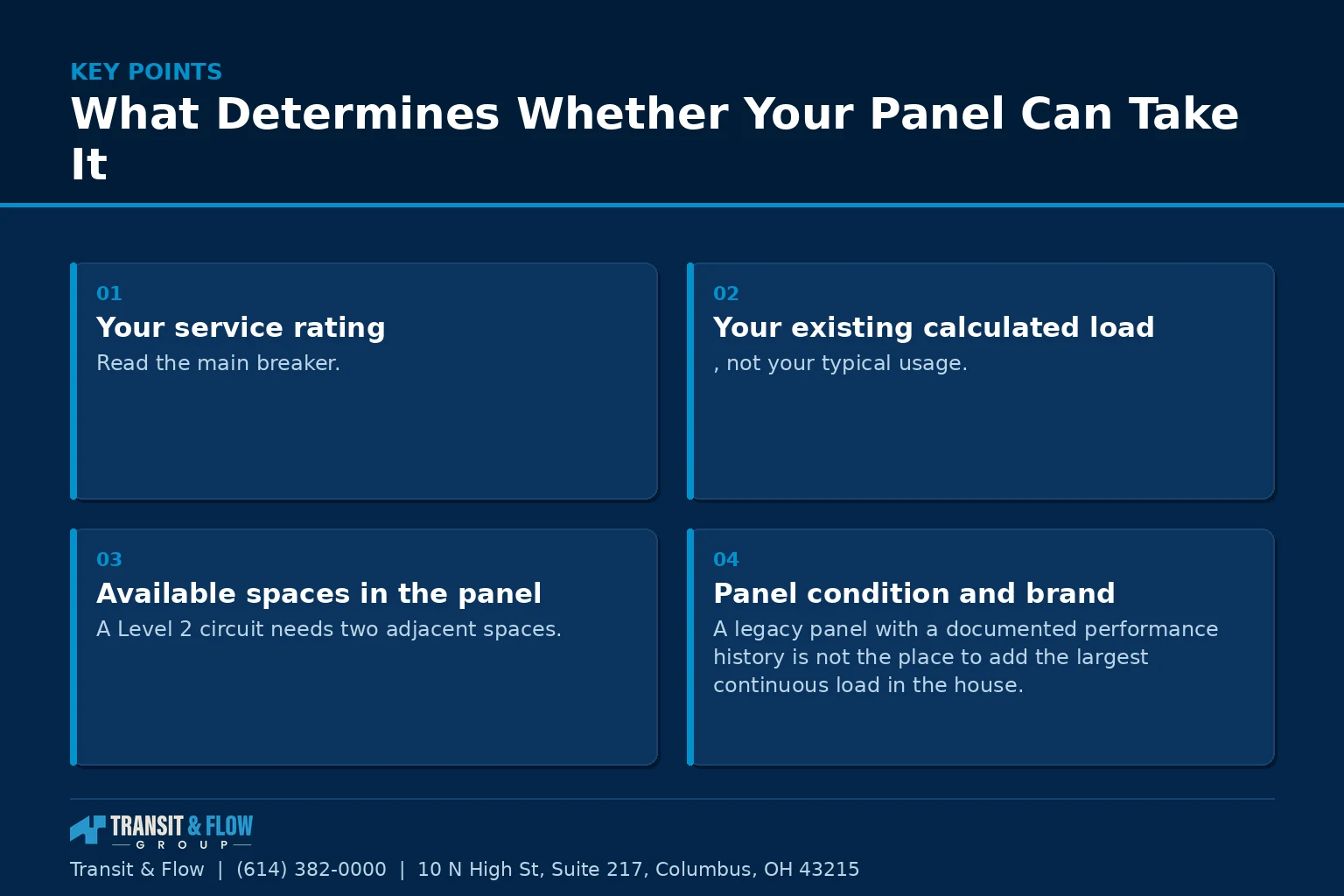
A Level 2 charger is a continuous load, which means the circuit that feeds it must be sized above the charger’s draw rather than exactly at it. That is why a charger’s amperage and its circuit’s amperage are different numbers, and it is why capacity gets consumed faster than owners expect.
- Your service rating. Read the main breaker. A home on 100 amps with electric heat, an electric range, an electric water heater, and central air has far less headroom than a home on 200 amps with gas appliances.
- Your existing calculated load, not your typical usage. An electrician performs a documented load calculation using a recognized method. This is the number that governs, and you should ask to see it.
- Available spaces in the panel. A Level 2 circuit needs two adjacent spaces. A full panel means a subpanel, a panel replacement, or a listed device that manages the load.
- Panel condition and brand. A legacy panel with a documented performance history is not the place to add the largest continuous load in the house.
- Distance from panel to parking spot. Conductor size increases with distance to control voltage drop, and long runs through finished space drive labor.
- The route. An unfinished basement wall next to an attached garage is the easy case. A detached garage across a driveway means a trench, a feeder, and often a subpanel.
There is a middle path worth naming. Where capacity is the only obstacle, listed load management systems and energy management devices can allow a charger to share capacity with other large loads by reducing charging when the house is drawing heavily. These are real, code-recognized products, and in the right house they turn a service upgrade into a much smaller project. Ask whether one applies before accepting that an upgrade is mandatory.
Hardwired or Plug-In
- Hardwired. The unit is permanently connected. Generally the choice for outdoor installations, for higher-current units, and where a clean permanent result matters. Replacing the unit later is electrician work.
- Plug-in to a 240-volt receptacle. Lets you unplug and take the unit, or swap it later without an electrician. The receptacle type and its required protection matter, and this is a detail to confirm with your electrician and your inspector rather than with a forum post.
Requirements around receptacle type, protective devices, and outdoor installation have changed across recent code cycles, and Ohio jurisdictions do not all adopt the same edition on the same schedule. Do not treat any code specific you read online, including here, as current for your address. Confirm with your electrician and the building department that will inspect the work.
The Installation Sequence
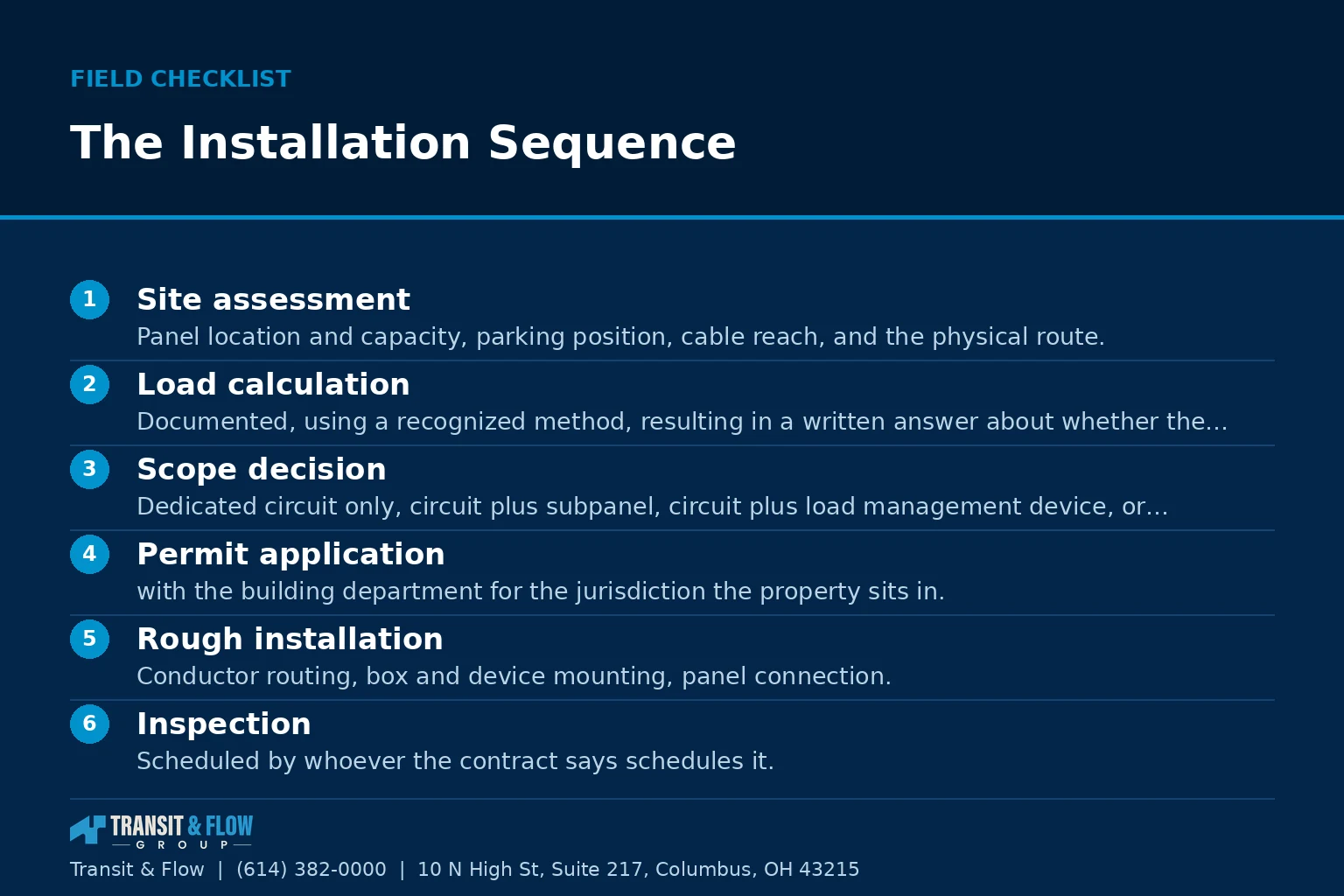
- Site assessment. Panel location and capacity, parking position, cable reach, and the physical route. Cable reach is the most commonly regretted decision, so stand where the car will actually park and measure to the charge port on the side of the vehicle it is on.
- Load calculation. Documented, using a recognized method, resulting in a written answer about whether the existing service supports the load.
- Scope decision. Dedicated circuit only, circuit plus subpanel, circuit plus load management device, or circuit plus service upgrade. These are four different projects.
- Permit application with the building department for the jurisdiction the property sits in.
- Rough installation. Conductor routing, box and device mounting, panel connection.
- Inspection. Scheduled by whoever the contract says schedules it.
- Energize, commission, and test with the actual vehicle, not just a meter.
- Documentation. Permit final, updated panel directory, equipment manuals, and warranty paperwork handed to you.
Reading a Charger Installation Proposal
On cost: there is no honest flat price for this work. It varies with service size, panel condition and available spaces, run distance, whether the route is through finished space, whether trenching is involved, the equipment selected, jurisdiction permit and inspection requirements, utility involvement, and what the panel reveals when it is opened. Any published number would be wrong for most houses. Ask for a written scope on your property and evaluate it against these points.
- The circuit amperage being installed, and the continuous output it supports.
- The calculated existing load on your service, and the capacity that leaves available.
- Whether a service upgrade is required or merely recommended. Those are different answers, both are legitimate, and the proposal should say which one this is.
- Whether a load management device was considered, and the stated reason it was ruled out.
- Whether the equipment is included or supplied by you, and who warrants it.
- Hardwired or receptacle, and the protective device required for that choice at this address.
- The conductor size and the run length, and how voltage drop was accounted for.
- Who pulls the permit, who schedules the inspection, and whether the fee sits inside this price.
- The exclusions, stated explicitly. Drywall repair, trenching and restoration, panel work, and utility coordination are the usual ones.
- The labor warranty, in writing, and its duration.
- The handling and pricing path if the panel reveals a condition requiring remediation.
- The effect on your parking and your power on installation day.
On Incentives
Federal, state, and utility incentives for home charging equipment and installation exist, and their availability, amounts, and eligibility rules change with legislation and program budgets. Nothing about them should be taken on faith from a contractor’s proposal or from any article, including this one. Verify current terms directly with the administering agency and your utility, and confirm eligibility with a tax professional before counting on a credit. A contractor who states an incentive as a certainty is telling you something they cannot know.
Planning Errors Worth Avoiding
- Buying the charger before the assessment. The assessment determines what the house supports. Buying first can strand the equipment.
- Ignoring the second vehicle. If a second electric vehicle is plausible within five years, size the plan for it now. The incremental cost during one project is far smaller than a second project.
- Mounting for the car you park today. Charge ports differ by manufacturer and sit on different corners. Cable length and mounting position should tolerate a different vehicle.
- Skipping the permit. An unpermitted circuit of this size is a disclosure problem at sale, potentially an insurance problem after a loss, and an uninspected connection carrying a heavy continuous load.
- Using an existing dryer or range receptacle. Sharing a circuit with an appliance is not a substitute for a dedicated one, and the receptacle protection requirements differ.
- Treating an extension cord as a solution. Not for this load, not ever, not temporarily.
Where Transit & Flow Group Fits
Transit & Flow Group coordinates electrical work across Columbus and Central Ohio and partners with properly licensed and insured specialty contractors when licensing is required. Our standard on charging installations is that the load calculation is shown to you rather than summarized, that load management is evaluated before a service upgrade is proposed, and that the permit is pulled and the final inspection is documented. Households adding a charger are often also weighing a heat pump or other electrification, and planning those together is the difference between one panel project and two. To get a written scope on your property, request an assessment.
Frequently Asked Questions
Do I actually need a Level 2 charger at home?
Not necessarily, and the honest starting point is how many miles you drive on a typical day and whether the vehicle sits at home overnight. Level 1 uses a standard household receptacle and the cord that came with the vehicle, requires no installation, and is genuinely adequate for a short commute with overnight charging. Many households find Level 1 covers their real pattern and that Level 2 buys convenience rather than necessity. Both are legitimate answers, and knowing which one you are buying changes how you evaluate the proposal.
How do I find out whether my panel can support a charger?
A licensed electrician performs a documented load calculation using a recognized method, and that number governs rather than your typical usage. Your service rating, the available spaces in the panel, the panel’s condition, the distance from the panel to the parking spot, and the physical route all feed the answer. A Level 2 charger is a continuous load, so the circuit feeding it is sized above the charger’s draw rather than exactly at it, which consumes capacity faster than owners expect. Ask to see the calculation rather than accepting a summary of it.
Is a service upgrade always required when the panel is full?
Not always, and this is worth asking about directly before accepting an upgrade as mandatory. Where capacity is the only obstacle, listed load management and energy management devices can let a charger share capacity with other large loads by reducing charging while the house is drawing heavily. These are code-recognized products, and in the right house they turn a service upgrade into a much smaller project. Whether one applies to your house is a determination for your electrician, working from the adopted code in your jurisdiction.
Does a home charger installation need a permit?
A Level 2 installation is licensed, permitted, and inspected work, and the permit is pulled with the building department for the jurisdiction the property actually sits in. Skipping it creates a disclosure problem at sale, potentially an insurance problem after a loss, and an uninspected connection carrying one of the largest continuous loads in the house. The proposal should say who pulls the permit, who schedules the inspection, and whether the fee is inside the price. Confirm the requirements for your address with that building department rather than with an online source.
Should the charger be hardwired or plugged into a receptacle?
Hardwiring is generally the choice for outdoor installations, for higher-current units, and where a clean permanent result matters, with the trade-off that replacing the unit later is electrician work. A plug-in unit on a 240-volt receptacle can be unplugged and taken with you or swapped later without an electrician. The receptacle type and the protective device required for that choice have changed across recent code cycles, and Ohio jurisdictions do not all adopt the same edition on the same schedule. Confirm the requirement with your electrician and the building department that will inspect the work.
Can I use my existing dryer or range receptacle for charging?
Sharing a circuit with an appliance is not a substitute for a dedicated circuit, and the protection requirements for the receptacle differ. An extension cord is not a solution for this load under any circumstances, including temporarily. The load runs for hours at a time, and the consequence of a poor connection is heat. Have a licensed electrician establish what the adopted code requires at your address before assuming an existing outlet will serve.
Sources
- Alternative Fuels Data Center, charging electric vehicles at home
- Ohio Construction Industry Licensing Board, electrical trade licensing
- City of Columbus, Get a Permit, permit application channels
About This Guide
Written and edited by Micheal Parker, founder of Transit & Flow Group. Published October 9, 2026. This guide is checked against the agency and code sources listed above, and it is revised when those sources change.
General contractor of record. Micheal Parker holds City of Columbus General Contractor Registration G12064, issued by the Columbus Department of Building and Zoning Services under Transit & Flow LLC and valid through June 30, 2027. Trade work that falls outside the scope of that registration is performed by licensed trade partners, and the responsible license holder is identified before work begins.
Transit & Flow Group, home and commercial services for Columbus and the surrounding Central Ohio communities. Phone (614) 382-0000. Email solutions@transitflowgroup.com. 10 N High St, Suite 217, Columbus, OH 43215. Contact our team or review the communities we serve.
