
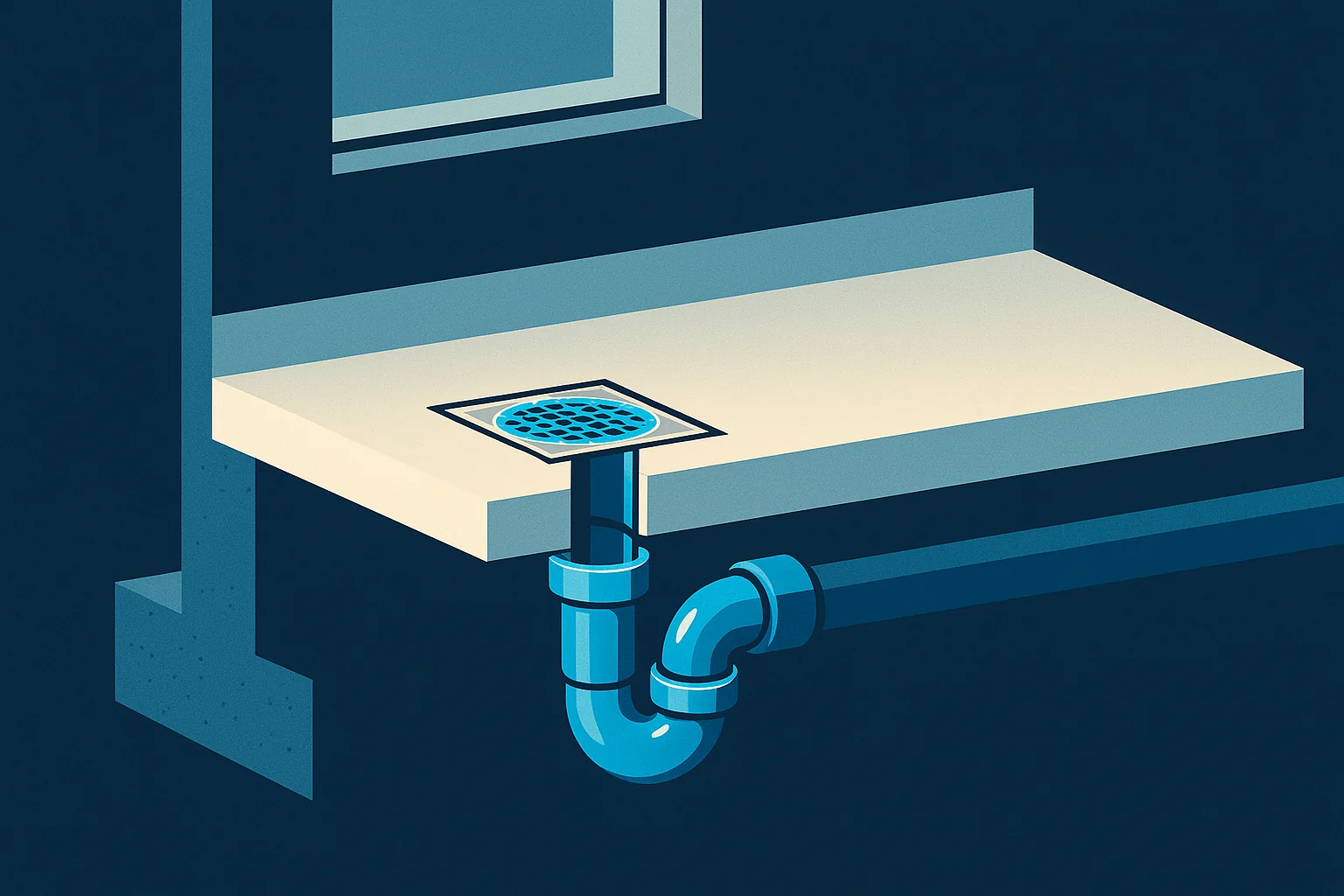

The basement floor drain is the lowest opening in your plumbing system, which means it is both the first place a problem announces itself and the place any overflow chooses to arrive. Most Central Ohio homeowners think about it exactly once, on the day it backs up. This guide covers what the drain is actually connected to, why backups happen there specifically, what prevention is genuinely effective, and what to do in the first hour of an event. It is part of our drain and sewer guide, and it builds on our explanation of what a camera inspection shows.
In This Guide
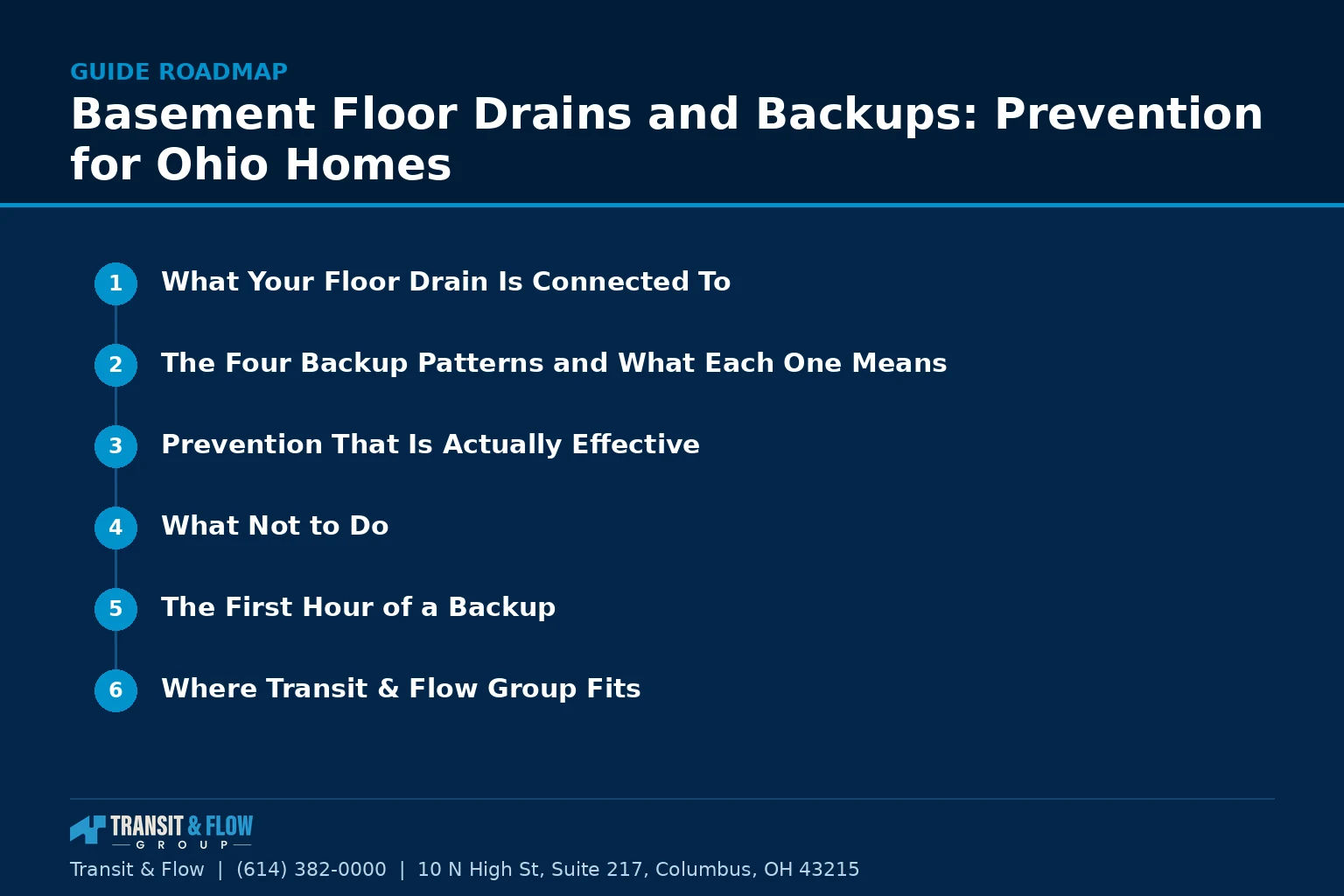
- What Your Floor Drain Is Connected To
- The Four Backup Patterns and What Each One Means
- Prevention That Is Actually Effective
- What Not to Do
- The First Hour of a Backup
- Where Transit & Flow Group Fits
- Frequently Asked Questions
Transit & Flow Group coordinates projects and partners with properly licensed and insured specialty contractors when licensing is required.
What Your Floor Drain Is Connected To
In most homes the basement floor drain ties into the building drain, the horizontal pipe that collects everything in the house and carries it out to the lateral. It sits below every other fixture. It has a trap, a curved section holding a small standing water seal that blocks sewer gas from entering the basement, and in many installations a trap primer or a nearby fixture keeps that seal full.
Two consequences follow from the geometry. First, if anything downstream restricts flow, waste backs up to the lowest opening, and that is the floor drain, not the toilet upstairs. Second, if the trap seal evaporates, sewer gas enters the basement freely, which is why a dry-smelling basement is often a trap problem rather than a sewer problem.
Older Central Ohio homes complicate this. Some have floor drains that historically connected to a combined system carrying both storm and sanitary flow, some have foundation drains tied in, and some have had that arrangement altered by past work nobody documented. If you do not know what your floor drain is connected to, that is worth establishing before you need to know.
The Four Backup Patterns and What Each One Means
- Backup during household use, no rain. Points at a restriction in the building drain or the lateral. Roots, grease, a belly, or an offset. This is a private-side problem and a camera inspection is the next step.
- Backup during or shortly after heavy rain, household use normal. Points at water entering the system from outside, or at the municipal main surcharging and pushing back. Different problem, and the first call is to your sewer utility rather than a plumber.
- Backup only when the washing machine discharges. Points at a partial restriction that only reveals itself at high flow volume. Classic early main line indicator, and one of the most useful diagnostic facts you can hand a technician.
- Clear water, no odor, appearing slowly. Often not a backup at all. Look at groundwater, a failed sump pump, a water heater discharge, or condensate before assuming sewage.
Writing down which pattern applies before you call is worth more than any description of how bad it looked.
Prevention That Is Actually Effective
Ranked roughly by how much protection each buys relative to effort.
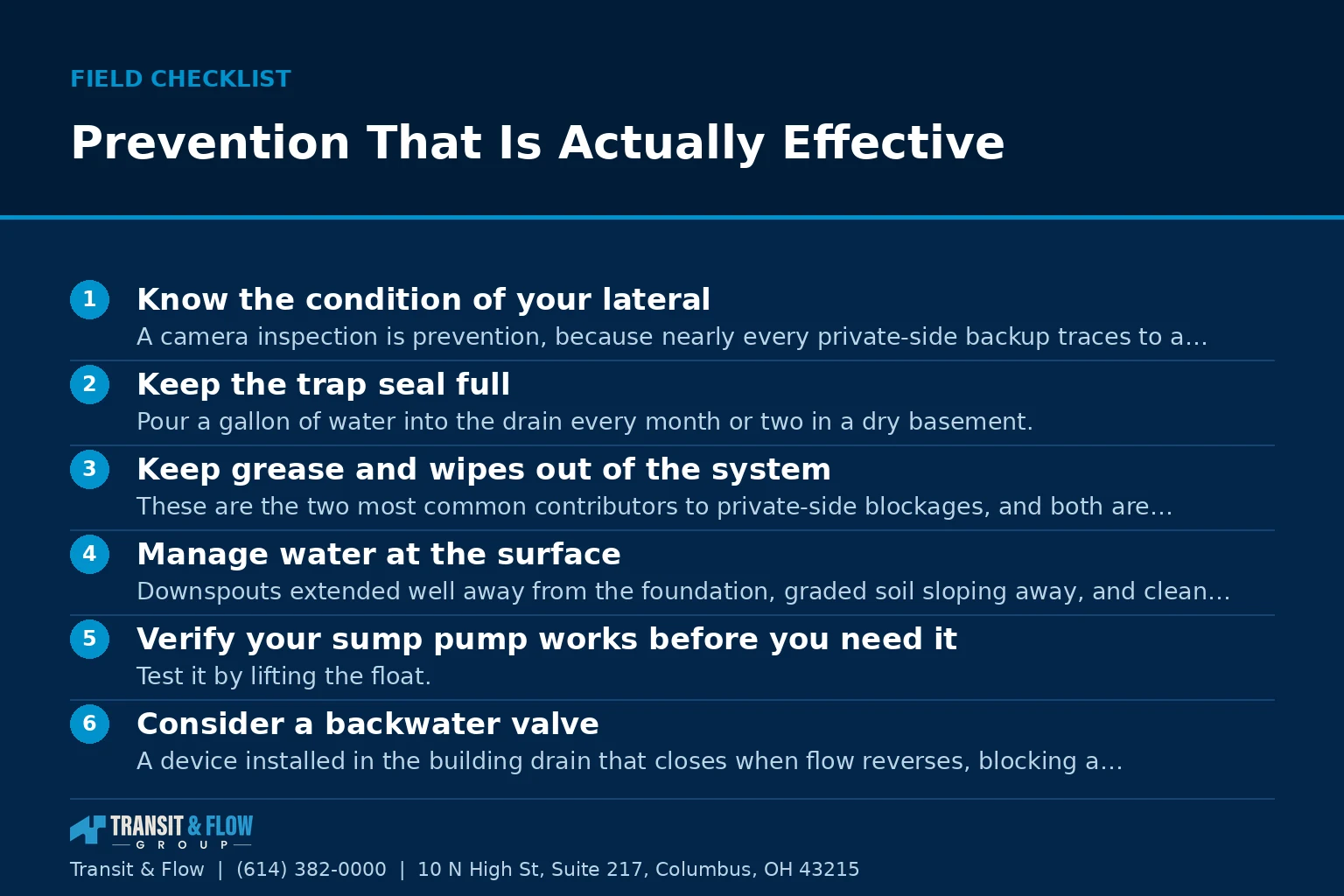
- Know the condition of your lateral. A camera inspection is prevention, because nearly every private-side backup traces to a condition that was visible on camera years earlier.
- Keep the trap seal full. Pour a gallon of water into the drain every month or two in a dry basement. Add a small amount of mineral oil on top to slow evaporation in drains that are used seasonally or not at all.
- Keep grease and wipes out of the system. These are the two most common contributors to private-side blockages, and both are entirely within your control regardless of what any packaging claims.
- Manage water at the surface. Downspouts extended well away from the foundation, graded soil sloping away, and clean gutters reduce the groundwater load reaching your foundation and, in some configurations, your drainage system.
- Verify your sump pump works before you need it. Test it by lifting the float. Confirm it discharges well away from the house, and confirm it does not discharge into the sanitary sewer, which many jurisdictions prohibit.
- Consider a backwater valve. A device installed in the building drain that closes when flow reverses, blocking a municipal surcharge from entering the house. It requires professional installation, a permit in most jurisdictions, and periodic inspection, and it is not appropriate for every configuration. Ask specifically whether yours qualifies.
- Get your line cleared on a schedule if you have a known condition. If a camera has documented root intrusion you are not yet ready to repair, scheduled maintenance clearing is a legitimate interim strategy. It is management, not a fix, and it should be treated as a bridge to a repair decision.
- Store nothing porous directly on the basement floor. Pallets, shelving, and plastic bins are cheap insurance for anything you care about.
What Not to Do
- Do not cap or seal the floor drain. It is the pressure relief point for the whole system. Sealing it moves the next backup to a fixture inside your finished space.
- Do not pour chemical drain opener into a backed-up floor drain. It will not clear a main line, and it leaves caustic standing water for whoever works on it.
- Do not assume a one-time backup was a one-time event. The condition that produced it is still there.
- Do not run a snake into a line you believe may be collapsed without a camera first. You can convert a repairable condition into an emergency.
The First Hour of a Backup
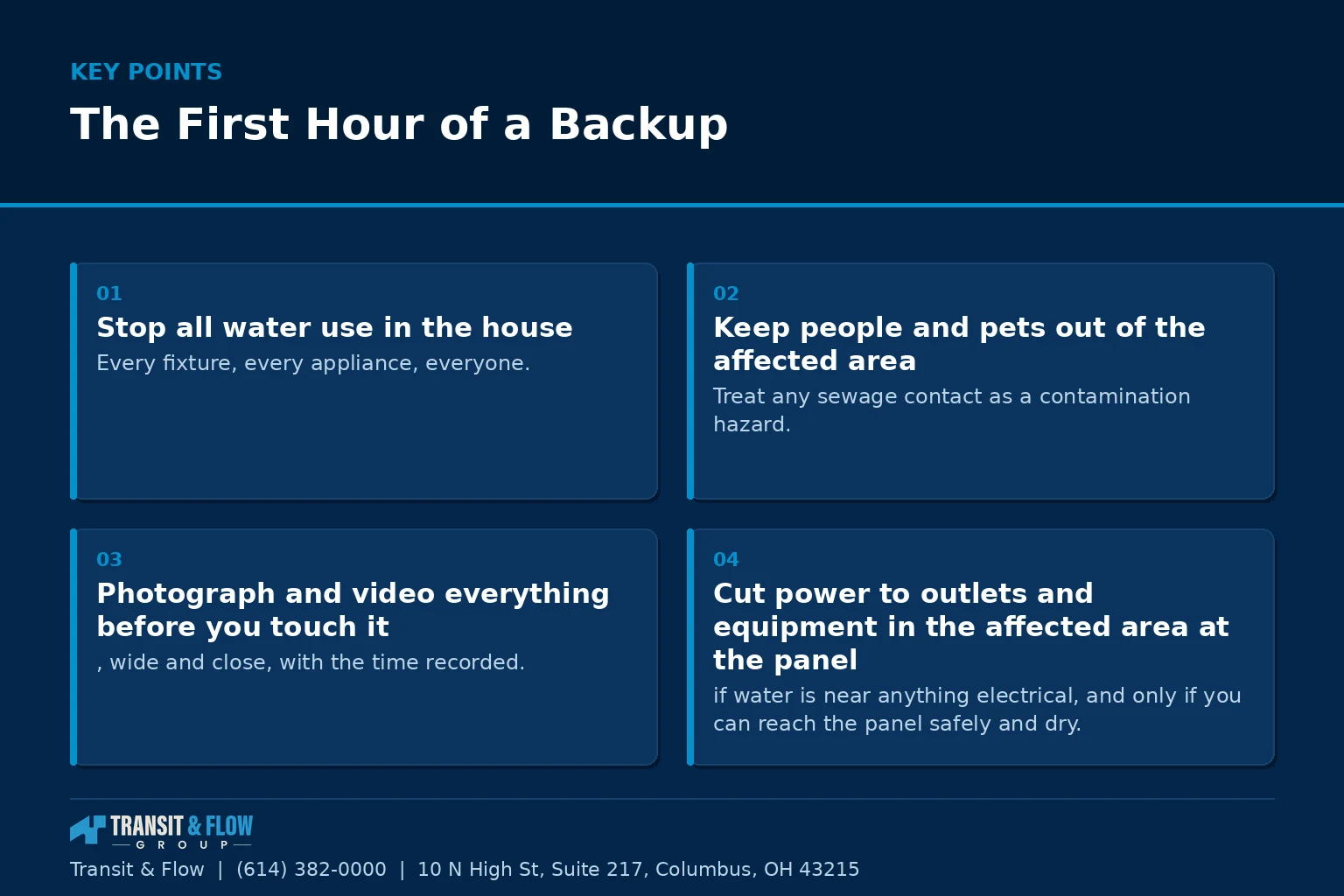
- Stop all water use in the house. Every fixture, every appliance, everyone. This does more than anything else on the list.
- Keep people and pets out of the affected area. Treat any sewage contact as a contamination hazard.
- Photograph and video everything before you touch it, wide and close, with the time recorded.
- Cut power to outlets and equipment in the affected area at the panel if water is near anything electrical, and only if you can reach the panel safely and dry.
- Note the pattern. Was it raining? Was laundry running? Which fixtures were affected and which were not?
- Call your sewer utility first if rain is involved. A main line surcharge is their problem, and many jurisdictions want the report.
- Call for service and tell the dispatcher where your cleanout is. Access saves time on arrival.
- Ask for a camera inspection as part of the same visit. The access is already open, which is the least expensive moment to get the diagnosis.
On insurance, this guide stops at documentation. Whether any of it is covered depends entirely on your policy, your endorsements, and your carrier’s determination. Document thoroughly, report promptly, and take those questions to your agent.
Where Transit & Flow Group Fits
Transit & Flow Group coordinates drain and sewer response across Columbus and Central Ohio, and when a basement event crosses into water damage restoration or broader plumbing work, one coordinator carries the whole thing rather than handing you to a second company mid-event. Our standard on any floor drain backup is camera first, defect located and marked, video delivered to you. If your basement has backed up even once, request an assessment.
Frequently Asked Questions
Why does the basement floor drain back up before any other fixture?
Because it is the lowest opening in the plumbing system. The floor drain usually ties into the building drain, the horizontal pipe that collects everything in the house and carries it out to the lateral, and it sits below every other fixture. When something downstream restricts flow, waste rises to the lowest opening it can find, and that is the floor drain rather than a toilet upstairs. That geometry is why the basement is where the problem announces itself.
What does it mean if the backup only happens during heavy rain?
That pattern points away from a private-side blockage and toward water entering the system from outside, or toward the municipal main surcharging and pushing back. It is a different problem from a backup that happens during ordinary household use with no rain, and the first call is to your sewer utility rather than to a plumber. Many jurisdictions want the report. Writing down which pattern applies before you call is worth more than describing how bad it looked.
Why does my basement smell like sewer gas when nothing has backed up?
The floor drain has a trap, a curved section holding a small standing water seal that blocks sewer gas from entering the basement. If that seal evaporates, which happens in dry basements and in drains that see little or no use, gas enters freely. Pouring a gallon of water into the drain every month or two keeps the seal full, and a small amount of mineral oil on top slows evaporation in seasonal drains. A dry-smelling basement is often a trap problem rather than a sewer problem.
Is it a good idea to cap or seal a floor drain that keeps backing up?
No. The floor drain is the pressure relief point for the whole system, and sealing it does not remove the restriction, it only relocates where the next backup surfaces, usually to a fixture inside finished space. The same logic applies to pouring chemical drain opener into a backed-up floor drain, which will not clear a main line and leaves caustic standing water for whoever works on it next. Address the condition causing the backup rather than the opening where it appears.
Would a backwater valve solve the problem?
A backwater valve is a device installed in the building drain that closes when flow reverses, which is what blocks a municipal surcharge from entering the house. It requires professional installation, a permit in most jurisdictions, and periodic inspection, and it is not appropriate for every configuration. Ask specifically whether your building drain qualifies rather than assuming it does. The determination belongs to a licensed plumber working with your building department.
What should happen in the first hour of a backup?
Stop all water use in the house immediately, since that does more than anything else on the list. Keep people and pets out of the affected area and treat any sewage contact as a contamination hazard. Photograph and video everything before touching it, wide and close, with the time recorded, then note the conditions, whether it was raining and whether laundry was running. Call the sewer utility first if rain is involved, then call for service and ask for a camera inspection on the same visit while access is already open.
Sources
- U.S. Environmental Protection Agency, sanitary sewer overflows and basement backup causes
- Ohio Revised Code 3781.28, excavation notice requirements
- City of Columbus, Get a Permit, permit application channels
About This Guide
Written and edited by Micheal Parker, founder of Transit & Flow Group. Published September 23, 2026. This guide is checked against the agency and code sources listed above, and it is revised when those sources change.
General contractor of record. Micheal Parker holds City of Columbus General Contractor Registration G12064, issued by the Columbus Department of Building and Zoning Services under Transit & Flow LLC and valid through June 30, 2027. Trade work that falls outside the scope of that registration is performed by licensed trade partners, and the responsible license holder is identified before work begins.
Transit & Flow Group, home and commercial services for Columbus and the surrounding Central Ohio communities. Phone (614) 382-0000. Email solutions@transitflowgroup.com. 10 N High St, Suite 217, Columbus, OH 43215. Contact our team or review the communities we serve.
