
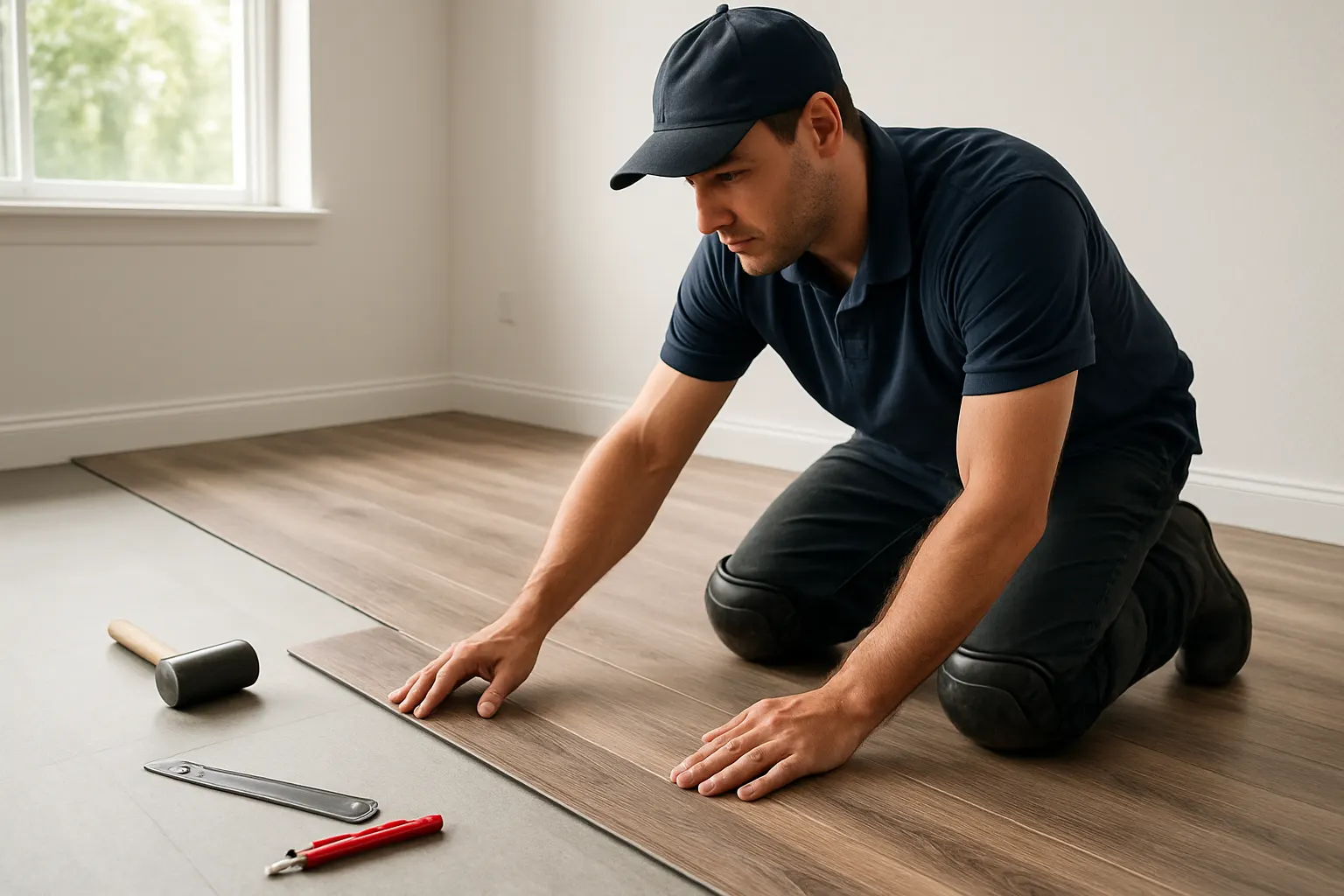
Underlayment Installation in Columbus, Ohio
Transit & Flow Group installs underlayment beneath new flooring throughout Columbus and Central Ohio: the thin layer of foam, felt, cork, or rubber sheeting that sits between your subfloor and your finished floor. It is a small-looking product that does a lot of work, cushioning footsteps, dampening sound between floors, and in many cases adding a layer of moisture protection the finished flooring alone cannot provide. Describe your flooring project and the rooms involved in the Estimate Builder for a preliminary online estimate.
Transit & Flow Group installs underlayment beneath new flooring throughout Columbus and Central Ohio: the thin layer of foam, felt, cork, or rubber sheeting that sits between your subfloor and your finished floor. It is a small-looking product that does a lot of work, cushioning footsteps, dampening sound between floors, and in many cases adding a layer of moisture protection the finished flooring alone cannot provide. Describe your flooring project and the rooms involved in the Estimate Builder for a preliminary online estimate.
Is this the right service for you?
This page covers underlayment installation: the material installed directly under laminate, engineered hardwood, luxury vinyl plank, or, less often, carpet, chosen for cushioning, sound dampening, or moisture protection depending on the room and the floors above or below.
Underlayment is not the same thing as your subfloor, and it is worth being clear about the difference before you book anything. Underlayment is a thin, purpose-built layer installed on top of a sound subfloor. It adds comfort, quiet, or a moisture barrier, but it does not fix a structural problem. If your subfloor itself is soft, squeaking, uneven, or damaged (plywood that has delaminated, joists that have sagged, or water damage that has weakened the deck underneath), that is a structural repair, not an underlayment question, and it is covered separately on our Subfloor Repair page. If you are not sure which situation you are in, send photos through the Estimate Builder and we will tell you plainly which page fits before you spend money on the wrong fix.
Underlayment is most often chosen for one or more of these reasons: a condo or upstairs room where sound transmission to the space below matters, a basement or slab installation where a vapor barrier layer is needed under the finished floor, an older home with an uneven subfloor that needs a thin leveling and cushioning layer before laminate or LVP goes down, or simply wanting a quieter, softer feel underfoot than a hard floor over bare subfloor provides.
How pricing works
Underlayment installation is priced as a range per square foot, since the right product and thickness change with the flooring going on top and the performance you need.
- Material type drives price first. Basic foam underlayment for laminate or LVP sits at the low end. Cork, rubber, and combination foam-vapor-barrier products cost more but add sound dampening or moisture protection that foam alone does not.
- Subfloor condition affects labor. A clean, dry, sound subfloor is a straightforward install. Minor unevenness may be addressed with a self-leveling underlayment product, priced differently than a cushioning underlayment and requiring cure time before flooring goes down.
- Moisture testing in basements or over concrete slabs is sometimes recommended before choosing a vapor-barrier product, and we will flag that as a separate line if your project needs it.
- Room count and square footage scale material and labor cost together, and bundling underlayment with a flooring installation already scoped with Transit & Flow is typically more efficient than pricing it as a standalone add-on later.
As general market context, HomeGuide reports underlayment installation typically running $0.50 to $2 per square foot for materials and labor depending on the product type, separate from the cost of the finished flooring itself (not a Transit & Flow Group quote). Enter your project details and photos in the Estimate Builder for a preliminary online estimate. Final scope and price subject to verification on site.
What’s included
- Subfloor check for cleanliness, dryness, and flatness before underlayment goes down
- Underlayment material in the type and thickness matched to your flooring choice and the room’s needs
- Cutting and fitting to the room, including seams taped or sealed where the product calls for it
- Basic subfloor cleaning and debris removal prior to installation
- Coordination with your flooring installation schedule when both are booked together
- All workmanship is backed by a 1-year labor warranty on labor, parts, and equipment covered per manufacturer terms.
What’s not included
- Structural subfloor repair; a soft, sagging, or damaged subfloor deck is covered on our Subfloor Repair page, and underlayment should not be installed over an unresolved structural problem
- The finished flooring material itself, quoted separately by flooring type
- Active moisture intrusion in a basement or crawlspace, which needs to be resolved before any flooring system goes down
- Mold assessment; if we find signs of moisture damage during subfloor inspection, we flag it for evaluation before proceeding
Underlayment choices around Central Ohio
Central Ohio’s mix of housing stock makes underlayment a genuinely different decision from house to house. Older homes in neighborhoods like Clintonville and German Village often have wood subfloors with more natural variation than modern plywood decking, and a cushioning or leveling underlayment can smooth out minor unevenness before laminate or LVP goes down. Condos and multi-story homes across the region, including newer builds in Dublin and New Albany, often need sound-dampening underlayment specifically for upstairs rooms, both for the homeowner’s comfort and because some condo associations require a minimum sound rating for hard flooring installed above another unit.
Basement finishing is the other big driver locally. A finished basement in Westerville, Grove City, or anywhere with a slab foundation benefits from a vapor-barrier underlayment layer, since concrete slabs in Central Ohio’s clay-heavy soil can wick moisture upward even without a visible leak. Choosing the right underlayment for a basement floor is one of the more consequential decisions in a basement flooring project, and it is worth discussing before the finished floor is selected.
Our process
- Share your flooring type, room dimensions, and any known subfloor concerns through the Estimate Builder for a preliminary online estimate.
- We help you match underlayment type and thickness to your flooring choice and the room’s specific needs, whether sound, moisture, or cushioning.
- On-site verification of subfloor condition and final pricing before installation begins.
- Subfloor cleaning, underlayment installation, and seam sealing where required.
- Final walkthrough before flooring installation proceeds, confirming the surface is ready.
Services completed by appropriately qualified professionals where required.
More Flooring
- Baseboard Replacement in Columbus, Ohio
- Engineered Hardwood Flooring in Columbus and Central Ohio
- Flooring Consultation in Columbus and Central Ohio
- Subfloor Repair in Columbus, Ohio
- Tile Flooring in Columbus and Central Ohio
- Transition Strip Installation in Columbus, Ohio
- Vinyl Sheet Flooring in Columbus and Central Ohio
- Waterproof Flooring in Columbus and Central Ohio